How thriving, free-market Hong Kong came under the boot of communist China

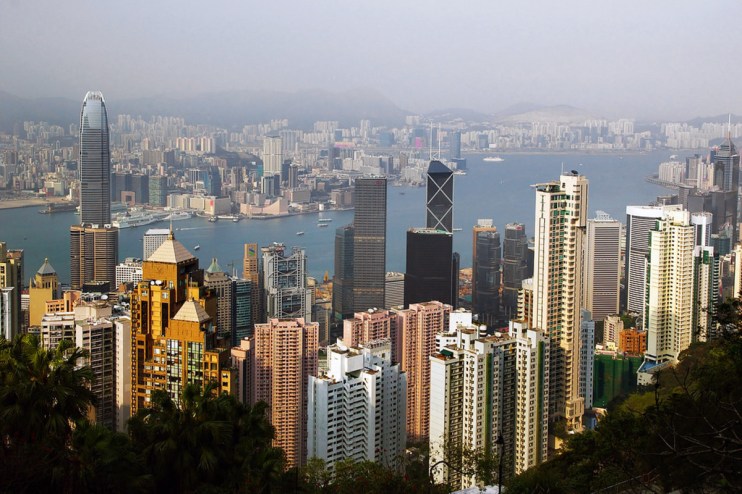
What began on this day in 1843 ended in a strange form of decolonisation. The UK handed over a territory to China, not by popular demand, but to abide by international treaties, knowing that to the other side such agreements were worthless, says Eliot Wilson
If you have any real memory of the handover of the British Dependent Territory of Hong Kong to the People’s Republic of China at midnight on 1 July 1997, then you will now be uncomfortably close to middle age.
The ceremony was held in driving rain and watched by a global audience of hundreds of millions: the then-Prince of Wales, now King Charles III, gave a farewell speech on behalf of the Queen before the Union flag and the Hong Kong flag were lowered for the last time. At midnight, the territory became a “special administrative region” of China.
It began, in a way, on this day, 26 June, in 1843. With the formal exchange of ratifications, the Treaty of Nanking, agreed the previous summer, came into force and ended the First Opium War between the United Kingdom and imperial China. The terms, dictated by the victorious British, provided for “the Island of Hong-Kong, to be possessed in perpetuity by Her Britannic Majesty, Her Heirs and Successors”.
A Victorian transformation
Hong Kong Island and its harbour had been occupied by a force of Royal Marines aboard HMS Sulphur in January 1841. Although the harbour offered a good anchorage, there was not much else to look at: a population of 6,000 fishermen and charcoal burners in a string of small coastal villages. But Victorian imperial trade, reinforced by the might of the Royal Navy, was transforming such havens and ports.
The Colony of Hong Kong’s charter gave it a governor, the resourceful, independent-minded Ulsterman, Lieutenant General Sir Henry Pottinger; a colonial secretary, Major George Malcolm; an Executive Council; and a Legislative Council of the governor and three advisers. And Hong Kong began to acquire land and people.
The Convention of Peking in 1860 ceded the southern part of the sparsely populated Kowloon Peninsula and Stonecutters Island to the British Crown as dependencies of Hong Kong. The Second Convention of Peking (1898) expanded the colony’s boundaries further, including the northern part of Kowloon and 263 small islands, later known as the New Territories. Crucially, they were ceded to Britain on a 99-year, rent-free lease (the longest term then allowed under British property law).
The Chinese have always dismissed these legal agreements as among “the Unequal Treaties”, forced upon often-defeated Eastern rulers by Western colonial powers. But that agreement of a lease on the New Territories put a timebomb under the British Colony of Hong Kong and started the clock.
By the 1970s, the colony was 130 years old. British Hong Kong was a remarkable place, with a population which grew from 4m to 5m between 1970 and 1980, a free-trade idyll with a booming banking sector and GDP which was multiplying as quickly as statisticians could count. But one date ground inexorably closer: 30 June 1997, and the expiry of the 99-year lease on the New Territories.
In March 1979, Sir Murray MacLehose became the first governor of Hong Kong to make an official visit to the People’s Republic of China, where he raised the issue of the lease with Deng Xiaoping. The “paramount leader”, already in his 70s, had only taken control in Beijing months before, but on Hong Kong he was firm: China would resume possession when the lease expired.
Margaret Thatcher became Prime Minister weeks later, inheriting a situation she abhorred. Hong Kong was almost a free-market Thatcherite beau idéal, while China was a Communist dictatorship with blood on its hands to make the multitudinous seas incarnadine. She visited China in 1982, the first Prime Minister to do so, determined somehow to mitigate the inevitable.
One idea was to maintain a British presence and some kind of administration in Hong Kong beyond 1997. This British connection, UK negotiators argued, was the kernel of the colony’s economic success. The available evidence seemed to suggest that was what the population wanted too. There was some exploration of the legal boundaries: Hong Kong Island and Kowloon were British possessions “in perpetuity”. But retaining them while returning the New Territories and New Kowloon was not practical.
The Sino-British Joint Declaration
At the end of 1984, the two governments signed the Sino-British Joint Declaration. There would be full surrender of sovereignty, but Beijing agreed to govern Hong Kong as a special administrative region with a high degree of autonomy and continuity, represented by the slogan “one country, two systems”. There was little choice: Deng had indicated that a peaceful transfer in 1997 was preferable but he would seize Hong Kong by force if necessary.
The time wound relentlessly down to 30 June 1997, the last day of British rule in Hong Kong. Population growth slowed as emigration grew. The last governor, Chris Patten, introduced more representative government which the Chinese would inevitably neuter or abolish. By 2014, Beijing had publicly repudiated the Joint Declaration, and since 2020 dissent and opposition to the communist regime has been brutally repressed.
What began on this day in 1843 ended in a strange form of decolonisation. The UK, a democracy, handed over a territory to an autocracy, China, not by popular demand – Hong Kongers would probably rather have retained benign if slightly lofty British rule – but to abide by international treaties, knowing that to the other side such agreements were worthless. While Britain ran the gamut of emotions from acceptance to bitter-tasting disgust, there is little evidence anyone in London suggested simple abnegation.
1997 was an enormous boost for the Communist Party of China. Hong Kong has maintained its prosperity but paid a heavy price in liberty of thought and deed. Britain, meanwhile, gave up an economy equivalent to 11 per cent of its own and one of the biggest banking centres in Asia, and seemed diminished. Nearly 30 years on from the handover, it makes the concept of “doing the right thing” rather more difficult to identify.
Eliot Wilson is writer and contributing editor at Defence On The Rocks