How to boost business with a pen stroke? Reform international banking fees

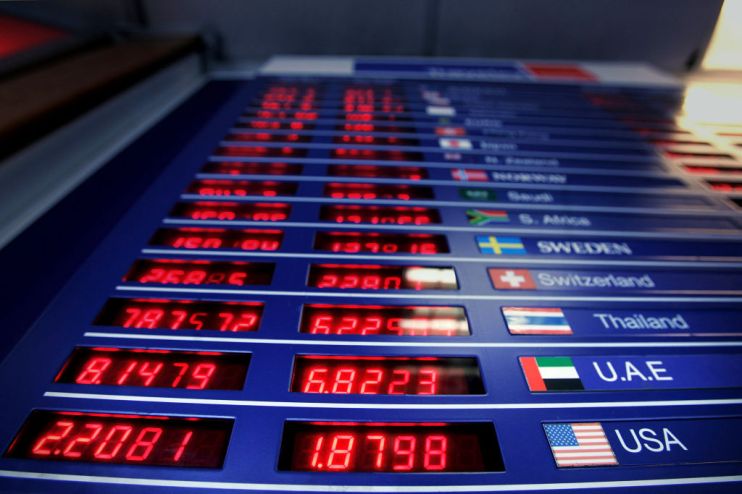
Hidden fees for international payments isn’t a sexy topic, but giving it some attention could transform opportunities for small businesses, writes Steph McGovern, host of The Rest is Money podcast and owner of small business Gootopia
For small businesses, expanding overseas can be the difference between profit and loss, success and failure. Yet that expansion can seem tougher than ever. The past decade has seen any number of trade barriers go up: geopolitical volatility, supply chain disruption, inflation, Brexit.
As a small business owner, I know just how big and insurmountable each of these disruptions can feel. They increase costs, make expansion tougher – yet there is little that can be done to prevent their effects. British small businesses simply have to rely on their resilience and knowhow to manage. It’s a learned stoicism, crucial to making any business succeed in 2024.
And yet – there’s one barrier that we can do something about. Changing international payments regulation does not sound interesting, sexy or something any of us want to give a moment’s thought. But keep reading, I’ll convince you.
New research by Censuswide, which surveyed 3,000 small businesses nationwide, found that the high cost of international banking is one of the major barriers to expanding abroad. The high cost of international payments puts off over a quarter (26 per cent) of small businesses from expanding overseas – a figure higher than tariffs (19 per cent), supply chain disruption (22 per cent) and even regulation (25 per cent). It is a trade barrier by stealth, one that is rarely talked about, but has a disproportionate impact on businesses.
The problem is that the market lacks fair competition. Banks and old-school providers charge small businesses marked-up exchange rates, thereby hiding the expensive cost of their services. These hidden fees make it impossible for time-strapped small businesses to accurately compare the market, hampering competition and therefore further driving up costs and driving down the quality of services on offer. Consumers suffer from hidden fees too, but the volume of money moved by businesses makes the problem even more acute.
A few providers, like Wise, Starling Bank and Monzo, do list their fees transparently. But they are in the minority. Last year, hidden FX fees cost UK small businesses £2.8bn. I get it, big figures like that can seem too abstract, too remote to matter. However, it is a problem that is costing the British economy jobs, investment and growth. Further research of over 1,500 small and midsize businesses found that if the cost of international payments was reduced, small businesses say they would invest in entering new markets (34 per cent), new technology (33 per cent), new staff (27 per cent) and increased staff wages (26 per cent).
Fix transparency, fix hidden fees, and the situation improves drastically. The problem would be solved if international payments providers were forced to list their hidden fees, i.e. the markup they are taking on the exchange rate they offer versus the standard rate seen on Google or Bloomberg. Last week, the European Parliament announced its support for legislation that does exactly this.
Unfortunately, the UK is lagging behind. Existing legislation is patchy and allows providers to easily hide their fees. Worse – this legislation doesn’t even apply to small businesses. Something known as a ‘corporate opt out’ means providers don’t have to apply legislation to business customers.
Unlike most other trade barriers, this is a problem that can be solved swiftly, easily and without costing the taxpayer a penny. The sector becomes far more competitive in a stroke. In return, small businesses will have more opportunity, more money and new horizons. It’s time to tighten the legislation, stop hidden fees – and end the opt out.