How to break up big tech? Regulating technology companies is more easily said than done

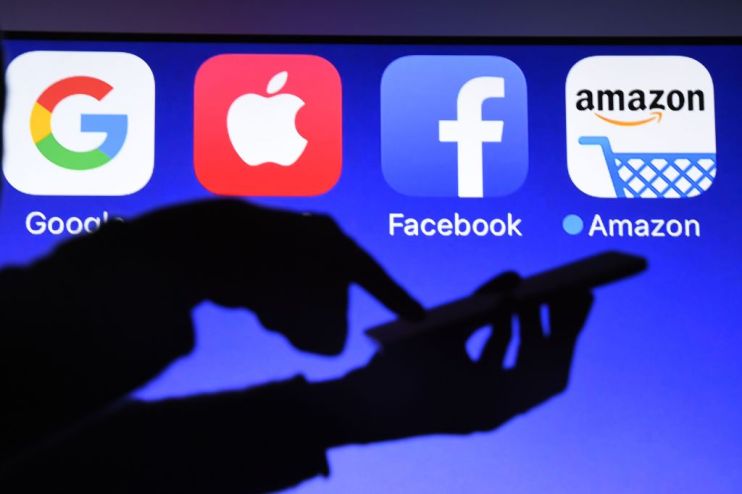
Over the last few years, the public perception of technology companies has shifted quite dramatically. Large tech firms such as Google, Facebook and Amazon are no longer the darlings of the world. They are attracting the same kind of ire that financiers attracted a decade ago.
At the political level, this translates into a broad bipartisan support for regulating the sector, due to the opinion that the most powerful technology companies are monopolies that stifle competition. There are also concerns that they have too much control over the creation and dissemination of news. On both of these counts, regulation will be complicated.
Imposing a stricter framework of rules on tech companies is far from straightforward, as the most successful businesses tend to benefit from advantages that come from scale.
As a social network like Facebook grows in size, it is able to use data to offer better services, which in turn attracts even more customers.
Given the essential role that scale plays in many tech firms, it is not clear that the kind of antitrust action that we saw in the US more than 100 years ago is relevant to today’s economy.
We know how to break up a rail company or an oil business into smaller components, but tackling the monopolistic power of a technology company would likely require a different approach, since a simple deconstruction would likely take away many of the elements that make it a successful company in the first place.
It is also hard to see how the modern conception of pernicious monopolies applies to companies like Facebook and Google. In the 1970s, antitrust regulation was reformulated in terms that focused on consumer welfare: a monopoly was considered pernicious if it negatively impacts the price available to the consumer.
When we apply this metric to Amazon for example, we find that its ability to offer low prices is actively a plus to the consumer, despite its dominance of the e-commerce market.
And then there are companies that provide services that are nominally free to users, such as Facebook.
Even if you take into account the data that they farm from their users, it is hard to say that the consumer is not getting a good deal. Advertising revenues at Facebook are 43 cents a day per user, which results in a profit of nine cents in the US and three cents in Europe. Does a user get three cents worth of utility from the platform?
Research from 2012 also suggested that free digital services increase the consumer surplus in the US alone by over $100bn per year, which is equivalent to $300 per capita. So it appears that the new interpretation of monopolistic also does not fit technology.
Moving onto the issue of fake news being spread on tech platforms, we find an equally complicated situation.
One of the main complaints here is that social media algorithms ensure that people only see news they agree with. This not only leads to a polarisation in political attitudes, but it also allows voters to be influenced by factually inaccurate reports.
It is not clear how breaking up the companies could help with this — if for example, Instagram were separated from Facebook. But there is an argument that larger companies have the resources to invest in the workforce and the artificial intelligence needed to combat the spread of fake news.
Smaller companies would be unable to keep up. For shareholders in the larger tech companies, we can read this as a situation where there is short-term pain for long-term gain, in the form of barriers to entry in the future.
It should be clear by now that no matter how governments approach the regulation of large tech firms, the path ahead will not be a straight one.
It seems likely that countries will coordinate on a supranational level to reform tax systems for the globalised twenty-first century. Examples of solutions include the Common Consolidated Corporate Tax Base that would allocate the taxable profits of a multinational corporation by a formula.
This has the benefit of allowing individual nations to decide what rate to tax their share of the tax base. The reason that this reform has taken so long is that it is difficult for countries to agree on a common formula. We think the idea has enough political momentum to happen in the medium term.
To summarise, current regulation in the US is not fit for purpose with today’s digital economy. Certain aspects of internet companies make competition in their respective markets unlikely, and politicians are likely to view increased regulation, rather than direct public provision, as the solution.
Regulation is likely to segment these global businesses, as regional regulators focus on their preferred measures.
The complexity of many of these issues means that investigations will take many years, in which time the companies may have changed, perhaps in anticipation of the regulator’s judgements. Acquisitions will increasingly come under scrutiny and are more likely to be blocked.
Given the difficulty in regulating these businesses, perhaps the easiest route for governments to follow is to increase the tax burden on them. Traditionally, tax has been one of the most effective ways of mitigating the market failure caused by monopolies.
But big tech firms tend to provide customers with a desirable service at a negligible cost, which makes them harder to tax. It seems likely that international coordination will be needed in order to increase the tax burden of big tech in the next few years.
Sign up to Morning Wire’s Midday Update newsletter, delivered to your inbox every lunchtime
Main image credit: Getty