Skip to content
Tuesday 1 September 2026London --:--Frankfurt --:--Zurich --:--
NewslettersSearchEN · DE · FR
MorningWire

European business, markets and politics

FTSE 100
10,765.18
-0.55%
DAX
26,025.13
-0.89%
CAC 40
8,317.86
-0.20%
STOXX 50
6,389.87
-0.47%
  • Europe
  • Markets
  • Business
  • Economy
  • Regulation
  • Politics
  • Opinion
More
GermanyFranceEU InstitutionsCompetitionPublic AffairsBankingTechnologyEnergy
  • Germany
  • France
  • Europe
  • Markets
  • Business
  • Economy
  • Regulation
  • Politics
  • Opinion
  • DE
Wednesday 23 September 2020 6:00 am  |  Updated:  Tuesday 22 September 2020 3:25 pm

Incentives are a better way to tackle Covid-19 than blanket lockdowns

By: Paul Ormerod

Add as a preferred source on Google
covid testing
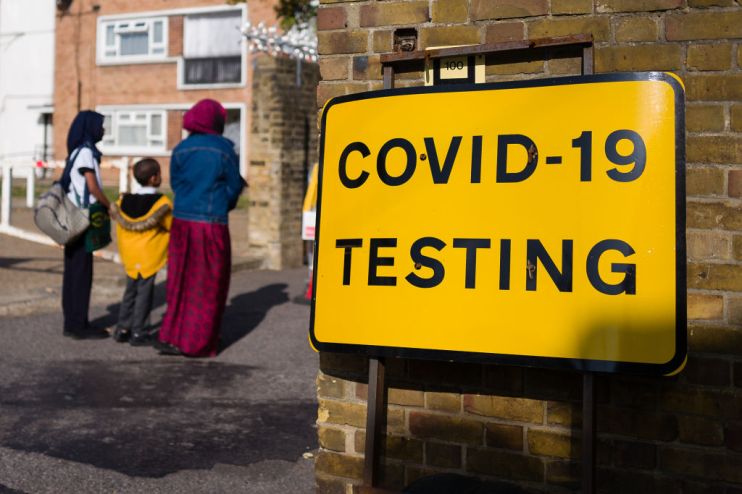
It comes amid fresh warnings of regular self-testing as nightclubs open their doors and bars welcome guests regardless of table size or households.

A great deal of government policy during the Covid crisis has involved regulation. Given a choice, economists usually prefer to use incentives. Altering the relative costs and benefits of an action is a well-established way to alter behaviour.

Perhaps the government has been listening. A big stick will now be waved at people who fail to self-isolate when they ought to: breaking this regulation can be punished by a fine of up to £10,000.

The size of the penalty seems large enough to deter people from going out and about when they should be staying at home. The case in favour of the policy seems open and shut.

Read more: Coronavirus: Boris Johnson imposes stringent new restrictions for up to six months

However, the fine alters another incentive in the test and trace regime. The bigger the fine for breaking the rules, the less likely it is that people will supply the correct contact information in the first place.  

Which of these two incentives will predominate is a purely empirical matter and one which is hard to predict in advance. Both undoubtedly exist, and the impact on the test and trace system remains to be seen. But it may just blow the scheme out of the water.

We do not know the source of the proposal within the machinery of government.  SAGE, the scientific group which has been advising the government during the pandemic, has no economists as members. But there are well over 1,000 economists working directly for the Government Economic Service. Have none of them made this obvious point to ministers about the different incentives?

Read more

Rory Sutherland joins Adam Smith Institute as senior fellow

Business meeting with diverse professionals discussing financial growth strategies in a modern conference room setting

On a more positive note, vulnerable groups have responded well to incentives created by the information which has emerged about the virus. No less than 89 per cent of all Covid deaths occur in the over 65 age groups. Even more pertinently, those with pre-existing medical conditions account for 95 per cent of all Covid mortalities.  

There is a strong overlap between these two groups. Many of these individuals have altered their behaviour dramatically. They are shielding.  As a result, total deaths remain low given the number of infections.

German has experienced less than a quarter of the number of deaths as the UK. Its case fatality rate – the percentage who die once they catch the disease – among the elderly is the same as in the UK. The Germans have simply been much more effective at preventing the elderly from catching it in the first place.

An absolutely crucial part of any strategy is to try and keep the virus out of care homes. It is not possible for the very elderly in care homes to change their behaviour. Their environment is decided for them. 

Care homes already have the incentive of reputational risk to avoid the virus spreading. But it must be worth reinforcing this with a public policy of substantial monetary incentives for those homes which are able to remain virus-free.

Whatever the incentive structure might be, a more subtle and targeted approach is needed than that of blanket lockdowns.  These simply generate huge social and economic costs, with little in the way of overall health benefits.

Main image credit: Getty

Read more

BNPL regulation is proof that industry and regulators can work together successfully

Woman using Zopa Bank credit card and smartphone app, demonstrating digital banking on-the-go features.

Share this article

  • Facebook
  • X
  • LinkedIn
  • WhatsApp
  • Email

Similarly tagged content:

Sections

  • Opinion

Categories

  • Opinion

Related Topics

  • Coronavirus

Trending Articles

  • Jaguar reveals the Type 01’s screen-free interior

  • Trio of firms poised to quit London Stock Exchange as exodus gathers pace

  • Vodafone and Deliveroo look to patch up Reform ties after Yusuf prison threats

  • FTSE 100 Live: Stocks slide as bound rout deepens; Oil jumps as Trump vows more strikes on Iran

  • Treasury ‘tells Healey’ to consider tax on banks and oil

More from Morning Wire

  • Rory Sutherland joins Adam Smith Institute as senior fellow

    News
    Business meeting with diverse professionals discussing financial growth strategies in a modern conference room setting
  • BNPL regulation is proof that industry and regulators can work together successfully

    Opinion
    Woman using Zopa Bank credit card and smartphone app, demonstrating digital banking on-the-go features.
  • ‘Social value’ procurement rules are an absurd waste of time and money

    Economics
    Tunnelling for the Euston link finally kicks off this week.
  • Second time lucky for Lucy Rigby?

    Markets
    City minister Lucy Rigby advocating for compulsory financial education in primary schools to empower young learners
  • EV targets set to be watered down

    Transport & Infrastructure
    Car bodies on an assembly line in a UK car plant, showcasing EV manufacturing process
  • John Caudwell and Stuart Rose blast ‘tax creep’ 

    Economics
    John Caudwell in a formal setting, possibly during a business meeting or public speaking event, conveying professionalism.
  • Burnham accused of gutting tech department’s ‘biggest strength’

    Tech
    Andy Burnham, Mayor of Greater Manchester, smiling in glasses, dark jacket, light blue shirt, blurred green background.
  • Devolution will create losers too

    Opinion
    Andy Burnham discussing Manchesters Bee Network public transport initiative at a city council event.
MorningWire

Independent European business, markets and political news for decision-makers.

Morning Briefing

Europe

  • Germany
  • France
  • EU Institutions
  • Europe

Business

  • Markets
  • Business
  • Economy
  • Regulation
  • Competition
  • Public Affairs

Editorial

  • Opinion
  • Editorial Policy
  • Corrections
  • Contact

Company

  • About Morning Wire
  • Privacy Policy
  • Terms of Use
  • Cookie Policy
© 2026 Morning Wire Ltd · Published by Morning Wire Media, Bahnhofstrasse 65, 8001 Zürich, Switzerland
Privacy · Terms · Cookies · Facebook