How to get workers back to the office in 2025? Let them open the windows!

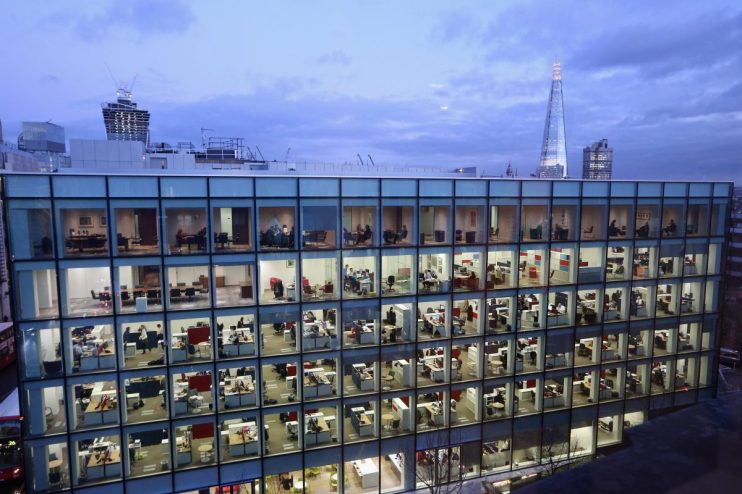
Five years on from the pandemic, it’s time to bin the office gimmicks and get back to basics, writes Knight Frank real estate expert Philipp Ueberschaer
Five years ago the first rumours of a flu-like illness were emanating from China: it was the first indication that our worlds were about to be turned upside down.
The pandemic had the most dramatic impact on the world of work since the invention of the computer, and many organisations and real estate owners are still working out the ultimate effect of lockdowns and the subsequent global switch to hybrid working.
Many of these changes were emerging anyway, with the internet and wireless communication having removed the requirement for employees to be desk-bound, but Covid turbo-charged the adoption of technology for the workplace .
It also raised bigger questions, delivering proof that mass remote work was possible and questioning the role of the office as a place to work for the first time.
At the beginning of 2020 I was living and working in New York City in a 600 square foot apartment which myself and my partner barely saw. We were too busy working long hours or socialising in Manhattan, loving life in one of the best cities in the world.
Then on 20 March the New York State governor’s office issued an executive order closing ‘non-essential’ businesses and the world of Zoom and Teams officially began. It’s amazing to think that before that we had relied on impersonal conference calls across states and the world.
As an occupier-focused real estate executive I was suddenly in demand, with the whole real estate world wanting to know how other countries and companies were coping with lockdowns, from air conditioning to sanitation, layout, distancing, use of elevators to people flows.
Gradually the pandemic abated, mass vaccination turned the tide and offices re-opened. But the picture globally is a patchwork of different approaches, depending on cultures, sectors and infrastructure.
So five years after the pandemic what happens to the workplace next?
The office in 2025
We can get a good insight from Knight Frank’s third quarter 2024 Global Corporate Real Estate Sentiment Index. This poll of occupiers shows the majority of companies have reached a new status quo, with their teams spending the majority of their time in the office in a hybrid arrangement.
What is revealing is that while workplace occupancy has stabilised, the new trend among occupiers is increased use of artificial intelligence (AI), with 48 per cent seeing their adoption of AI rising to a ‘very high’ level over the next year.
But even more interesting is the polling’s finding that 48 per cent believe AI will have a neutral impact on their property portfolios, five per cent expect a marginal increase and two per cent expect a significant increase.
Only 10 per cent expect a marginal reduction and one per cent expect a significant reduction, meaning that we should not expect an upheaval of the type inflicted upon the workplace by Covid to be caused by artificial intelligence.
In the long term, however, we have to understand that with AI adoption this high, the knock-on effect on the workplace has to be profound.
Out with workplace gimmicks
When people first started to return to the office after the pandemic I was keen to see how the workplace had changed. I visited one occupier in a world-famous New York office tower, which had fantastic views, amazing free pastries and an incredible cafe – and no one was working there.
I visited a world-famous accounting firm in Eastern Europe and there were advanced driving games complete with racy bucket seats – but no one was using them because again no one was working there. The gimmicks weren’t persuading people back into the workplace.
In their keenness to get people back to the office I think that some companies panicked by over-reacting, re-purposing their offices as corporate entertainment centres and ultimately trying too hard and spending too much money when a less gimmicky approach would have been more effective.
My advice five years on from Covid now is to focus on the fundamentals: a focus on sustainability, functionality, health (can people open the windows?), ultra-reliable connectivity, a location in a safe neighbourhood where people can work late and even clean toilets.
The reason people come in to the office is to work, but what is emerging is a different balance of work and life compared with 20 years ago.
So much has been said over the last five years about the workplace – days spent in the office is still a great subject of conversation – that people now just want to get back to what the best workplaces do best: provide a great and comfortable setting for people to get on with their jobs.
Philipp Ueberschaer is Europe, Middle East and Africa head of occupier strategy and solutions at Knight Frank