Skip to content
Friday 14 August 2026London --:--Frankfurt --:--Zurich --:--
NewslettersSearchEN · DE
MorningWire

European business, markets and politics

FTSE 100
10,772.67
-0.56%
DAX
26,299.74
-0.12%
CAC 40
8,650.56
-0.28%
STOXX 50
6,545.47
+0.18%
  • Europe
  • Markets
  • Business
  • Economy
  • Technology
  • Politics
  • Opinion
More
GermanyFranceBankingAIEnergyFintechPropertyCapital Markets
  • Germany
  • France
  • Europe
  • Markets
  • Business
  • Economy
  • Technology
  • Politics
  • Opinion
  • DE
Friday 13 March 2020 5:49 am  |  Updated:  Thursday 12 March 2020 6:07 pm

How to lead your business through a crisis like coronavirus

By: Atholl Duncan

Add as a preferred source on Google
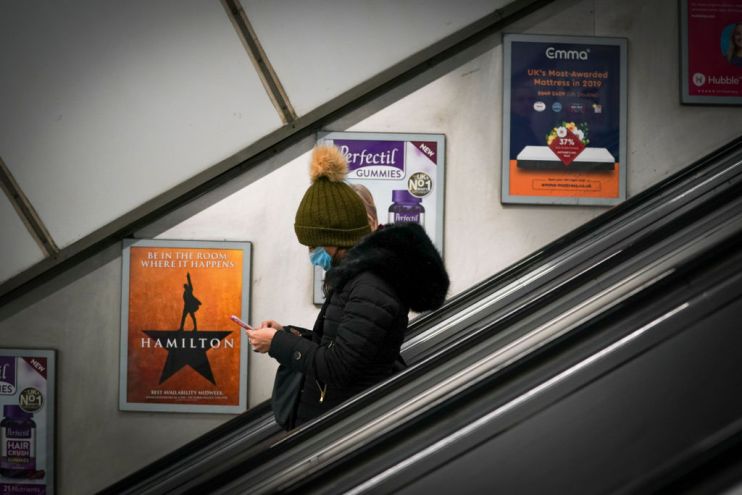
UK Enters Delay Phase Of Coronavirus Plan
Passenger on the London Underground wears a surgical mask during the Coronavirus pandemic in London on March 12, 2020 in London, England. The Prime Minister announced the UK is entering the "delay" phase of emergency planning for the Covid-19 crisis. Schools will not be closed at this time although they have been asked to cancel school trips abroad. People with cold symptoms or a temperature are asked stay home for seven days.

Leadership, at every level, is about to be tested in a way in which it has never been tested before. We’re now in uncharted territory in the spread of Covid-19.

The first thing to accept is that leading in a crisis is very different from leading in normal times.

I learned that the hard way — leading teams in the aftermath of the Lockerbie disaster and the Piper Alpha explosion in 1988, as well as the Dunblane school shootings in 1996.

I was also closely involved in last year’s equine flu incident, which closed down British horseracing for six days — a crisis of contagion with some similarities (but none of the magnitude) to the one that we are dealing with today.

The first lesson is that our bodies and brains behave very differently in the stress of a crisis. 

Our heart rate rises. We perspire more. A battle begins between two parts of our brain — the cerebral cortex which controls the fight, flight or freeze reactions, and the limbic system which is responsible for our emotional responses. Failing to control this battle leads to bad decisions — or no decisions at all.

The best example of this state of mind is Captain Chesley “Sully” Sullenberger, who in 2009 safely landed a plane on the Hudson River after it hit a flock of birds.  His state of “deliberate calm” was what enabled him to make the right decisions to save 155 lives. This is something which pilots practise in simulators, and which our leaders need right now.

The second thing your brain does in a crisis is constantly seek to predict the future. This is an advantage and a disadvantage. As we unconsciously focus on what we expect to happen, we can miss what is actually about to happen — especially if it is something totally unexpected.

So, what can we learn from the past which will help our crisis leaders right now? Focus on what is within your sphere of control and influence. Communicate, communicate and communicate to employees, customers and stakeholders. But don’t think that information alone makes people informed — context and tone is everything.  

Read more

Infantino crisis shows football needs independent non-exec, says ex-Fifa advisor

Three people view the FIFA sign and official name in front of a green soccer field.

Show care and compassion to your people. What you do in a crisis will either create powerful bonds for a lifetime, or bad feelings which never wash away. Be visible. Walk the shop floor. Talk to the people. Reassure them. They will be watching you, and their mood will mirror your behaviour. 

In some circumstances, use humour with your teams. It signals normality and releases endorphins in the brain which counteract the feelings of stress. 

In the first phase of a crisis, people always respond well. It is when the first phase is over that people tire and bad judgements are made. Plan to avoid this. 

Also, remember your duty as a wider corporate citizen. If your business can help the community, not only is it the right thing to do, but it will be highly appreciated. 

Monitor your own energy, stress levels and reactions. You need to keep in good shape to lead your business and your people through whatever will happen next. Watch for fight, flight or freeze responses in your own behaviour. These are the first signs of exhaustion and burnout — normally followed by feelings of being overwhelmed and low accomplishment.  

This period of extreme stress and colossal decisions is, of course, the most important time to turn to a mentor or an executive coach if you have one. Pausing for even 30 minutes of contemplation and respite at key moments is crucial for your own well-being and decision-making, and potentially game-changing for the businesses and the people you lead.

Ironically, this period is also the time when few will take this most valuable of steps.

Main image credit: Getty

Read more

22 months of cuts: Jobs crisis deepens despite growth boost 

London has defied national trends as job postings in the capital rose.

Share this article

  • Facebook
  • X
  • LinkedIn
  • WhatsApp
  • Email

Similarly tagged content:

Sections

  • Jobs and Money
  • News
  • Opinion

Categories

  • Business
  • Opinion
  • Personal Development

Related Topics

  • Coronavirus

Trending Articles

  • Five-star Mayfair hotel hit with HMRC winding-up petition

  • Revolut takes flight with launch of new airport lounges

  • It’s not just Jason Arday, most of sociology is a scam

  • IT consultant ordered to pay £50,000 after being accused of stealing Soho House members’ personal details

  • As it happened: FTSE 100 falls as Iran and US clash over Strait of Hormuz; Oil stockpiles ‘rapidly depleting’

More from Morning Wire

  • Infantino crisis shows football needs independent non-exec, says ex-Fifa advisor

    Sport Business
    Three people view the FIFA sign and official name in front of a green soccer field.
  • 22 months of cuts: Jobs crisis deepens despite growth boost 

    Economics
    London has defied national trends as job postings in the capital rose.
  • Fifa crisis: Uefa exec Nasser Al-Khelaifi ‘not interested’ in ousting Infantino

    Sport Business
    Nasser Al-Khelaifi adjusting his tie, speaking to another person in a business setting
  • ‘Difficult decisions’ – Burnham looks at new tax on workers to fund social care overhaul

    Politics
    Andy Burnham, Mayor of Greater Manchester, discussing social care with an elderly man wearing a yarmulke.
  • Number of British millionaires sinks to lowest level since financial crisis

    Wealth
    Canada skyline with modern skyscrapers under a clear blue sky, showcasing iconic financial district architecture
  • Fifa crisis: Europe, North America and Asia unite to call for Infantino to quit

    Sport Business
    Gianni Infantino, FIFA President, raising both hands, wearing a suit with a World Cup pin.
  • Rightmove: Housebuilders face worst conditions since financial crisis

    Property
    Numerous For Sale and To Let signs from various real estate agents outside a brick building.
  • If Burnham wants firms to hire young people, he needs to get out of their way

    Opinion
    Labour's Rachel Reeves has been urged to offer a tax relief to curb the number of Neets in the UK.
MorningWire

Independent European business, markets and political news for decision-makers.

Morning Briefing

Europe

  • Germany
  • France
  • Europe
  • UK & Ireland

Business

  • Markets
  • Banking
  • Technology
  • Energy
  • Property
  • Fintech

Editorial

  • Opinion
  • Editorial Policy
  • Corrections
  • Contact

Company

  • About Morning Wire
  • Privacy Policy
  • Terms of Use
  • Cookie Policy
© 2026 Morning Wire Ltd · Published by Morning Wire Media, Bahnhofstrasse 65, 8001 Zürich, Switzerland
Privacy · Terms · Cookies · Facebook