Skip to content
Friday 21 August 2026London --:--Frankfurt --:--Zurich --:--
NewslettersSearchEN · DE · FR
MorningWire

European business, markets and politics

FTSE 100
10,816.56
+0.64%
DAX
26,136.56
+0.59%
CAC 40
8,484.43
+0.37%
STOXX 50
6,462.22
+0.63%
  • Europe
  • Markets
  • Business
  • Economy
  • Regulation
  • Politics
  • Opinion
More
GermanyFranceEU InstitutionsCompetitionPublic AffairsBankingTechnologyEnergy
  • Germany
  • France
  • Europe
  • Markets
  • Business
  • Economy
  • Regulation
  • Politics
  • Opinion
  • DE
Wednesday 07 September 2022 6:15 am  |  Updated:  Tuesday 06 September 2022 5:03 pm

How Truss pays for her plan for energy prices is just as important as what she does

By: Paul Ormerod

Add as a preferred source on Google
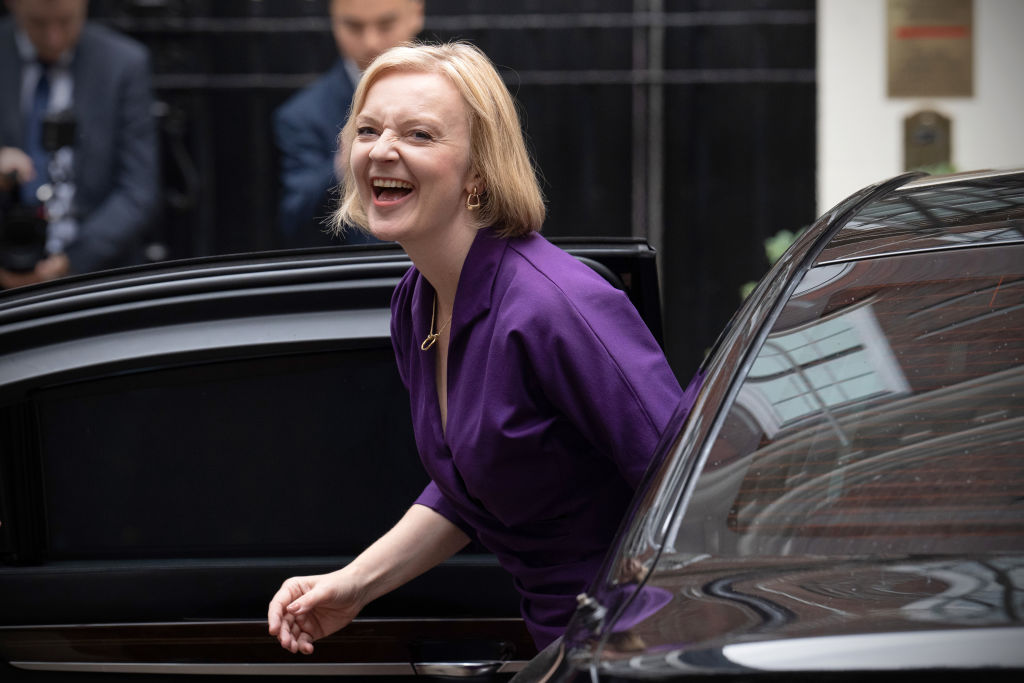
The Conservative And Unionist Party Elect Liz Truss As Their New Leader
Liz Truss is expected to announce an energy price cap freeze (Photo by Carl Court/Getty Images)

Our new prime minister already has a long list of detractors. Yet something many are failing to take notice of is how well she grasps the fundamental importance of generating economic growth.

This is the central issue facing the economy and it will determine how, ultimately, we pay for an intervention in the energy market. Without a decent underlying rate of growth, tax revenues simply don’t increase quickly enough to meet the demands for public services placed upon them.

Contrary to what the doom merchants claim, the UK has done comparatively well since the financial crisis. Between 2010 and 2019, the year before the pandemic, the UK economy grew at an average of 2 per cent a year. That’s not bad when compared to the Eurozone growth of 1.3 per cent a year. 

The difference is small in terms of percentage points. But in UK terms, that difference translates into some £15bn of additional output in a single year. In turn, that means at least £6bn extra in tax revenue. 

On the negative side, if growth averages only around 2 per cent, the increases in tax revenue associated with it are effectively already spoken for.

For example, regardless of who wins the next general election, we will have to spend more on defence and security. The war in Ukraine has crystallised a fundamental shift in international relations. Russia and China are now perceived as hostile powers. No government can ignore this issue.

In health, the obesity crisis will place major demands on the NHS. In deprived areas of the UK, over one in every three adults are estimated to be obese, a figure which has risen sharply in the past few years. More will have to be spent on treating the health issues linked to obesity, such as type 2 diabetes, high blood pressure, coronary heart disease and strokes.

Read more

‘Moron premium’ – Westminster turmoil has ‘cost taxpayers £35bn’ since 2022

Westminster Houses of Parliament under clear sky, iconic London landmark representing UK government and politics

And then, of course, is the “small” matter of interest payable on the national debt.  

For the financial year 2022/23, the Office for Budget Responsibility (OBR) originally projected this to be £83bn. To put this in context, this is half of the total budget of the Department of Health. In terms of the direct amount the department spends on the NHS itself, debt interest is already nearly two-thirds of the total.

Now respected City analysts are suggesting the OBR’s projections are too optimistic, and debt interest payments might easily top £100bn in the current financial year.

Politicians have become far too accustomed to funding programmes by issuing debt on which the interest rate was around 1 per cent, which was the stable rate for much of the previous decade. It had been gradually rising, but in the last few weeks, UK government debt yields have jumped sharply to around 3 per cent.

There is much talk of the energy price rises being equivalent to a war situation, in which very long dated government debt is issued to pay for the war. Simple arithmetic shows that at an interest rate of 3 per cent, a newly issued government bond repayable in fifty years’ time will involve the cumulative payment of one and a half times its value in interest.

These are all issues that will prove very difficult to turn around. At current growth rates, as far as public services are concerned, the proceeds are already spoken for. Growth has to be the absolute priority of the new prime minister taking office this week.

Read more

Brazen Burnham should call an election and put his ten year plan to the voters

Andy Burnham speaking to media outside 10 Downing Street with a crowd gathered.

Share this article

  • Facebook
  • X
  • LinkedIn
  • WhatsApp
  • Email

Similarly tagged content:

Sections

  • Opinion

Categories

  • Morning Wire Content
  • Opinion

Trending Articles

  • House prices in wealthy London boroughs fall by up to £300,000

  • As it happened: Miners fuel FTSE 100 recovery; oil jumps as Trump claims Strait of Hormuz

  • City law firm sues prominent Emirati business family

  • Amanda Blanc has worked her magic at Aviva

  • As it happened: FTSE 100 rallies after JD Sports drags on blue chips; oil jumps again

More from Morning Wire

  • ‘Moron premium’ – Westminster turmoil has ‘cost taxpayers £35bn’ since 2022

    Politics
    Westminster Houses of Parliament under clear sky, iconic London landmark representing UK government and politics
  • Brazen Burnham should call an election and put his ten year plan to the voters

    Politics
    Andy Burnham speaking to media outside 10 Downing Street with a crowd gathered.
  • Mahmood called for banker bonus tax to fix youth unemployment 

    Banking
    Shabana Mahmood wearing a stylish black jacket, embodying professional elegance in a business setting
  • What Burnham could learn from BP’s pragmatism

    Energy
    BP logo and green lettering on a light background.
  • Tories say households could save £540 a year by scrapping net zero

    Energy
    Kemi Badenoch speaks, gesturing with hands, while Claire Coutinho listens intently at a table with coffee cups.
  • Get ready for new energy minister Miatta Fahnbulleh’s war on London’s drivers

    Opinion
    Miatta Fahnbulleh, director of New Economics Foundation, smiling and holding red documents, wearing a black blazer.
  • Ofgem targets speculative AI data centres to free up Britain’s energy grid

    Tech
    2024 was a transformational year for GlobalData.
  • Industry bodies call on Burnham to bring down energy bills to fire up growth

    Energy
    North Sea oil terminal with tankers, storage tanks, and cranes under a cloudy sky, highlighting energy industry infrastruc...
MorningWire

Independent European business, markets and political news for decision-makers.

Morning Briefing

Europe

  • Germany
  • France
  • EU Institutions
  • Europe

Business

  • Markets
  • Business
  • Economy
  • Regulation
  • Competition
  • Public Affairs

Editorial

  • Opinion
  • Editorial Policy
  • Corrections
  • Contact

Company

  • About Morning Wire
  • Privacy Policy
  • Terms of Use
  • Cookie Policy
© 2026 Morning Wire Ltd · Published by Morning Wire Media, Bahnhofstrasse 65, 8001 Zürich, Switzerland
Privacy · Terms · Cookies · Facebook