
How will global disruption affect small cap stocks?

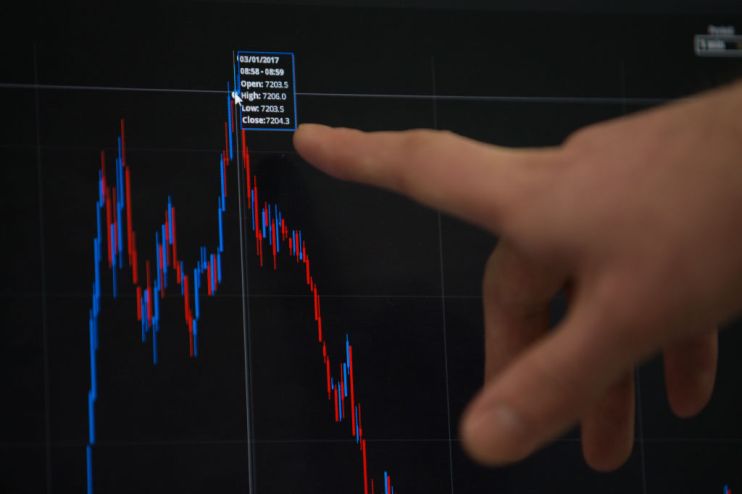
Small capitalisation stocks, or small caps, can offer the potential for higher returns compared with investing in larger companies, although they are not without risks. As with all equities, investors may not get back the amount they originally invested.
As well as the potential for higher returns, investors are also being drawn to the sector for another reason – the ability to navigate the increasingly disruptive environment in which we live.
Larger, older and more cumbersome companies are not always best equipped to adapt to rapid change. Small caps, in contrast, can be more nimble and are often the driving force behind disruption, benefitting from the trend, rather than being a victim of it.
Small companies, operating in relatively large and mature markets, also have the capacity to grow disproportionately from a low revenue and profits base. Moreover, it is often only by investing in small companies that investors can gain exposure to a new technology or a market.
The disruptive power of small caps
The world is changing fast. Old industries are under considerable pressure with innovation and technological advances moving at an unprecedented pace. New competitors with superior technology can quickly displace established companies that have dominated their sector for decades. The relentless growth of online retailer Amazon and the decline of US shopping malls clearly demonstrates this trend.
Although not immune to it, small-cap companies can benefit from this disruption. They are less burdened with layers of management and there is less fear of losing sales volume or market share by introducing new products, a major issue for well-established large corporations.
The following examples illustrate how some smaller companies have taken advantage of their size to adapt to disruptive market forces.
Responsive to changing demand – Musashi Seimitsu
Japanese auto parts maker Musashi Seimitsu demonstrates why being nimble in the face of changing demand is critical when facing disruption.
The company revamped its product offering by developing parts to be used in electric motors. This followed the realisation that the shift to electric vehicles could lead to reduced demand for its transmission and engine products (because electric cars require fewer parts than internal combustion engine vehicles).
Read more:
– Five things every investor needs to know about disruption
– Is the financials sector priced for disruption?
- For more on how disruptive companies could affect your investments visit Schroders’ insights.
Consequently, when electric vehicles become more prevalent, it should be able to respond quickly to the changing demand by ramping up the production of electric vehicle parts.
Flexible producer – Albioma
French independent renewable energy supplier Albioma operates in French oversees territories and a few developing countries. It has a long-term supply contract with EDF (France’s state-owned electricity company) to provide electricity in several of those territories.
Albioma’s power plants are designed to operate on a variety of fuels. This could stand it in good stead following President Macron’s announcement that France will cease to use coal to produce electricity after 2022, with a push to replace it with biomass (organic material used as fuel).
The flexibility of the company’s plants means that the change in energy source will require less capital expenditure than large power companies will be burdened with when they convert their coal-fired plants.
Reinvented as an enabler of disruption – Chroma
Just as pick and shovel sellers, rather than gold miners, were the ones who made fortunes in California’s 19th century gold rush, companies can also be enablers of disruption, rather than producers of disruptive products.
Taiwanese electronic testing and measurement equipment manufacturer Chroma ATE used to produce testing equipment for traditional power electronics. However, as new technologies have emerged, it has substantially reinvented itself.
Over the past 10 years, it has started making testers for wireless solution, LED lighting and semiconductor companies. In the last three years, electric vehicles have become the key driver of its growth and the company now sells testing machines to the largest global electric vehicle battery producers.
It also enables facial recognition technology on smartphones by selling testers to companies in both the Apple and Android supply chains.
Spread the risk
Although the small-cap sector is large and varied, smaller companies have a higher degree of specific risks at an individual stock level. Dependency on one product or market, a small number of key executives, higher representation in cyclical sectors and typically more limited options for financing are some of the key risks for small companies.
Diversification is one way to mitigate these stock-specific risks, as is a thorough understanding of the strengths, risks and vulnerabilities of individual companies.
Any references to securities are for illustrative purposes only and not a recommendation to buy and/or sell.
Important Information: The views and opinions contained herein are of those named in the article and may not necessarily represent views expressed or reflected in other Schroders communications, strategies or funds. The sectors and securities shown above are for illustrative purposes only and are not to be considered a recommendation to buy or sell. This communication is marketing material.
This material is intended to be for information purposes only and is not intended as promotional material in any respect. The material is not intended as an offer or solicitation for the purchase or sale of any financial instrument. The material is not intended to provide and should not be relied on for accounting, legal or tax advice, or investment recommendations. Reliance should not be placed on the views and information in this document when taking individual investment and/or strategic decisions. Past performance is not a guide to future performance and may not be repeated. The value of investments and the income from them may go down as well as up and investors may not get back the amounts originally invested. All investments involve risks including the risk of possible loss of principal. Information herein is believed to be reliable but Schroders does not warrant its completeness or accuracy. Reliance should not be placed on the views and information in this document when taking individual investment and/or strategic decisions. The opinions in this document include some forecasted views. We believe we are basing our expectations and beliefs on reasonable assumptions within the bounds of what we currently know. However, there is no guarantee than any forecasts or opinions will be realised. These views and opinions may change. Issued by Schroder Investment Management Limited, 1 London Wall Place, London, EC2Y 5AU. Registration No. 1893220 England. Authorised and regulated by the Financial Conduct Authority.