Skip to content
Sunday 13 September 2026London --:--Frankfurt --:--Zurich --:--
NewslettersSearchEN · DE · FR
MorningWire

European business, markets and politics

FTSE 100
10,650.44
+0.39%
DAX
25,568.56
+0.82%
CAC 40
8,179.77
+0.78%
STOXX 50
6,325.13
+0.90%
  • Europe
  • Markets
  • Business
  • Economy
  • Regulation
  • Politics
  • Opinion
More
GermanyFranceEU InstitutionsCompetitionPublic AffairsBankingTechnologyEnergy
  • Germany
  • France
  • Europe
  • Markets
  • Business
  • Economy
  • Regulation
  • Politics
  • Opinion
  • DE
Wednesday 15 December 2021 6:00 am  |  Updated:  Tuesday 14 December 2021 5:39 pm

Human rights are designed to be invisible but we must not take them for granted

By: Susie Alegre

Add as a preferred source on Google
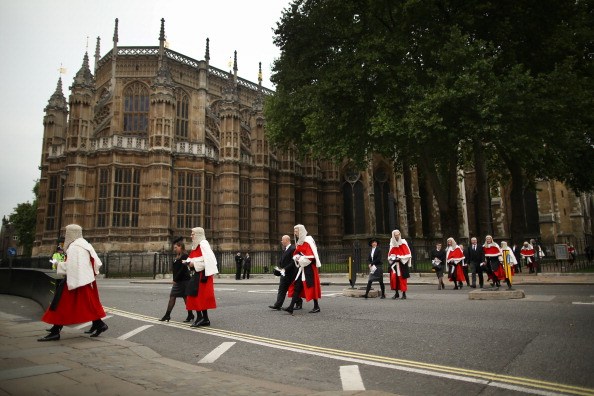
Judges Procession To Westminster Abbey To Mark The Start Of The Legal Year

Human rights laws are a perennial bugbear of governments of all stripes for a reason – they limit what they can do in some areas and oblige them to act in others, regardless of party politics.  But if you find yourself asking “What have human rights ever done for me?” it may be because human rights law has, quietly and unobtrusively, protected you so effectively that you have never felt your rights to be under threat.

You probably only hear about human rights in the media when they are used to protect people you don’t like or don’t care much about – not people like you. But human rights law, domestic and international, underpins things we often take for granted in this country – the rule of law, democracy, a free media – and it is a bright thread through our legal system, laws and institutions, even when it is not explicit.  Human rights law is not a standalone document, it is the reason we have laws that govern our daily interactions with each other and with the State, and it informs the way those laws are applied to protect everyone.

In the pandemic, governments around the world have had to make difficult decisions, limiting some rights to protect others.  Covid threatens our right to life which justifies lawful and proportionate restrictions on some of our freedoms to address the very real threat. But human rights law also helps to focus the mind on what laws and measures are really necessary and proportionate to protect health.  And it ensures that when we find ourselves in need of care, that care must be delivered with dignity.

If you value your safety and security, human rights law puts obligations on governments to protect us from criminal acts that threaten our lives and our dignity.  The European Court of Human Rights found that a failure to legislate adequately to prohibit rape, for example, was a violation of a State’s responsibility to protect against inhuman and degrading treatment.  And the Human Rights Act in the UK has been used to clarify how police must act to protect the lives of people they know are under threat and the duty of local authorities to protect children at risk of harm.

We are often told that human rights law prevents international co-operation to combat crime or terrorism because it says we cannot hand people over to States where their rights would be destroyed.

But it is precisely the respect for human rights law that allows for enhanced cooperation between States who protect rights adequately. The same applies for transnational business which thrive in an environment with the kind of legal certainty that allows companies to know what they can and, crucially, cannot do across borders and to be confident that they can rely on the rule of law.

Most countries have incorporated international human rights standards into their legal DNA through written constitutions that are hard to change in recognition of the fact that human rights protections are so fundamental that they should not be exposed to the ebb and flow of politics.

It is not only the declaration of rights that matters, it is the way they apply in practice.

For human rights to work for anyone, they have to work for everyone. If you don’t think they matter to you, it is because you have the luxury of living under the often invisible protection of human rights law.

Read more

Workers’ rights overhaul pushes Employment Tribunal to breaking point

LONDON, ENGLAND - OCTOBER 15: Commuters cross London Bridge on October 15, 2024 in London, England. Estimates for the September 2024 payroll indicate that the number of employees rose by 0.4% compared with September 2023, a rise of 113,000 employees. (Photo by Dan Kitwood/Getty Images)

Share this article

  • Facebook
  • X
  • LinkedIn
  • WhatsApp
  • Email

Similarly tagged content:

Sections

  • Opinion

Categories

  • Opinion

Trending Articles

  • Wetherspoon boss: ‘Not up to Burnham’ to choose who is on the high street 

  • Badger Beer maker Hall & Woodhouse doubles profit ahead of tie-up with James May

  • Four interest rate hikes loom despite surprise economic growth

  • Primark sales slip as owner dresses up retailer for demerger

  • Barclays faces legal scrutiny over role in £90m ‘Ponzi scheme within a Ponzi scheme’

More from Morning Wire

  • Workers’ rights overhaul pushes Employment Tribunal to breaking point

    Legal
    LONDON, ENGLAND - OCTOBER 15: Commuters cross London Bridge on October 15, 2024 in London, England. Estimates for the September 2024 payroll indicate that the number of employees rose by 0.4% compared with September 2023, a rise of 113,000 employees. (Photo by Dan Kitwood/Getty Images)
  • Exclusive: City giants tighten trans policies

    Business
    Progress Pride flag flying on a pole against a modern building, symbolizing trans policies in city firms
  • Lammy’s cohabitation rules threaten unmarried couples with ‘horrendous’ court costs

    Legal
    Foreign Secretary David Lammy is set to hold talks with officials about Iran and Israel.
  • Ten bold ideas to fire up the British economy

    Economics
    Morning Wire
  • Tesco, B&Q and Whitbread scolded in minimum wage crackdown

    Retail
    A man with a beard and dark suit holding a notebook, standing in front of a building with windows.
  • Trans charity ‘misleading employers’ with company guidelines, campaigners claim

    Business
    Two women, one with long blonde hair and glasses, the other with dark curly hair, raise their arms in triumph.
  • Exclusive: Easyjet shareholder rights to be watered down under Apollo deal

    Aviation
    EasyJet airplane at airport terminal with passengers boarding, representing airline industry and travel news updates
  • Jamie Vardy bags Bundesliga rights as he steps up streaming war with Neville and Lineker

    Sport Business
    Man in a green hoodie speaking into a microphone, with a 5000 sign in the background.
MorningWire

Independent European business, markets and political news for decision-makers.

Morning Briefing

Europe

  • Germany
  • France
  • EU Institutions
  • Europe

Business

  • Markets
  • Business
  • Economy
  • Regulation
  • Competition
  • Public Affairs

Editorial

  • Opinion
  • Editorial Policy
  • Corrections
  • Contact

Company

  • About Morning Wire
  • Privacy Policy
  • Terms of Use
  • Cookie Policy
© 2026 Morning Wire Ltd · Published by Morning Wire Media, Bahnhofstrasse 65, 8001 Zürich, Switzerland
Privacy · Terms · Cookies · Facebook