Skip to content
Thursday 20 August 2026London --:--Frankfurt --:--Zurich --:--
NewslettersSearchEN · DE · FR
MorningWire

European business, markets and politics

FTSE 100
10,721.23
-0.21%
DAX
26,007.67
-0.32%
CAC 40
8,505.90
+0.05%
STOXX 50
6,444.41
0.00%
  • Europe
  • Markets
  • Business
  • Economy
  • Regulation
  • Politics
  • Opinion
More
GermanyFranceEU InstitutionsCompetitionPublic AffairsBankingTechnologyEnergy
  • Germany
  • France
  • Europe
  • Markets
  • Business
  • Economy
  • Regulation
  • Politics
  • Opinion
  • DE
Tuesday 15 October 2019 8:57 pm

‘I was suffering with OCD, which was horrific’: Former England scrum-half Kyran Bracken opens up over his mental health problems

By: Felix Keith

Add as a preferred source on Google
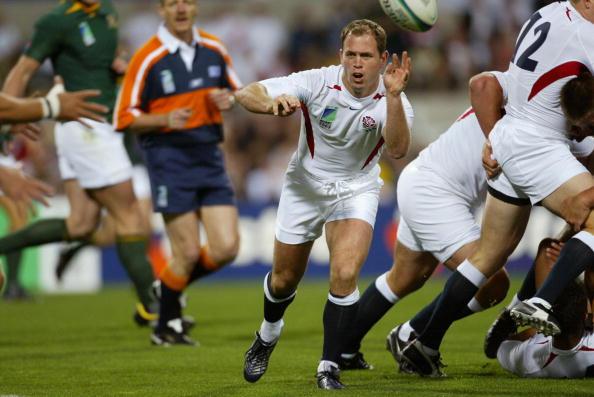
PERTH, AUSTRALIA: England's scrumhalf Kyran Bracken (C) passes the ball during the Rugby World Cup Pool C match between England and South Africa at Subiaco Oval in Perth, 18 October 2003. AFP PHOTO/Greg WOOD (Photo credit should read GREG WOOD/AFP/Getty Images)
Bracken won 51 caps for England as a scrum-half between 1993 and 2003 (Getty Images)

Kyran Bracken played professional rugby for 14 years. As a scrum-half he won 51 caps for England and was part of the famous World Cup-winning squad of 2003. 

That much is well documented. What wasn’t known, until now, was that he has struggled with mental health problems. But 13 years on from his retirement, Bracken has come forward to tell his story in the hope of starting a dialogue about what he feels is a taboo subject in rugby.

“I feel a bit weak for having never said anything,” Bracken tells Morning Wire “I feel that the reason for never speaking was the taboo and the admission of weakness. 

Read more: Why the refereeing allocation might favour Australia in England’s quarter-final

“As the years go by, you always think: ‘I wish I was brave enough to tell everyone my story’. It’s got to the stage where my kids are growing up and I haven’t told them.

“I should say that someone who has played for their country, won a World Cup, won Dancing on Ice and done all these nice things can struggle as well.” 

Struggling to sleep

It all started with adrenaline rushes. Not just where you might expect them – on the pitch – but throughout days off. He started to have bouts of nausea. Then difficulty sleeping. Bracken began training after just a few hours of sleep as his symptoms spiralled into what he now knows as obsessive-compulsive disorder (OCD).
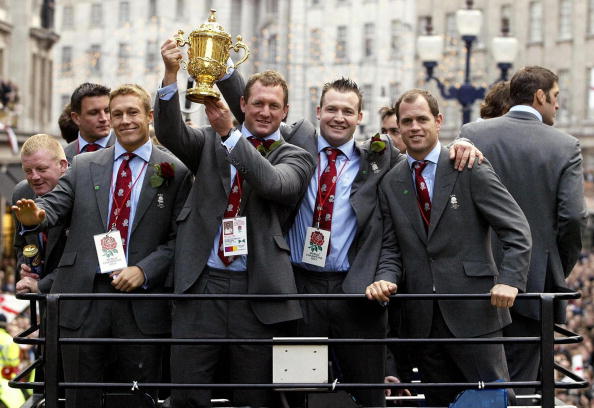
LONDON, UNITED KINGDOM:  England's (front left-right) Jonny Wilkinson, Richard Hill, Mark Regan and Kyran Bracken ride the open-top bus with the Webb Ellis Cup during the Victory Parade in London, 08 December, 2003. Later the England Rugby World Cup winners were travelling to receptions at Buckingham Palace and Downing Street.   AFP PHOTO/DAVID DAVIES/WPA POOL  (Photo credit should read DAVID DAVIES/AFP/Getty Images)
Bracken (right) was part of the squad which won the Rugby World Cup in 2003 (Getty Images)

“I was suffering from OCD, which was horrific,” he says. “It was only when I started struggling to sleep and creating sleeping rituals to get to sleep, taking sleeping tablets and going to the toilet all night, that suddenly the OCD became a controlling factor over everything. I didn’t know it was OCD at the time, but suddenly it started with very invasive thoughts and became very weird. That was the tail end, when I was at my worst.

“A few years before that, the signs were coming. If I’d seen the right people they probably would have said: ‘You’re suffering from anxiety and before it gets any worse you need to get medication and get help, CBT (cognitive behavioural therapy)’. But I was treating the symptoms more than anything.”

Isolated and embarrassed

Bracken felt isolated and embarrassed, unable to share his struggles with his team-mates and coaches because he thought they would be taken as a sign of weakness.

Read more

Travelodge boss quits amid backlash over hotel sexual assault

Travelodge London Central Elephant & Castle sign with a blurred red double-decker bus in the background

“It was the World Cup year, 2003, when all the pressure was building up,” he explains. “Would I be fit? I had a bad back and once the sleep unfolded, taking sleeping tablets, being all over the place, I found it really hard to cope.”
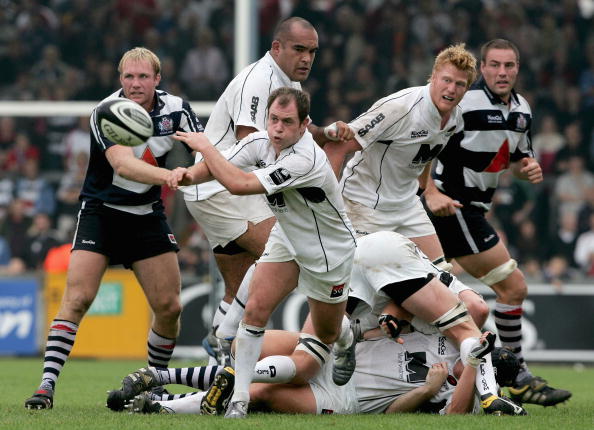
BRISTOL, UNITED KINGDOM - OCTOBER 16: Kyran Bracken of the Saracens passes the ball during the Guinness Premiership match between Bristol and Saracens at the Memorial Ground on October 16, 2005 in Bristol, England.  (Photo by Tom Shaw/Getty Images)
Bracken believes the macho nature of rugby makes it difficult for players to speak about mental health (Getty Images)

Bracken received help through the Rugby Players’ Association, was prescribed medication as well as undergoing CBT and counselling, but his secret stayed under wraps due to the macho culture of rugby.

“You look at the guys who go out onto a rugby pitch: they strap everything up, it’s gladiator time,” he says. “No matter what I’m going through, I’m going to give my best and dominate you. It’s about competing against all the pain. You’re going to dominate and you’re going to win. So any admission of pain or weakness is something you would never be used to sharing.” 

Coping better

Things are improving. Bracken says “one or two players have phoned me suffering with the same sort of thing”, while 10 per cent of Premiership players phone the RPA’s confidential helpline to discuss mental problems each year. 

Bracken estimates that he struggled with OCD for 10 years – five while playing and five post-retirement – but now, aged 47 and with his timber frame company, speaking arrangements and coaching at St Albans School to keep him busy instead of playing, he is coping better.

LONDON, ENGLAND - MARCH 12:  (L-R) Kyran Bracken, Chico Slimani and Colin Ratushniak attend a photocall to announce the tour of Celebrities On Ice at The Ice Bar on March 12, 2013 in London, England.  (Photo by Ben Pruchnie/Getty Images)
Bracken (left) won the 2007 edition of Dancing On Ice (Getty Images)

“As a rugby player, you always want the quick fix,” he says. “You think: bandage it up, strap it up. But when it comes to OCD you need to be patient and try different things to alleviate the stress that it brings. 

“It’s about retraining the mind and accepting those intrusive thoughts and trying to break the routines and rituals of trying to sleep and going to the toilet.

“There’s no magic wand – it takes a long time to get it right. It is probably one of the hardest disorders to treat but it is possible to get better.”

Main image credit: Getty Images

Read more

Exclusive: Rugby League monitoring Henry Pollock amid £1m Hearn wage demands

A young man with blonde hair and a dark shirt, clenching his fist and smiling, likely celebrating or cheering.

Share this article

  • Facebook
  • X
  • LinkedIn
  • WhatsApp
  • Email

Similarly tagged content:

Sections

  • Life&Style

Categories

  • Sport

Related Topics

  • Rugby Union

Trending Articles

  • Jobless Banquet: Youth unemployment surge ‘sends Neets to KFC’

  • City law firm sues prominent Emirati business family

  • Amanda Blanc has worked her magic at Aviva

  • As it happened: Miners fuel FTSE 100 recovery; oil jumps as Trump claims Strait of Hormuz

  • House prices in wealthy London boroughs fall by up to £300,000

More from Morning Wire

  • Travelodge boss quits amid backlash over hotel sexual assault

    Hospitality
    Travelodge London Central Elephant & Castle sign with a blurred red double-decker bus in the background
  • Exclusive: Rugby League monitoring Henry Pollock amid £1m Hearn wage demands

    Sport Business
    A young man with blonde hair and a dark shirt, clenching his fist and smiling, likely celebrating or cheering.
  • Will the Nations Championship financially underdeliver for in-need Fiji?

    Sport Business
    Getty Images logo displayed prominently on a digital screen, symbolizing the brands visual content prowess and media prese...
  • What can the Rugby World Cup learn from US nailing of Fifa World Cup?

    Sport Business
    Getty Images logo displayed on a digital screen against a blurred background, highlighting the brands global presence
  • Sorry Hearn, Northampton Saints idiots if they pay Pollock £1m

    Sport Business
    GettyImages 2282147422
  • Compass Pathways to Announce Second Quarter and First Half 2026 Financial Results on August 5, 2026

    Business Wire
  • Politicians call for easing of private school stranglehold on elite rugby

    Sport Business
    Getty Images logo on a digital screen, representing the renowned stock photo agency in a business news context.
  • Saracens and Harlequins embracing athletics and hockey smart move for rugby

    Sport Business
    Teams and flags on a blue hockey pitch before a match, with a stadium full of spectators.
MorningWire

Independent European business, markets and political news for decision-makers.

Morning Briefing

Europe

  • Germany
  • France
  • EU Institutions
  • Europe

Business

  • Markets
  • Business
  • Economy
  • Regulation
  • Competition
  • Public Affairs

Editorial

  • Opinion
  • Editorial Policy
  • Corrections
  • Contact

Company

  • About Morning Wire
  • Privacy Policy
  • Terms of Use
  • Cookie Policy
© 2026 Morning Wire Ltd · Published by Morning Wire Media, Bahnhofstrasse 65, 8001 Zürich, Switzerland
Privacy · Terms · Cookies · Facebook