If Chequers falters, the answer to Brexit is the EEA, not no-deal

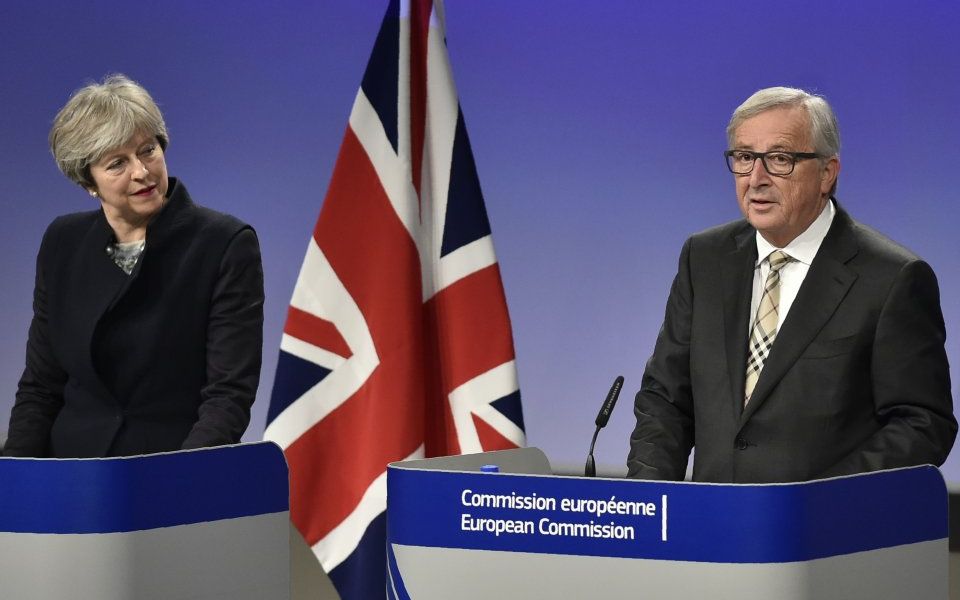
The Prime Minister has come out fighting this week, announcing both to the Conservative party and to the country that it is her Chequers deal for Brexit, or no deal at all.
Her efforts should be supported. Brexit requires a pragmatic, economically realistic, and constitutionally secure solution, so I support the government’s endeavours to reach a negotiated settlement.
However, the solution must also pass through the complex arithmetic in the House of Commons – and it is no secret that Chequers faces significant opposition.
Read more: Mark Carney: Chequers-style Brexit could 'bounce' UK economy by £16bn
My Brexiteer colleagues have been making a lot of noise during the last few weeks in their criticisms of the Prime Minister’s approach, but what was notable was their failure to produce their promised full coherent alternative plan to Chequers.
The Economists for Free Trade put out a paper last week, which was ridiculed and dismantled by anyone who had a passing knowledge of international trade or economics.
Their prediction that a no-deal outcome would lead to a seven per cent increase in GDP over 15 years was based on an assumption that Brexit will lead to no friction between the UK and EU, and their claim that WTO rules make trade barriers illegal is laughable.
As John Maynard Keynes once said, remorseless logic applied to initial false assumptions leads to Bedlam.
Meanwhile, the Economic Research Group (ERG) of hard-Brexit MPs has also briefed that its own alternative (supposedly modelled on Canada) was not produced, as it would reveal too much detail.
However, if the leaked details we did hear – such as a “Star Wars” missile shield and a Falklands Expeditionary Force – were a taste of the level of economic analysis we can expect when this plan is eventually published, one should not anticipate too much insight.
The ERG did publish a paper on Northern Ireland, which provided the usual untested technological solutions to the border.
I am reminded of the findings of the Northern Ireland Affairs Committee – chaired by a Brexit voter – in its report on this issue: “We have, however, had no visibility of any technical solutions, anywhere in the world, beyond the aspirational, that would remove the need for physical infrastructure at the border.”
So my message to colleagues is clear: if you chuck Chequers or any negotiated settlement, Canada will not be the answer.
But there is a realistic alternative if the negotiations with the EU fail: joining the European Free Trade Association (Efta) and remaining in the European Economic Area (EEA).
Joining Efta is an off-the-shelf model that has already been tested. It would allow the UK to remain in most parts of the Single Market, but be removed from the more controversial parts of EU membership, such as the pursuit of an ever closer union and the common justice and home affairs policies.
Indeed, it would be a return to the common market principles that Margaret Thatcher advocated when the UK led the creation of the Single Market.
Despite these obvious benefits, numerous myths about both Efta and the EEA continue to circulate.
For example, it is often said that EU immigration rules are the same for Efta countries. This is not true. The EEA Agreement is predicated on free movement of workers and strengthening trade, not the concept of EU citizenship.
Furthermore, Articles 112 and 113 of the EEA Agreement can be used as an emergency brake on immigration – similar to what the UK was offered as part of David Cameron’s renegotiation before the Referendum.
For Efta countries, the EEA Agreement is upheld by the separate Efta Court, rather than the Court of Justice of the EU (CJEU). While the Efta Court will not seek to diverge, it can and has if necessary.
Indeed, the CJEU regularly follows the precedent in Efta Court case law, which often hears novel cases first and is the only court of general jurisdiction whose jurisprudence is regularly taken into account by the European Court of Justice.
In short, this would not be a case of accepting EU laws and rulings without representation, as has been suggested.
Finally, there is the charge that Efta countries are rule-takers. However, the “rules” in question are those which our exporters will need to comply with to trade with the EEA in any situation.
Efta member states have the right to participate in expert groups and committees of the European Commission, to submit comments on upcoming EU legislation, and have a “right of reservation” to block any EEA law. They follow the rules, yes, but they also get a say in them.
As the search for a future relationship with the EU that protects our economy and prevents a hard border in Ireland continues, we need to keep an open mind.
If Chequers falters and a negotiated settlement with the EU is not available, the Efta model will merit far wider attention than it has received so far.
Read more: To win the Brexit prize, ditch Chequers and go back to the drawing board