Skip to content
Friday 21 August 2026London --:--Frankfurt --:--Zurich --:--
NewslettersSearchEN · DE · FR
MorningWire

European business, markets and politics

FTSE 100
10,748.16
+0.04%
DAX
25,983.04
0.00%
CAC 40
8,453.09
0.00%
STOXX 50
6,422.06
0.00%
  • Europe
  • Markets
  • Business
  • Economy
  • Regulation
  • Politics
  • Opinion
More
GermanyFranceEU InstitutionsCompetitionPublic AffairsBankingTechnologyEnergy
  • Germany
  • France
  • Europe
  • Markets
  • Business
  • Economy
  • Regulation
  • Politics
  • Opinion
  • DE
Wednesday 12 March 2025 5:21 am  |  Updated:  Tuesday 11 March 2025 12:09 pm

If crises are the test of a nation, Western Europe is failing

By: Paul Ormerod

Add as a preferred source on Google
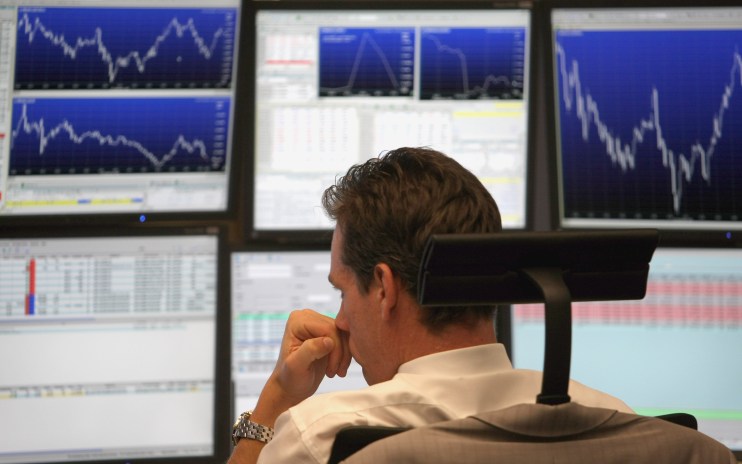
FRANKFURT AM MAIN, GERMANY - SEPTEMBER 30: A trader looks on during a trading session on the floor of Frankfurt stock exchange on September 30, 2008 in Frankfurt am Main, Germany. Due to the weakness of the U.S. economy the German stock market remains volatile. The U.S. stocks took a nosedive in reaction to the global credit crisis and as the U.S. House of Representatives rejected the $700 billion rescue package. (Photo by Ralph Orlowski/Getty Images)
(Photo by Ralph Orlowski/Getty Images)

The financial crisis and the pandemic have shown how Western Europe deals with crises. And it’s not pretty, writes Paul Ormerod

Karl Marx certainly had the ability to encapsulate a complex phenomenon in a pithy and memorable paragraph.  

In a pamphlet on the Crimean War of the 1850s he wrote: “The redeeming feature of war is that it puts a nation to the test. As exposure to the atmosphere reduces all mummies to instant dissolution, so war passes supreme judgement upon social systems that have outlived their vitality”.

In modern jargon, he is describing the effect of a major shock on a socio-economic system which lacks resilience. An economy may continue to function in benign external conditions and even appear healthy. But a large shock rapidly exposes any weaknesses in the ability of the economy to adapt and evolve.

The nations of Western Europe have now experienced two such shocks in less than 20 years. In the late 2000s we had the financial crisis. In the early 2020s lockdown and the pandemic.  

And now there is the third, namely the distinct possibility that America will no longer defend Europe.

Recovery after the 2008 financial crisis

The recovery from the financial crisis in Western Europe varied across countries but overall it was poor. Even by 2015, six years after the end of the crisis, several countries had still not regained their 2007 levels of GDP, the year immediately before the crisis. For the most part, however, growth resumed in 2010 and the drops in output in 2008/09 were recovered. In the UK, for example, GDP was some seven per cent higher in 2015 than it was in 2007.

But taking the 2007-15 period as a whole, annual average growth rates were distinctly anaemic. The low growth rates have continued to the present day. The final country to regain its pre-financial crisis output level, Italy, only did so in 2023.  

In the UK, growth since 2007 has averaged just one per cent a year. This contrasts very sharply with the 2.7 per cent achieved from the mid-1950s to the mid-2000s. Given the rise in the population, the per capita increase post-pandemic is in fact only just above zero.

Read more

Europe has made a ‘major mistake’ on slow electrification, IEA chief warns 

UK industrial electricity prices are the highest in the G7 and 46 per cent above the average of the International Energy Agency.

Recovery after the 2020 pandemic

The dramatic, adverse consequences of the second shock – lockdowns during the pandemic – have become more and more apparent.  

Just to give one example, in the calendar years 2017-19, immediately before the pandemic, the UK government borrowed around £50bn each year. This soared to £273bn in 2020, followed by a further £166bn in 2021. This massive increase in indebtedness continues to hold the public finances in a vice-like grip.

It is plain for all to see that Western Europe as a whole has performed very poorly in response to the major shocks of the financial crisis and the Covid-19 pandemic. For decades after the Second World War, these countries followed what we might usefully describe as the social democratic welfare model.  

Regardless of which political parties were in power, the role of the state in the economy and society was very much larger than it was before the 1940s and taxation was necessarily much higher in order to finance the activities of the state.

This model worked well for many years and delivered prosperity on an unprecedented scale. But, in retrospect, it was already beginning to falter by the time of the financial crisis. 

The whole thrust of policy was towards less and less risk taking, and to more and more regulation, introduced with the aim of preventing failure. Of course, intentions are not the same as outcomes, and the financial crisis exposed the problems with this approach.

It is hard to escape the conclusion that Marx’s words, originally directed at Tsarist Russia, apply to Western Europe today. We need to embrace innovation and risk much more positively, just as the Americans have done. And they have ridden the crises much more effectively.

Paul Ormerod is an honorary professor at the Alliance Business School at the University of Manchester and an economist at Volterra Partners LLP

Read more

Britain needs a Marshall Plan for civic life

Harry Truman, smiling in a fedora, and Winston Churchill in a bowler hat, seated together in a car.

Share this article

  • Facebook
  • X
  • LinkedIn
  • WhatsApp
  • Email

Similarly tagged content:

Sections

  • Opinion

Categories

  • Opinion
  • Business

People & Organisations

  • Covid-19 pandemic
  • European economy
  • financial crisis
  • growth
  • Karl Marx
  • UK economy
  • UK GDP

Trending Articles

  • Jobless Banquet: Youth unemployment surge ‘sends Neets to KFC’

  • Amanda Blanc has worked her magic at Aviva

  • City law firm sues prominent Emirati business family

  • House prices in wealthy London boroughs fall by up to £300,000

  • As it happened: Miners fuel FTSE 100 recovery; oil jumps as Trump claims Strait of Hormuz

More from Morning Wire

  • Europe has made a ‘major mistake’ on slow electrification, IEA chief warns 

    Energy
    UK industrial electricity prices are the highest in the G7 and 46 per cent above the average of the International Energy Agency.
  • Britain needs a Marshall Plan for civic life

    Opinion
    Harry Truman, smiling in a fedora, and Winston Churchill in a bowler hat, seated together in a car.
  • Healey faces £24bn spending squeeze as inflation puts tax rises in play

    Economics
    Bank of England headquarters in 2025, showcasing modern architecture and iconic London skyline in the background.
  • Iran war could ‘halt growth’ across UK economy 

    Economics
    Andy Burnham, Mayor of Greater Manchester, in a dark suit and glasses, listening intently at a wooden table.
  • IMF warns Bank of England against cutting interest rates

    Economics
    IMF Chief Kristalina Georgieva issues caution to Bank of England amid economic concerns
  • Bank of England warns Burnham of UK economy’s ‘big issue’

    Economics
    Bank of England Governor Andrew Bailey said the future of interest rates was "more uncertain".
  • TOURISE and Oxford Economics Release New Global Report on Tourism Resilience in an Era of Permanent Disruption

    Business Wire
  • Healey revives ‘price-gouging’ threat as cost of living options narrow

    Politics
    Chancellor John Healey smiling, wearing a navy suit, white shirt, and red tie.
MorningWire

Independent European business, markets and political news for decision-makers.

Morning Briefing

Europe

  • Germany
  • France
  • EU Institutions
  • Europe

Business

  • Markets
  • Business
  • Economy
  • Regulation
  • Competition
  • Public Affairs

Editorial

  • Opinion
  • Editorial Policy
  • Corrections
  • Contact

Company

  • About Morning Wire
  • Privacy Policy
  • Terms of Use
  • Cookie Policy
© 2026 Morning Wire Ltd · Published by Morning Wire Media, Bahnhofstrasse 65, 8001 Zürich, Switzerland
Privacy · Terms · Cookies · Facebook