If defence is a priority, government must be honest about who pays

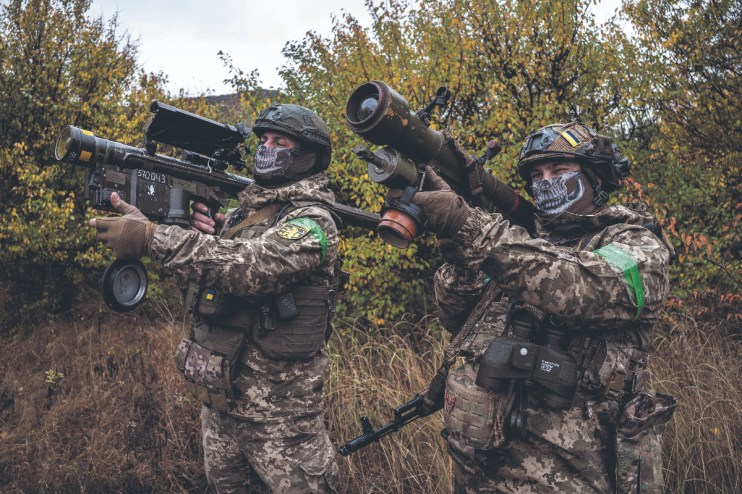
America has made clear that Europe must stand on its own two feet when it comes to national security. But defence ambitions must be reconciled with balance sheets already stretched to their limits, says Helen Thomas
The largest build-up of American military assets in the Middle East for two decades alongside last week’s Munich Security Conference have refocused minds on hard power. The era of cheap security guarantees is over but the threat to global peace is not.
US Secretary of State Marco Rubio used the Munich stage to deliver a blunt message: “global institutions… must be reformed”. The UN, he argued, “was powerless to constrain the nuclear program of radical Shia clerics in Tehran. That required 14 bombs dropped with precision from American B-2 bombers.” Washington wants a “reinvigorated alliance” with Europe to counter global threats. The implication was clear: Europe must shoulder more of the burden.
The problem is not political rhetoric. It is arithmetic.
Western governments are emerging from the pandemic with historically high debt burdens. Emergency spending packages, furlough schemes and energy subsidies were financed at ultra-low interest rates that no longer exist. Now borrowing costs are structurally higher, growth is anaemic and fiscal headroom is thin. Defence ambitions must be reconciled with balance sheets already stretched to their limits.
The UK faces this tension in particularly stark form. Senior military figures have stepped up pressure on the government to move faster and go further. According to reports in the Sunday Times, top Nato officials have warned the ministry of defence that the UK “risks being relegated to the bottom tier of the Nato league tables”.
The comparison with Poland is uncomfortable. Warsaw has doubled the proportion of GDP it spends on defence in four years. Britain, by contrast, has slipped from being Nato’s third-largest spender to 12th over the same period.
This slide comes despite Sir Keir Starmer signing up to last year’s Nato summit headline ambition of spending five per cent of GDP annually on defence. Yet even that figure conceals nuance. The five per cent is split between 3.5 per cent for “core defence” and 1.5 per cent for a broader shopping list: protecting critical infrastructure, defending networks, civil preparedness, innovation and strengthening the defence industrial base.
There is an obvious temptation for sleight of hand. Governments can reclassify existing spending under the softer 1.5 per cent heading. Cybersecurity, infrastructure resilience and industrial subsidies may be strategically important but they are not the same as tanks, ships and trained personnel. The political optics of hitting five per cent may prove easier than the fiscal reality of funding it.
Across the Channel, the eurozone has already deployed one workaround. The “national escape clause” in the Stability and Growth Pact has been activated, allowing countries to increase defence spending without it counting towards the deficit limits that normally constrain fiscal policy. In effect, defence has been partially ring-fenced from Brussels’ budgetary rulebook.
More innovative still is SAFE, the Security Action for Europe. This is a €150bn loan facility through which the EU will raise funds on capital markets and lend them to member states for defence investment and joint procurement. By pooling borrowing at the European level, governments hope to secure cheaper financing and encourage coordinated spending.
Yet this approach exposes a longstanding tension. Defence remains, politically and constitutionally, a core function of the nation state. Who decides how pooled funds are allocated? Which industries benefit? Which capabilities are prioritised? There are already signs of pragmatism. A “two-speed” process is gaining traction, allowing a subset of countries to move ahead. The so-called E6 format, led by Germany and including Poland, is designed to deepen defence cooperation among willing states, irrespective of euro membership. Monetary union, it seems, need not be a precondition for fiscal coordination in matters of security.
Awkward questions
This raises an awkward question for Britain. Could the UK, post-Brexit, plug into such arrangements? Access to a pooled European balance sheet anchored by Germany would be fiscally attractive. But the politics would be combustible. Defence cooperation may be less emotive than single market alignment, yet anything that looks like renewed entanglement with EU financial structures would draw fire.
There are other proposals circulating. One is the creation of a Defence, Security and Resilience Bank, which would be a multinational institution blending public and private capital. Shareholder nations would invest equity, treated as an asset on their balance sheets. Scaled sufficiently, such a bank could achieve a AAA rating, lowering borrowing costs for defence projects.
It could also provide guarantees to commercial lenders, unlocking credit for smaller defence firms that struggle to access finance. In theory, this would mobilise private capital at scale without immediately swelling public deficits.
But all of these schemes take time. They require negotiation, institutional design and political capital. The UK may need something swifter.
The most direct route to higher spending would be a dedicated defence levy
The most direct route to higher spending would be a dedicated defence levy. The precedent exists. After Covid, the Conservative government introduced the Health and Social Care Levy, marketed as a temporary response to an extraordinary challenge. A similar framing could be applied to security: a time-limited contribution to meet a defined strategic emergency.
No electorate welcomes a new tax but the government’s room for manoeuvre is severely constrained. Large spending increases funded by borrowing risk unsettling gilt markets. Deep cuts elsewhere are politically implausible. Creative accounting will only go so far.
If defence is genuinely a national priority then honesty about the cost may ultimately prove the most credible strategy. The geopolitical climate is becoming more dangerous and defence will not slip quietly down the agenda.
The question is no longer whether Europe should spend more. It is how candidly governments are prepared to admit who will pay.
Helen Thomas is founder and CEO of Blonde Money