If money’s tight, why waste it on futile GB Energy?

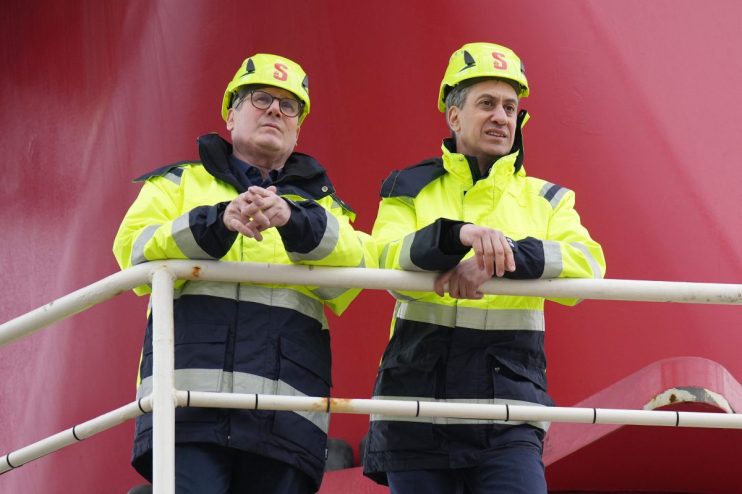
The fiscal pain of this Budget will be worse because of needless GB energy, writes Conservative Environment Network director Sam Hall
This is going to be a painful Budget. You don’t need me to tell you that – the government has been clear from day one that tough choices are coming.
And to a certain extent, fiscal belt-tightening is needed. The pandemic, support for spiralling energy bills and mounting pressures on public services have all contributed to this squeeze. Undoubtedly, Rachel Reeves has to do something to bring order to the public finances.
But, is this Budget looking more dark and depressing than it needs to because of Labour’s early choices in government? Are their overtly statist interventions just adding extra expenditure and pain to both British taxpayers and businesses, when they are arguably arbitrary and unnecessary?
In particular, I’m talking about GB Energy.
One of the most substantive pledges in Labour’s election manifesto, Ed Milliband has wasted no time in getting this totem of big government off the ground.
Since July, we have seen announcement after announcement relating to GB Energy – from partnering with the Crown Estate for new offshore wind projects to GB Energy’s new headquarters in Aberdeen being announced in Starmer’s Labour Conference speech.
It is clear Labour are investing a lot of political capital into GB Energy – but the same is true of actual, taxpayers’ capital.
As a supporter of clean energy, I can certainly admire the government’s ambition to build more homegrown renewable energy. Expanding wind and solar will boost our nation’s energy security, create well-paid green jobs and protect British households from future spikes in imported fossil fuel costs. However, the creation of yet another quango, with a hefty £8.3bn price tag and a vaguely defined remit, immediately raises eyebrows.
The holes in GB Energy
GB Energy is completely unnecessary. Successive Conservative governments have unlocked private capital for renewable energy projects for over a decade, taking renewables up to around 50 per cent of our electricity mix. We should not be creating a government-owned company which risks crowding out private money when the current system is working.
The government should stimulate private investment through recommitting to Conservative-pioneered contracts for difference auctions. Instead of financing the upfront cost of new renewable projects, the government provides a guaranteed power price for 15 years. This offers investors a base level of certainty over their returns, but avoids pouring in billions of pounds of taxpayers money.
The government might argue that renewable projects haven’t delivered the hoped-for boom in the energy supply chain, and that GB Energy is needed to create economic value for taxpayers where private markets have failed. But we don’t need a state-owned energy company like Orsted, Vattenfall or EDF to unlock more benefits for the UK economy from clean energy. Instead, we need to get our economic fundamentals right to become more attractive to international energy investors.
This means building on the last government’s freeport model. By cutting taxes, streamlining planning, upgrading infrastructure and simplifying regulation, we can attract more green industry to Britain without state ownership.
A case study: Teesside
And this point is made most clear by the example of Teesside. The SeAH wind monopile factory has seen £900m of investment already flow into an industrial heartland area. This paves the way for the UK to be a world-leading manufacturer of wind turbines whilst creating thousands of jobs in an area that needs economic rejuvenation.
And this was made possible by clever cuts to local taxes and planning regulation – not nationalisation.
If money is as tight as Labour says, ideological vanity projects like GB Energy should not be a priority. Private finance must lead the way on clean energy. Any spare money should be put into green projects that genuinely need taxpayer support, such as the nature-friendly farming incentives or the reopening of local railway lines, instead of cutting them.
We can ensure long-term economic growth, tackle climate change and cut government expenditure – but this starts with abandoning GB Energy.