Skip to content
Sunday 9 August 2026London --:--Frankfurt --:--Zurich --:--
NewslettersSearchEN · DE
MorningWire

European business, markets and politics

FTSE 100
10,901.09
+0.31%
DAX
26,319.45
+0.69%
CAC 40
8,714.93
+0.17%
STOXX 50
6,523.86
+0.33%
  • Europe
  • Markets
  • Business
  • Economy
  • Technology
  • Politics
  • Opinion
More
GermanyFranceBankingAIEnergyFintechPropertyCapital Markets
  • Germany
  • France
  • Europe
  • Markets
  • Business
  • Economy
  • Technology
  • Politics
  • Opinion
  • DE
Wednesday 30 October 2024 11:09 am

In defence of Treasury brain

By: Joe Hill

Add as a preferred source on Google
The government's commitment to the triple lock has raised industry concerns

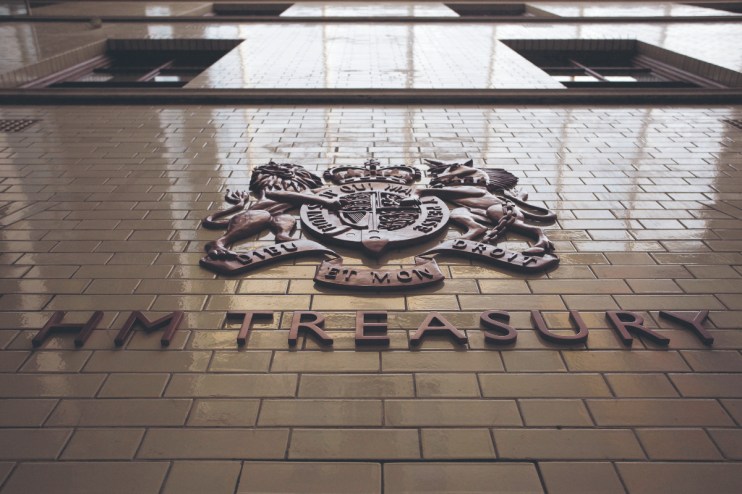
Treasury officials are often criticised for making budgets add up in the short term at the expense of long-term goals. That’s true, but imagine the money that would be wasted if they didn’t! Writes Joe Hill

Budgets are divisive, everyone has their own gripe. Too much spending, or too little. Not enough growth, or too much of the wrong kind of growth. Taxing “working people”, or everyone else. The one thing everyone agrees is that it’s the Treasury’s fault. 

Whatever the politics of the current Chancellor, the Treasury has long been dogged by accusations that its own culture and instincts damage decision making. Winston Churchill dubbed it “Treasury orthodoxy” at the Budget in 1929; you might have heard it referred to as “Treasury brain”. Whatever the name, it’s seen as a ‘bad thing’.

I disagree. Treasury brain is real, but we’d be far worse off without it.

At this point I should make a confession: I worked at the Treasury for three years. During that time I met many critics. Most held a grudge because their pet project didn’t get funded or their preferred tax cut wasn’t made. Those decisions can be seen as arbitrary and unfair – and often they are. Plenty are undeserved, but you would be amazed at how many ideas for wasting public money never see the light of day because the Treasury blocks them.

Its instincts are right: that things will always cost more than planned, that they will usually deliver less than promised and that lots of the ‘investments’ it is asked to make are anything but. 

These are instincts hardened by experience – during my tenure we were regularly told with a straight face that departments would need to spend 20 per cent more a year, every year, just to keep the lights on. Projects would always come in late, over-budget and under-delivered. And any attempt to reform public sector workforces was met by hostility, usually from within government itself. 

Read more

Fixing the £100,000 tax trap would be a bold first step – let’s not undermine it by taxing investment more

Canada skyline featuring iconic skyscrapers and modern architecture against a clear blue sky

Want proof? Take a look at any big government project or glance at public sector productivity rates.

True, the Treasury has plenty of failings. A bias towards short-termism, controlling budgets at the expense of end goals and ‘vandalising’ key projects to make the numbers add up. 

Who else would champion the interests of the taxpayer?

But its flaws are also more noticeable than those of other departments because of the power the Treasury has – and imagine if that wasn’t the case. Who else would champion the interests of the taxpayer? The rest of government has no incentive to save money – let them loose, and the Chancellor’s Budget envelope today wouldn’t be worth the paper it’s written on. 

The teams in Horse Guards Road are the only part of government which institutionally knows what all adults do: that politics is about trade-offs in life. Other civil servants may find it annoying that a 20-something ‘bright young thing’ from HMT asked them to do a cost-benefit analysis for their widget transformation fund, but would they do it if nobody told them to?

Of course it could be better. Indeed, many of the Treasury’s problems are because it has just enough power to block bad ideas, but not nearly enough power to make good ideas happen. And when all you have is a hammer, everything looks like a nail. 

On my first day at the Treasury I was told that we would always be criticised for “knowing the price of everything and the value of nothing”. That turned out to be the case. But looking back on it, I don’t think most critics really wanted us to think more about public value – they just wanted us to stop counting the cost. I don’t think many taxpayers would agree.

Joe Hill is policy director at the Reform think tank

Read more

Devolution will create losers too

Andy Burnham discussing Manchesters Bee Network public transport initiative at a city council event.

Share this article

  • Facebook
  • X
  • LinkedIn
  • WhatsApp
  • Email

Similarly tagged content:

Sections

  • Opinion

Categories

  • Opinion

People & Organisations

  • Autumn Budget 2024
  • Treasury
  • treasury brain

Related Topics

  • Budget
  • Treasury

Trending Articles

  • Thames Water faces fresh threat to survival after pensions regulation breach

  • PwC’s Embankment HQ to get major makeover ahead of Canary Wharf move

  • Family feud: London estate agent Winkworth sues chair over plot with wife to oust son from board

  • As it happened: Stocks rise despite new tensions in Strait of Hormuz; Oil price climbs

  • A tribute to wine legend Matthew Jukes by his friend Libby Brodie

More from Morning Wire

  • Fixing the £100,000 tax trap would be a bold first step – let’s not undermine it by taxing investment more

    Opinion
    Canada skyline featuring iconic skyscrapers and modern architecture against a clear blue sky
  • Devolution will create losers too

    Opinion
    Andy Burnham discussing Manchesters Bee Network public transport initiative at a city council event.
  • Andy Burnham’s technical education reforms are doomed to fail

    Opinion
    Andy Burnham, Mayor of Greater Manchester, in a high-vis vest at a technical education event.
  • Give London power to level up the rest of the country

    Opinion
    Business professionals in formal attire engaged in a lively discussion at a corporate meeting in a modern office setting.
  • Lucy Rigby back as City minister

    Politics
    Lucy Rigby, a blonde woman in glasses and a red blazer, with a phone in her pocket, walking past a black gate.
  • The City will bid good riddance to Rachel Reeves

    Opinion
    Reeves Bank exterior with modern architecture, showcasing its sleek design and prominent logo on a sunny day.
  • Where are Andy Burnham’s economic advisers?

    Politics
    Andy Burnham and John Healey at Number 10 North, both wearing suits and ties, with a microphone in the foreground.
  • Can the City make friends with Healey?

    Politics
    Chancellor John Healey smiling, wearing a navy suit, white shirt, and red tie.
MorningWire

Independent European business, markets and political news for decision-makers.

Morning Briefing

Europe

  • Germany
  • France
  • Europe
  • UK & Ireland

Business

  • Markets
  • Banking
  • Technology
  • Energy
  • Property
  • Fintech

Editorial

  • Opinion
  • Editorial Policy
  • Corrections
  • Contact

Company

  • About Morning Wire
  • Privacy Policy
  • Terms of Use
  • Cookie Policy
© 2026 Morning Wire Ltd · Published by Morning Wire Media, Bahnhofstrasse 65, 8001 Zürich, Switzerland
Privacy · Terms · Cookies · Facebook