In London, we have no other option but to break up the Metropolitan Police

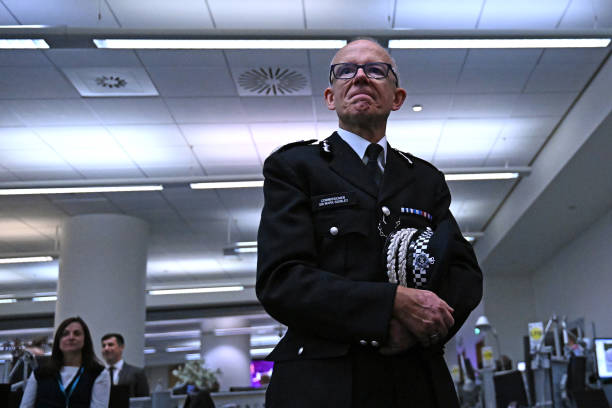
The Metropolitan Police has had years to make things right – but it hasn’t done it. It’s time we admit we should reform it for good – and the best way is to break it up, writes Will Cooling
On Monday night the Casey Review into the Metropolitan Police confirmed it had found extensive evidence that the force is institutionally racist, misogynistic and homophobic. This should be no surprise to anyone who has been following the long list of scandals that has befallen the force in recent years, of which the murder of Sarah Everard by a senior police officer whose appalling behaviour had long been overlooked by his colleagues and superiors, was the most shameful.
But it’s also not a surprise to anybody who knows the history. There have been so many reports into the Met’s failings, most famously after the Brixton Riots and the murder of Stephen Lawrence.
Repeatedly they have found an arrogant organisation whose bigotry fuses with its incompetence in ways that are particularly toxic for women and minorities.
Repeatedly they’ve challenged the force’s leadership to reform the organisation so that it can protect and help all Londoners.
And yet here we are again.
As the saying goes, insanity is doing the same thing over and over and expecting different results. We’ve been here too many times to believe that the Metropolitan Police can change. It is a fundamentally ill-conceived and broken institution that must be scrapped and replaced.
By abolition I do not mean the type of reforms that Keir Starmer helped to achieve in Northern Ireland, where the Royal Ulster Constabulary was replaced by a successor organisation in the Police Service of Northern Ireland that didn’t have its predecessor’s baggage or biases. Because the problem we face with the Metropolitan Police goes back to the fundamental flaw with the organisation; it is being asked to do too much for too many people.
No other police force in England and Wales is asked to cover an area as large and diverse as London. The Metropolitan Police isn’t just too far removed from the needs of women and minorities, it is too far removed from all Londoners. It does not have the intellectual bandwidth to tailor its approach to the needs of different areas, instead adopting a one-size fits all approach that pleases nobody. It would be better if different regions of London had their own police force, accountable to the borough councils, that drew its ethos and manpower from the local area.
Such a plan would also have the benefit of cutting the police force down to size. It is not healthy to have more than 35,000 police officers in one organisation. That is five times as big as the next largest police force in England and Wales. It encourages them to be insular, retreating into a community apart from wider society, with its own beliefs and preoccupations. That was never the vision for British policing, with the integration of constables into everyday life a key safeguard against them becoming a continental-style gendarmerie. They are after all civilians, not soldiers.
And that retreat from the rest of society is encouraged by the Met being used as Britain’s de facto national police force, tasked with protecting senior officials and leading on anti-terrorism amongst other responsibilities. This arrangement encourages a dangerous ‘warrior cop’ mentality amongst its officers and confuses its leadership about its key process. It also obscures who is responsible for holding the Met accountable, with Home Secretaries repeatedly failing to oversee the force effectively. That is why we go through this endless cycle of scandals causing ministers to commission reports, only for the actions to not be fully implemented.
The Metropolitan Police has had decades to get things right. They didn’t sufficiently change after Leslie Scarman or William Macpherson’s reviews, and they won’t meet the challenge set by Louise Casey this week. Is it really going to take another thirty years until we all realise the Met is never going to reform itself thoroughly, and needs to be replaced?