In the lead up to COP26, ministers need to revolutionise procurement policies to meet net zero targets

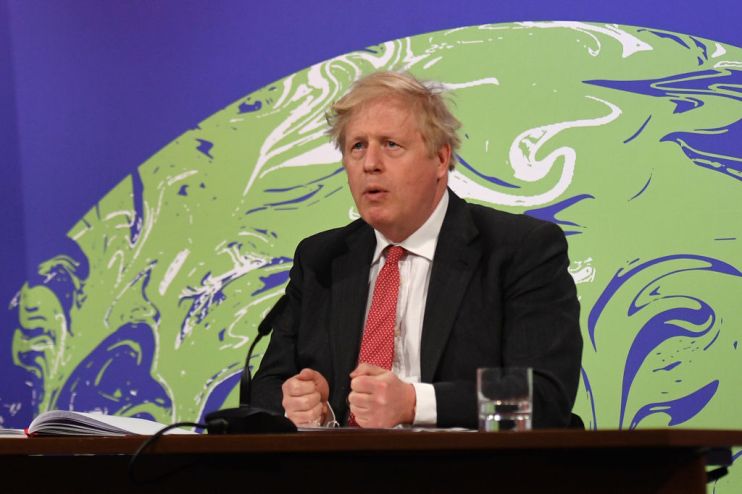
Boris Johnson’s bold aim to cut carbon emissions by 78 per cent by 2035 has cemented Britain’s commitment to address the climate crisis in the lead up to COP26 in Glasgow later this year.
Questions on delivery remain, however. While we await the Treasury’s much-anticipated Net Zero review, the UK needs to deploy a smart financial plan which is bold on reforming its procurement policies. As we all know, there is no simple solution, it will require a delicate union of new technologies and reforming old practices, there will need to be a coalescence between public and private in a way rarely seen before.
Rishi Sunak has already announced plans to issue green bonds, and the proposal of a green taxonomy – a common framework for determining which activities are environmentally sustainable – will be critical. Alongside both of these efforts, there needs to be a creative approach to finding new sources of funding from outside the public sector. As powerful as the Treasury’s coffers are, they won’t be able to deliver the widespread change needed with the current approach.
This merger of public and private investment is not a novel concept. London’s Tideway project used a regulated asset base (RAB) model to enable private financing, and developed a blended funding mix that accesses competitive green bonds. It was an example of the harmony which can be achieved between public and private funds.
We need to replicate and scale these successful methods across the country and apply them to today’s infrastructure challenges.
Efficient procurement of supplies and services is an indispensable piece of the net zero puzzle. If the UK shifts the way it procures contracts, to make sure they align with its net-zero ambitions, this will bring it closer to its climate goals. It will also incentivise private sector partners to decarbonise their own supply chains to compete for government contracts.
It needs to have a clear, outcome focused framework which balances costs and rewards with social value outcomes, tied to decarbonising the economy. Procurement contracts also need to be sensitive to local needs, which will demand different tactics to achieve change. For example, the needs of people in a highly industrial area, such as Tees Valley, will be different to highly connected cities such as London.
There has already been a significant shift within Whitehall to achieve environmentally sustainable practices in procurement. In December last year, the government published a green paper on transforming public procurement, alongside a construction playbook, to start the process of pivoting its procurement policies.
The private sector is already supporting this. Jacobs has partnered with Simetrica to develop the world’s first set of equity and welfare weights using a methodology approved by the Treasury’s Green Book, which effectively quantifies social value in infrastructure planning. This enables the design and delivery of projects to revolve around social value outcomes, while helping decision-makers to measure a project’s impact and help identify the right contracts for delivery.
Of course, there also needs to be a concerted effort to support the technologies driving low carbon solutions, such as low-carbon electricity from nuclear power and renewable energy. This will inject confidence in investors to help break these into the market, increase demand and lower prices.
If we are to guarantee a prosperous future for successive generations, we need to apply an outcome-based model across our financing and procurement processes, with social value and net zero objectives embedded at the heart of the system.