India votes: Just three hurdles stand in the way of economic renaissance

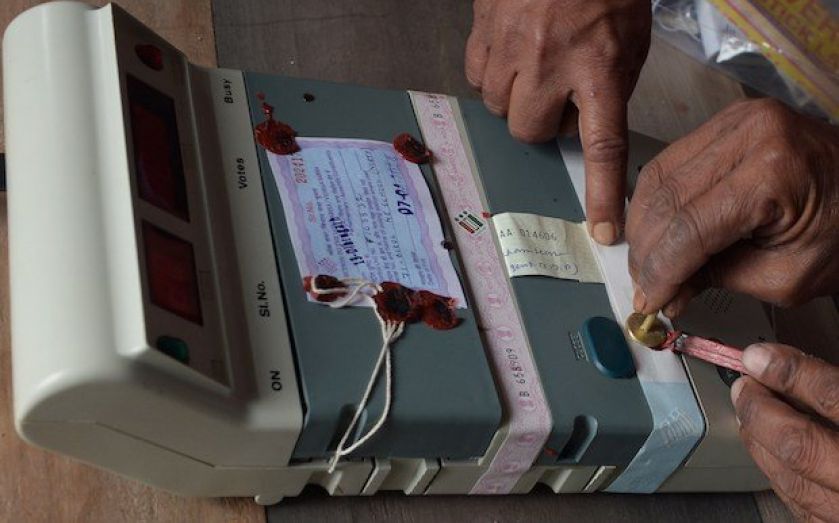
IT’S A heretical truth, but most elections don’t matter very much. This year, for example, for all the bells and whistles, the Turkish presidential contest, the European parliamentary elections, and even the US mid-terms will change little, leaving unaltered their governments’ economic and political trajectories in the world.
In the case of Turkey, the recent municipal elections demonstrated the continued dominance of Prime Minister Erdogan and his AK Party; this will not change by August. Nigel Farage and Ukip highlight the continent-wide rise of Euroscepticism, but they did not create it, nor will they practically change the fact that Euro-friendlies will continue to rule Brussels, even while increasingly looking over their shoulders. As for the mid-terms, Obama goes in a lame duck facing divided government. Exiting, he will remain a lame duck facing divided government.
But India’s election, which begins today (ending in early May), well, India is very different. The probable victory of the business-friendly Narendra Modi and his Hindu nationalist BJP party could do nothing less than jumpstart the moribund sub-continent, placing India on a new, virtuous cycle, and allowing growth to take off once again. This is a rare case where hyperbole is called for. If this were to happen, it would remake India – whose growth rate hit a decade low of 4.5 per cent in 2012-13 – and thus the world.
As ever in the world of political risk, in the words of Peter O’Toole’s Lawrence of Arabia, “nothing is written.” There are at least three major hurdles a Modi government will have to jump to prove successful. The first concerns the fact that – well as it is likely to do – the BJP will probably not win an outright majority, governing in the coalition fashion habitual for India. Here the specific outcome of the contest matters. If the BJP – as seems likely from the polling up to now – wins decisively, ruling with only a few coalition allies, rather than the usual cacophonous tent of self-serving, often-myopic state partners, Modi will be able to move far more decisively, dominating the coming coalition, rather than being dominated by it.
The second hurdle – also largely dependent on how big a victory he wins – is taming a reactionary civil service used to moving at a desultory pace at the best of times. In the face of the current weak Congress government of Prime Minister Singh, the bureaucrats have managed to stifle the precious few initiatives to emerge from the sclerotic administration. Modi’s energy, and the China-like growth rates he achieved over a decade as head of the state of Gujarat, shows that he is more than able to take on vested interests, in addition to the moribund Indian public sector itself. But to really have a chance to do so, he needs as decisive a mandate as possible.
The third and perhaps biggest hurdle involves the character of the man himself. A dark cloud has hung over this otherwise very appealing politician, since riots in Gujarat in 2002 led to an estimated 1,000 Muslims being slaughtered. Modi, then leader of the state, has been cleared of direct involvement in the atrocity. Since then, however, he has never fully explained his role at the time, let alone shown remorse. Beyond the obvious moral question, a country as heterogeneous as India simply cannot be successfully governed for long by someone intent on dividing ethnic and religious groups. Looking into the hearts of men is always dicey in terms of analysis, but here it matters enormously.
Because the simple fact remains that, if Modi and the BJP can manage these three basic challenges, glittering economic success is there for the taking. The hoopla surrounding the Brics concept has rightfully faded, with Brazil facing economic torpor, Russia desperately trying to salvage a rump sphere of influence limited to its own backyard, China looking as if it will get old before it gets rich, and South Africa governed by an increasingly corrupt and inept ANC.
Alone amid the bad news, India stands out – based on favourable demography above all – as the major emerging market with the greatest possibility of further catch-up growth on the cards. All it needs is a moderately competent, clean, and energetic government to achieve this. Modi’s decade-long record in Gujarat – a state that, in 2011, accounted for just 5 per cent of India’s population, but 22 per cent of its total exports and about 16 per cent of its industrial output – suggests that this is entirely plausible to expect. If he can master the politics and himself, Modi’s elevation to power might just be the most important news story of the year.
Dr John C Hulsman is senior columnist at Morning Wire, and president and co-founder of John C Hulsman Enterprises (www.john-hulsman.com), a global political risk consultancy. He is a life member of the Council on Foreign Relations, and author of Ethical Realism, The Godfather Doctrine, and most recently Lawrence of Arabia, To Begin the World Over Again.