Skip to content
Sunday 9 August 2026London --:--Frankfurt --:--Zurich --:--
NewslettersSearchEN · DE
MorningWire

European business, markets and politics

FTSE 100
10,901.09
+0.31%
DAX
26,319.45
+0.69%
CAC 40
8,714.93
+0.17%
STOXX 50
6,523.86
+0.33%
  • Europe
  • Markets
  • Business
  • Economy
  • Technology
  • Politics
  • Opinion
More
GermanyFranceBankingAIEnergyFintechPropertyCapital Markets
  • Germany
  • France
  • Europe
  • Markets
  • Business
  • Economy
  • Technology
  • Politics
  • Opinion
  • DE
Tuesday 13 January 2015 9:10 pm

Inflation has fallen below target: Should the UK be worried?

By: Express KCS

Add as a preferred source on Google

Lower price rises are a boost for the UK but something to be feared in Europe.

Why target inflation? Inflation is the increase in average prices in the economy over a period of time – normally a year. 
 
It is calculated by looking at a typical basket of goods, and seeing how the price of the basket changes over time. The UK’s headline basket is the consumer price index (CPI). 
 
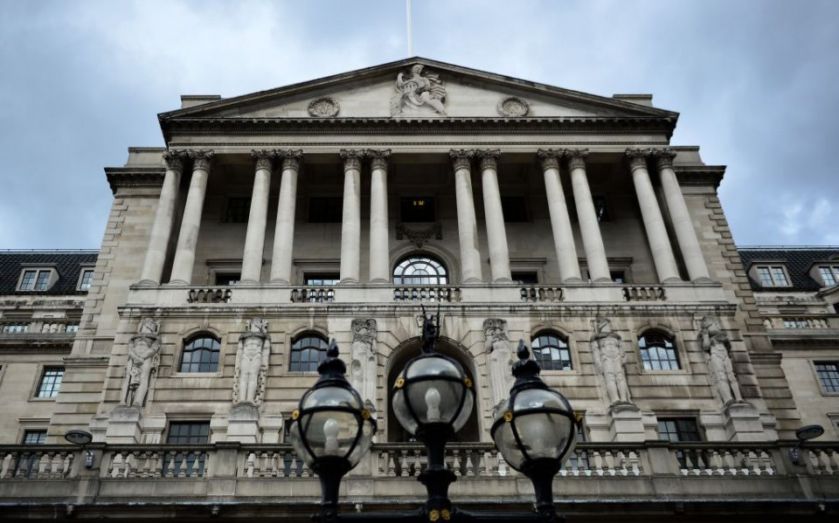
The Bank of England targets inflation at two per cent annual growth with a one per cent margin on either side.
 
An inflation target with credibility allows households and firms to plan their finances years in advance.
 
What are the problems associated with inflation and why do we specify a two per cent target?
 
High and rising inflation risks eroding the value of people’s savings and incomes, especially if it is unexpected.
 
However, falling inflation can be a sign of consumers being unwilling to spend. Policymakers thus aim for a low but positive rate of inflation. 
 
 A low but positive inflation rate may also be beneficial as wages are “sticky” and often fail to fall if the demand for labour falls. By cutting wages in real terms, inflation can shore up job numbers.
 
What is good deflation and what is bad deflation?
 
The overall level of prices in the economy is determined by the balance between supply ­­­– the willingness of firms to produce – and demand – the willingness of consumers to spend. 
 
Good deflation occurs when supply is boosted. This is caused by things like technological progress or an abundance of key commodities, such as oil.
 
Bad deflation comes from the demand side of the economy when consumers reduce their spending. 
 
Consumers cut their spending when their income declines or when greater uncertainty causes them to hold on to more cash than otherwise.
 
Should I worry about deflation?
 
Many people have issued warnings over deflation in the Eurozone, so it may seem strange that the possibility of deflation in the UK is being touted as a positive occurrence. 
 
The chart below of nominal GDP – GDP not adjusted for inflation – roughly represents total spending.
 
 
The Eurozone’s deflation is primarily the bad kind caused by weak spending. Spending in the UK has been stronger. Inflation in the UK is instead being driven down by oil prices which are diving due to a global supply glut.
 
“Low inflation driven by cheaper petrol, food and import costs is unambiguously a positive for the UK. It represents a big tax cut for consumers, who will be seeing real average earnings growth in excess of 1.5 per cent year-on-year within a couple of months,” said Rob Wood, economist at Berenberg investment bank.
 

Share this article

  • Facebook
  • X
  • LinkedIn
  • WhatsApp
  • Email

Similarly tagged content:

Sections

  • Markets & Economics
  • News

Categories

  • Business
  • Economics

Related Topics

  • UK inflation

Trending Articles

  • Thames Water faces fresh threat to survival after pensions regulation breach

  • PwC’s Embankment HQ to get major makeover ahead of Canary Wharf move

  • Family feud: London estate agent Winkworth sues chair over plot with wife to oust son from board

  • As it happened: Stocks rise despite new tensions in Strait of Hormuz; Oil price climbs

  • A tribute to wine legend Matthew Jukes by his friend Libby Brodie

More from Morning Wire

  • El Nino heatwaves to ‘fuel inflation next year’

    Economics
    Firefighter in helmet and uniform watching a blazing forest fire at night, red glow in the sky
  • ‘False dawn’: June inflation falls to 2.6 per cent but analysts say rises ahead

    Economics
    Till sales growth slowed to 2.7 per cent in the last four weeks
  • Bank of England holds interest rates but warns of rises to come

    Economics
    Bank of England headquarters in 2025, showcasing modern architecture and iconic London skyline in the background.
  • How patient can the Bank of England be?

    AD
    Historic Royal Exchange building in London with modern skyscrapers behind, clear blue sky.
  • Interest rate cut is ‘off the table’, says Bank of England governor

    Economics
    Governor Andrew Bailey has launched a defence of the Federal Reserve's independence.
  • Temporary inflation slowdown set to boost Burnham

    Economics
    Rising inflation graph with increasing percentage symbols, highlighting economic trends and financial market impact
  • Hold interest rates but ‘sound hawkish’, Morning Wire Shadow MPC tells Bank of England

    Economics
    Andrew Bailey, Governor of the Bank of England, with the Bank of England building and Union Jack flag in the background
  • Healey faces £24bn spending squeeze as inflation puts tax rises in play

    Economics
    Bank of England headquarters in 2025, showcasing modern architecture and iconic London skyline in the background.
MorningWire

Independent European business, markets and political news for decision-makers.

Morning Briefing

Europe

  • Germany
  • France
  • Europe
  • UK & Ireland

Business

  • Markets
  • Banking
  • Technology
  • Energy
  • Property
  • Fintech

Editorial

  • Opinion
  • Editorial Policy
  • Corrections
  • Contact

Company

  • About Morning Wire
  • Privacy Policy
  • Terms of Use
  • Cookie Policy
© 2026 Morning Wire Ltd · Published by Morning Wire Media, Bahnhofstrasse 65, 8001 Zürich, Switzerland
Privacy · Terms · Cookies · Facebook