Skip to content
Sunday 13 September 2026London --:--Frankfurt --:--Zurich --:--
NewslettersSearchEN · DE · FR
MorningWire

European business, markets and politics

FTSE 100
10,650.44
+0.39%
DAX
25,568.56
+0.82%
CAC 40
8,179.77
+0.78%
STOXX 50
6,325.13
+0.90%
  • Europe
  • Markets
  • Business
  • Economy
  • Regulation
  • Politics
  • Opinion
More
GermanyFranceEU InstitutionsCompetitionPublic AffairsBankingTechnologyEnergy
  • Germany
  • France
  • Europe
  • Markets
  • Business
  • Economy
  • Regulation
  • Politics
  • Opinion
  • DE
Wednesday 01 December 2021 6:15 am  |  Updated:  Tuesday 30 November 2021 4:56 pm

Unchallenged inflation will make strike action the norm in a new labour market

By: Paul Ormerod

Add as a preferred source on Google
Southern Train Drivers Strike For A Third Day
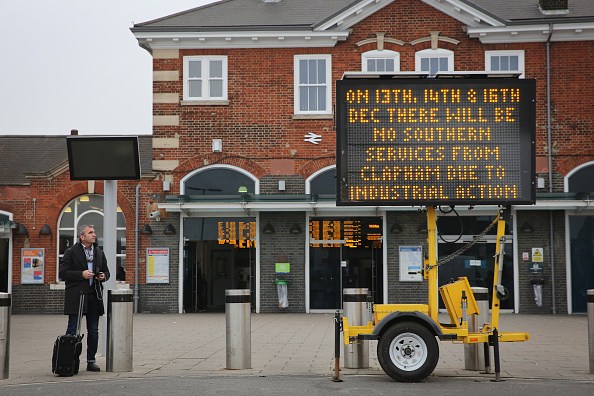
LONDON, ENGLAND - DECEMBER 16: A sign warning passengers of industrial action stands outside Clapham Junction Station on December 16, 2016 in London, England. Commuters across the South of the country are facing a third day of disruption after members of the 'ASLEF', the UK union for train drivers and operators, stage a third day of industrial action. Talks between Aslef and the RMT unions and Southern's parent company Govia Thameslink, broken down after an agreement couldn't be reached.. (Photo by Dan Kitwood/Getty Images)

Last Friday, London once again muddled through the inconvenience of yet another Tube strike.  Another one is planned for the middle of December.

They are just as much a feature of the metropolitan scene as Big Ben. Until more of the trains are automated, Tube staff will retain the capacity to cause disruption.

But this time, they are not alone in their militancy.  

Refuse collectors in Coventry, for example, are being balloted about striking over Christmas.  A bin strike in Sheffield was called off thanks to a generous last minute pay offer. Last week, Stagecoach workers in South Yorkshire balloted for strike action. Even university lecturers are getting in on the act, with a three day strike planned for later this month.

In the 1970s, nearly 2 million days were lost through strike action almost every year, culminating at almost 5 million in the notorious Winter of Discontent in 1979.  

Immediately before Covid struck, the numbers had fallen into the low tens of thousands – figures not previously seen since late Victorian times.

This labour militancy is also on display across the Atlantic, documented in an interesting piece in the New Left Review. A five week strike at John Deere, a massive manufacturer of agricultural equipment in the US, has just been settled with a 10 pay cent pay increase plus an immediate bonus of $8,500.

The wave of strikes across the country have stretched from nurses in Buffalo, New York to coal miners in Alabama and hospital workers on the West Coast. Even in the City of Angels, Hollywood technical workers authorised a strike with a 99 per cent vote on a 90 per cent turnout.

This newfound confidence in the labour force should come as no surprise.

Read more

Thunder Call set to Strike in Shergar Cup Sprint

Thoroughbred racehorses with jockeys galloping on a green track, blurred crowd in foreground

The bargaining power of labour has been gradually strengthening during the late 2010s. In the 1970s and early 1980s it was too strong for its own good, not just in the UK but across much of the developed world. The disruptions from strikes, costly though they were, paled into insignificance compared to the squeeze on profitability caused by high pay increases. Lower profits mean lower investment, which in turn means lower economic growth.

A dramatic tightening of monetary policy led to sharp rises in unemployment.

In Britain and America, unemployment by the early 1980s was more than double the rate of the early 1970s. In Germany, it rose to 8 per cent compared to a mere 0.8 per cent ten years previously.

This sharp shock curbed much of the enthusiasm for labour militancy. And then, of course, from the late 1980s onwards the re-integration of both China and India into the world economy massively increased the effective supply of labour.

But, gradually, these effects have faded. All this has important implications for inflation.  

There has recently been a sharp upward blip in inflation, to an annual rate of 3.8 per cent in the UK and as much as 6.2 per cent in the US, the highest for over 30 years.

The labour force is in a stronger position than it has been for decades to match inflation with wage increases. These in turn will feed into costs, and into subsequent further price rises.

It is wishful thinking, particularly on the part of the Bank of England, to imagine that the rise in inflation is purely temporary.

Decisive action on interest rates is needed now.

Read more

Doctors union tops up £1m reserve pot for strikes

GettyImages 2246649047: Business professionals discussing strategy at a conference table, highlighting teamwork and collab...

Share this article

  • Facebook
  • X
  • LinkedIn
  • WhatsApp
  • Email

Similarly tagged content:

Sections

  • Opinion

Categories

  • Opinion

Trending Articles

  • Wetherspoon boss: ‘Not up to Burnham’ to choose who is on the high street 

  • Badger Beer maker Hall & Woodhouse doubles profit ahead of tie-up with James May

  • Four interest rate hikes loom despite surprise economic growth

  • Primark sales slip as owner dresses up retailer for demerger

  • Lotus, Porsche and Corvette: the best sports cars to buy in 2026

More from Morning Wire

  • Thunder Call set to Strike in Shergar Cup Sprint

    Sport
    Thoroughbred racehorses with jockeys galloping on a green track, blurred crowd in foreground
  • Doctors union tops up £1m reserve pot for strikes

    Healthcare
    GettyImages 2246649047: Business professionals discussing strategy at a conference table, highlighting teamwork and collab...
  • As it happened: FTSE 100 slides as bound rout deepens; Oil jumps as Trump vows more strikes on Iran

    FTSE 100 Live
    Large oil tanker navigating a strait under a cloudy sky, impacting oil prices and global trade.
  • Reform’s Richard Tice under parliamentary investigation

    Politics
    Reform UK leader Nigel Farage and Deputy Leader Richard Tice are set to meet with Andrew Bailey to discuss interest rates and stablecoins.
  • Astrazeneca explores $400bn megadeal with US rival 

    Markets
    AstraZeneca building exterior with logo, glass facade, UK flag, and wildflowers in foreground.
  • Boomtown 2026 review: Surely the best party in the world

    Life&Style
    Large crowd at Boomtown festival main stage with vibrant smoke and confetti, during a sunny day.
  • House prices in wealthy London boroughs fall by up to £300,000

    Property
    Waverton Investment Management and London & Capital combined into W1M.
  • Lord O’Neill declines job in Burnham government

    Economics
    Jim ONeill, economist and former Goldman Sachs chairman, sitting on a yellow sofa in front of large windows.
MorningWire

Independent European business, markets and political news for decision-makers.

Morning Briefing

Europe

  • Germany
  • France
  • EU Institutions
  • Europe

Business

  • Markets
  • Business
  • Economy
  • Regulation
  • Competition
  • Public Affairs

Editorial

  • Opinion
  • Editorial Policy
  • Corrections
  • Contact

Company

  • About Morning Wire
  • Privacy Policy
  • Terms of Use
  • Cookie Policy
© 2026 Morning Wire Ltd · Published by Morning Wire Media, Bahnhofstrasse 65, 8001 Zürich, Switzerland
Privacy · Terms · Cookies · Facebook