Innovation Diary: Why designing the right marketing strategy could ultimately cut costs

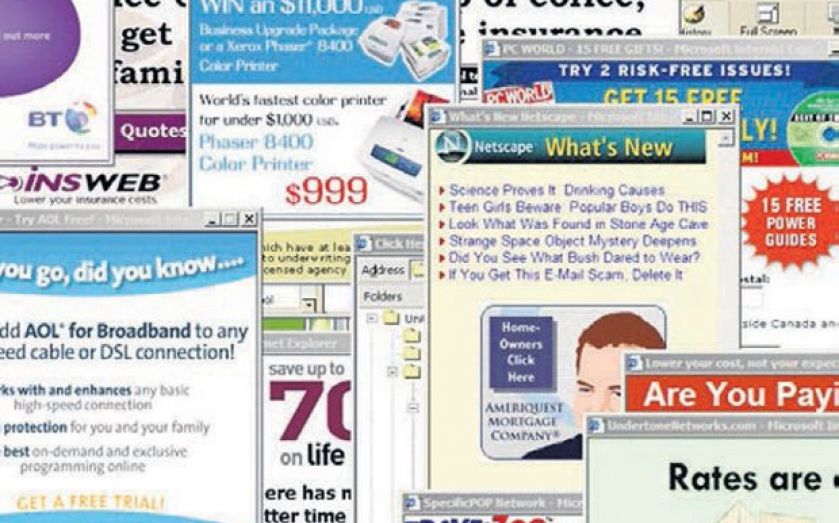
WHILE the digital economy has vastly increased the ability of startups to upscale in a cost-efficient way, attracting customers has not necessarily become any easier.
In research published in the Sloan Management Review last year, for instance, David Bell, Jeonghye Choi, and Leonard Lodish noted that, although internet firms theoretically have “‘unlimited’ trading areas”, and despite the opportunities afforded by internet advertising, identifying and targeting customers is more difficult than for bricks-and-mortar businesses. “Many internet retailers have trouble getting noticed,” they say. Without a physical store to tie a company to a particular client profile, “there are no straightforward rules about where to look for customers.” In a crowded market, standing out is difficult.
Many small businesses struggle with their marketing – both on and offline. Dee Blick, a fellow of the Chartered Institute of Marketing, has just published an excellent book on the subject. From her experience working with smaller firms, she suggests that there is often “a gap between where you are and where you want to be,” and that excess ambition can lead to the failure to understand “incremental marketing steps.”
What does this mean? Blick says that, first, many firms think that opening the doors or creating a product is “in itself enough to have a queue of customers.” Sometimes this works, but often it doesn’t. If a firm subsequently struggles, there is a tendency to fire from the hip – to “succumb to the latest big thing in advertising” to build momentum. She cites the example of a struggling client who had splashed out £12,000 on a direct marketing campaign – using an untested mailing list, and with no metrics to gauge success.
For Blick, this speaks to a false perception that sales are what a startup knows and can do, but marketing is “high fallutin strategy delivered by qualified marketers.” Given time constraints, and a perceived lack of knowledge, firms will outsource their requirements to experts, without having clear control over what they expect to achieve.
Blick’s theory, however, is that marketing is not just an integral part of any business, but can be conducted on a shoestring without the need for complicated theory. Her book hinges on the idea that thinking strategically and proactively about marketing is a good way to better understand your company – and why it exists. But it will also ultimately cut costs. Failure to strategise, meanwhile, can lead to companies overspending their budgets, wasting money on unsuitable activities, an over-reliance on generating business from existing customers, and sporadic marketing activity.
The strategy doesn’t need to be complex. But it should be built on an audit of your marketing activities to date – what you have spent, what new business you have gained. For some, this will entail a loss of pride. “Some companies pepper out bland messages,” says Blick, and there has to be a reckoning. Firms should review their key competitors, and whether marketing claims stack up against what else is out there. You should also analyse your target audience – and take note of anything that would limit your appeal. It must be a comprehensive audit of how your marketing relates to your core business.
Only once you have this basic structure should you consider how you can best use social media, for instance, or whether to redesign your website. Incremental steps build momentum.
Crucially, everything hinges on your research. The authors of the Sloan report reveal this in their own diagnosis for how to succeed. They analysed data from US startups to find four elements to successfully selling and marketing online.
First, collect customer postcode information. This can be used to estimate the impact of offline competition and demography on sales. Second, understand how online purchasers spread information about you offline (offline recommendations multiply online sales). Third, “delight” the right customer. This means not assuming that an unlimited trading area also means client diversity. Finally, engage in location-based experimentation, for example via a pop up store. Limited forays into the physical world can “seed” potential customers.
Tom Welsh is business features editor at Morning Wire
The 15 Essential Marketing Masterclasses for Your Small Business, by Dee Blick, is published by Capstone (£14.99).