Interest rates aren’t as influential as you think

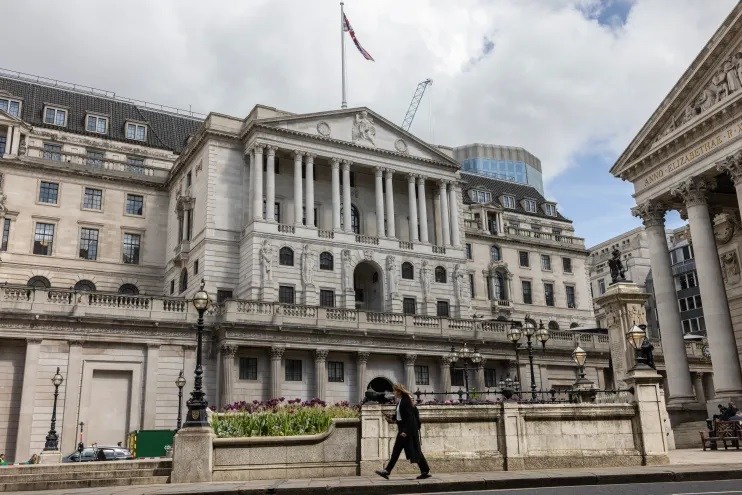
Andy Haldane’s criticisms of the Bank of England’s persistence with higher rates are misguided. Just as near-zero rates following the financial crisis were hardly a stimulus to growth, the more recent actions of the MPC can’t be said to be ‘crushing the economy’, says Paul Ormerod
Criticising the Bank of England has become fashionable in City circles. From persisting too long with quantitative easing, to completely missing the upsurge in inflation to the condescending group think displayed on the validity of its discredited New Keynesian models, the Bank under Andrew Bailey has done plenty to make itself fair game.
But when the critic is the distinguished former chief economist of the Bank itself, Andy Haldane, it’s worth paying attention.
But in his latest attack, he may have missed the mark. Speaking on Bloomberg’s UK Politics Podcast, Haldane stated that, “It’s one thing to have missed inflation on the way up, which happened; it’s quite another to then have crushed the economy on the way down.”
Yes, the Bank missed the rise in inflation – it’s the second part of the statement which is more problematic. The clear implication is that the Bank’s current persistence with high interest rates is crushing the economy and driving us into a recession.
On the face of it, that argument seems credible. Higher interest rates reduce the ability of households with mortgages to spend on goods and services. They make borrowing more expensive for firms looking to invest to expand production.
But this is far from being as obvious as it seems. In fact, there is little statistical evidence that interest rates have a strong impact on the level of economic activity.
There are two main reasons for this. First, and more important, the personal sector of the economy – individuals – is a large net creditor. In other words, the sector holds more assets than it does debt.
Data from the Office for National Statistics (ONS) is only available up to 2021. This is not a criticism, putting this sort of data together is not at all straightforward. But overall, the average value of the net assets of a household was £437,000. Much of this is held in land (mainly housing) and pensions. But the average holding of bank deposits is £70,000.
Of course, there are substantial inequalities in the distribution around the average and many households have very little savings. But for those who do have them, higher interest rates boosts their incomes. They have much more to spend then when rates were held close to zero for many years.
In the corporate sector, new investment is financed much more by retained profits than it is by borrowing. In general, the impact of interest rates on investment is therefore weak.
Certainly, the decade of the 2010s was characterised by interest rates of close to zero for much of the time. But we can see that this hardly acted as a major stimulus to the economy.
Between 2007, the year prior to the financial crisis, and 2019, the year immediately before the pandemic, the UK economy grew by only 1.2 per cent a year on average. The reasons for this are still a matter of active debate. But it is obvious that near-zero interest rates did not by themselves contribute a great deal to boosting growth.
In the same way, relatively high interest rates now cannot be said to be crushing the economy. Their overall impact arises from a combination of factors, some negative but also some which are positive.
For once, the stance of the Bank on interest rates seems correct. The very fact that they have only a weak effect on economic activity means they are only a weak tool to squeeze out inflation, even if their net impact on growth is negative. The Bank should persist with rates at their current level.