Skip to content
Tuesday 11 August 2026London --:--Frankfurt --:--Zurich --:--
NewslettersSearchEN · DE
MorningWire

European business, markets and politics

FTSE 100
10,862.50
-0.35%
DAX
26,323.88
0.00%
CAC 40
8,726.03
0.00%
STOXX 50
6,535.62
0.00%
  • Europe
  • Markets
  • Business
  • Economy
  • Technology
  • Politics
  • Opinion
More
GermanyFranceBankingAIEnergyFintechPropertyCapital Markets
  • Germany
  • France
  • Europe
  • Markets
  • Business
  • Economy
  • Technology
  • Politics
  • Opinion
  • DE
Monday 18 September 2023 6:00 am  |  Updated:  Monday 18 September 2023 7:43 pm

Interest rates: Three things the Bank will consider for the next rate decision

By: Chris Dorrell

Add as a preferred source on Google
The intervention comes as permanent staff positions in London fell at the sharpest rate in 22 months.

The Bank of England’s rate-setters will meet on Thursday to decide on interest rates and they will have no shortage of topics to discuss.

Although rates have been hoisted to a post-financial crisis high of 5.25 per cent, inflation – at 6.8 per cent – remains stubbornly above target.

Markets are predicting a 25 basis point hike, although recent comments from members of the Monetary Policy Committee (MPC) have raised the remote possibility that the bank rate could be left steady.

Here are three (of the many) things that the Bank will focus on.

Wage growth

MPC members have repeatedly highlighted developments in the labour market as crucial for assessing the future path of inflation.

But the Bank is in a bind.

Unemployment has increased faster than expected, climbing to 4.3 per cent in the most recent labour market report. The Resolution Foundation said that the recent rise in unemployment was the fastest pace on record outside a recession.

Yet annual pay growth has remained stuck at 7.8 per cent – the highest rate on record. The high rate of pay growth indicates that inflation is becoming increasingly embedded in the economy, with workers asking for higher wages as prices rise – forcing firms to raise prices further.

Inflation cannot fall sustainably to the Bank’s two per cent target without pay growth falling significantly.

Rising unemployment should ease pay increases, by increasing the supply of labour, but it won’t make the Bank popular.

Slowing growth

The UK economy shrunk by more than expected in July, with some economists suggesting we were already in a recession.

Read more

Bank of England to hold interest rates as oil price surge threatens UK economy

Bank of England building on Threadneedle Street, London, showcasing its historic architecture and financial significance

Higher interest rates are designed to slow the economy because it sends the cost of borrowing higher. Slowing growth is therefore to be expected.

The problem is that monetary policy operates with ‘lags and delays‘. This means it is unclear how much impact is still to be felt from decisions the Bank has already made.

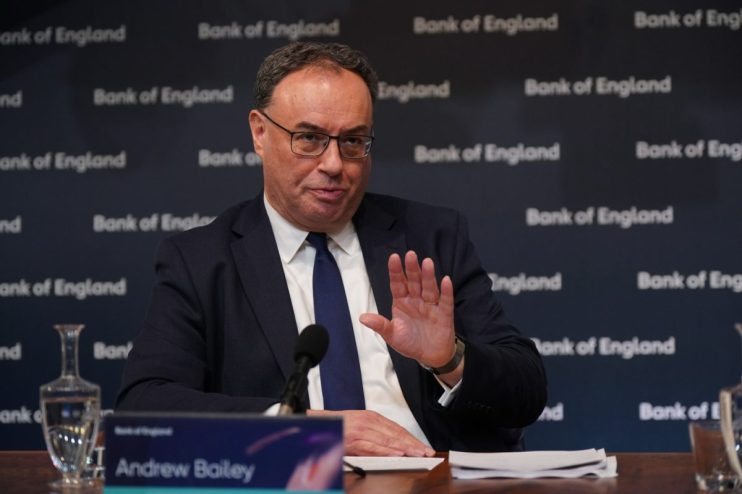
Andrew Bailey, the Bank’s governor, recently admitted that there is still a fair amount of tightening “in the pipeline”.

Several business groups have warned that further rate hikes will pile unnecessary pressure onto households and firms while the full impact of existing rate hikes has yet to be felt.

If inflation starts to fall faster and if the UK economy falls into recession, many will argue the Bank overtightened, causing an unnecessary contraction as a result.

Inflation

To restate the obvious, the current level of inflation is higher than the Bank’s two per cent target.

What’s worse, the rising cost of petrol and diesel will mean UK inflation will likely see a slight uptick in August.

Policymakers have been preparing for the news, with Chancellor Jeremy Hunt saying August’s figures – due out on Wednesday – will be “a blip“. Bailey also predicted a slight rise but said “I do not see that as essentially changing the path”.

Rather than focusing excessively on the impact of fuel costs, the Bank will keep a close eye on services inflation. This is another area which rate-setters have previously highlighted.

The annual rate of services inflation picked up from 7.2 per cent in June to 7.4 per cent in July, the highest level since March 1992. However, the increase was driven by a surge in rents and a more moderate increase in airfares which probably do not indicate persistent trends.

An easing in services inflation would likely be seen as a positive, even if the headline rate of inflation increased.

Read more

Healey faces £24bn spending squeeze as inflation puts tax rises in play

Bank of England headquarters in 2025, showcasing modern architecture and iconic London skyline in the background.

Share this article

  • Facebook
  • X
  • LinkedIn
  • WhatsApp
  • Email

Similarly tagged content:

Sections

  • Markets & Economics

Categories

  • Economics

Related Topics

  • Bank of England
  • UK inflation
  • UK interest rates

Trending Articles

  • Nottingham Forest owner Marinakis sues Crystal Palace for defamation

  • Back to basics: Sainsbury’s gradual retreat from the British high street

  • Hargreaves Lansdown orders staff back to office

  • As it happened: Intel, Arm shares slide; Oil climbs higher

  • Thames Water faces fresh threat to survival after pensions regulation breach

More from Morning Wire

  • Bank of England to hold interest rates as oil price surge threatens UK economy

    Economics
    Bank of England building on Threadneedle Street, London, showcasing its historic architecture and financial significance
  • Healey faces £24bn spending squeeze as inflation puts tax rises in play

    Economics
    Bank of England headquarters in 2025, showcasing modern architecture and iconic London skyline in the background.
  • Bank of England holds interest rates but warns of rises to come

    Economics
    Bank of England headquarters in 2025, showcasing modern architecture and iconic London skyline in the background.
  • El Nino heatwaves to ‘fuel inflation next year’

    Economics
    Firefighter in helmet and uniform watching a blazing forest fire at night, red glow in the sky
  • IMF warns Bank of England against cutting interest rates

    Economics
    IMF Chief Kristalina Georgieva issues caution to Bank of England amid economic concerns
  • Interest rate cut is ‘off the table’, says Bank of England governor

    Economics
    Governor Andrew Bailey has launched a defence of the Federal Reserve's independence.
  • Hold interest rates but ‘sound hawkish’, Morning Wire Shadow MPC tells Bank of England

    Economics
    Andrew Bailey, Governor of the Bank of England, with the Bank of England building and Union Jack flag in the background
  • House prices slump as Iran war and interest rates hit demand

    Property
    The price paid for first homes has surged 7.1 per cent in a year
MorningWire

Independent European business, markets and political news for decision-makers.

Morning Briefing

Europe

  • Germany
  • France
  • Europe
  • UK & Ireland

Business

  • Markets
  • Banking
  • Technology
  • Energy
  • Property
  • Fintech

Editorial

  • Opinion
  • Editorial Policy
  • Corrections
  • Contact

Company

  • About Morning Wire
  • Privacy Policy
  • Terms of Use
  • Cookie Policy
© 2026 Morning Wire Ltd · Published by Morning Wire Media, Bahnhofstrasse 65, 8001 Zürich, Switzerland
Privacy · Terms · Cookies · Facebook