Investing in the weather? Why catastrophe bonds are taking off in the City

The catastrophe bond market may sound like some kind of risky punt against the wind, but betting on the weather can prove a sound investment, writes Claude Brown
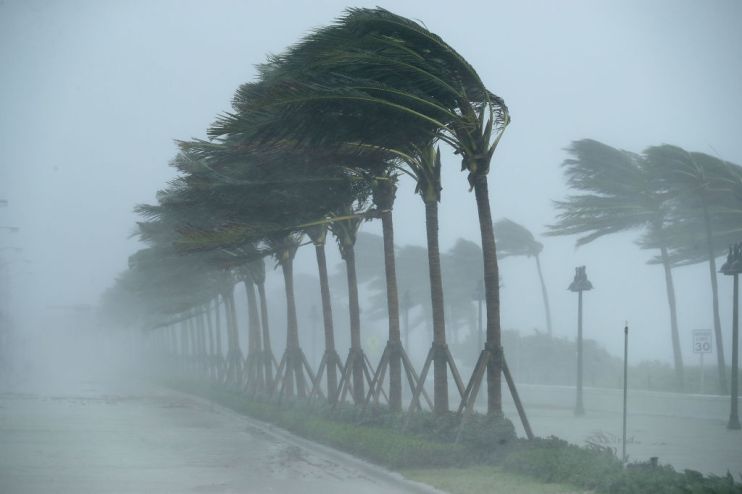
Life, it is often said, has two certainties, though the growing frequency of extreme weather events perhaps suggests a third could soon be added. From Florida to New Zealand, swathes of the planet are now battered by hurricanes and earthquakes with seemingly greater frequency. Only last year, for instance, Hurricane Ian swept across North America, causing an estimated $35bn-$55bn of damage across Florida, the Carolinas and Cuba.
It might seem strange, then, that catastrophe bonds, which are usually issued by insurers in regions at risk of extreme weather, are presently proving so popular in the Square Mile. After all, where cat bonds offer healthy returns whilst skies are clear, holders are obliged to pay out should a specified catastrophe hit a specified region.
And yet, despite the threat of extreme weather, the cat bond market has grown to a record $4bn, offering some of the best returns for hedge funds and with an increasing number of financial institutions holding onto the products as distinct portfolios.
The reason for the growth is in one sense clear: the double-digit yields offered by some products understandably prove attractive to investors, trumping concerns about risk. At the same time, cat bonds also provide an effective means of diversifying portfolios. These are products that are divorced from economic cycles and have been shielded from the slow ratcheting up of interest rates that have affected other financial products over the last few years.
In other words, a product that might once have been the preserve of specialist investors has gone mainstream (though specialist funds do still exist). But as with any development within financial markets, the growth has raised concern about risk, not least whether the compounding effects of climate change on global weather systems could soon burn the fingers of some investors. Hurricane Ian, after all, is expected to go down as one of the costliest storms in US history according to Bloomberg.
The truth, though, is that the growth of cat bonds is not a cause for concern, and still less a passing phase. For one, this is not a new product. Rather, the first cat bonds emerged in the 1990s in the wake of Hurricane Andrew, with the market growing quickly to the point that £1bn-2bn was issued in bonds between 1998 and 2001. It’s not just that the market has grown, it has matured, too: the quality of data and supporting technology available to investors has broadly improved, which will have helped with the development of investment strategies and risk modelling.
This cuts to the very heart of the issue: the cat bond market is not some kind of wild west of weather, nor does it represent a risky punt against the wind, but rather a sound product proving its worth. Perhaps counter-intuitively, in being detached from the corporate business cycle, cat bonds can actually help diversify holdings and spread risk.
Moreover, those buying the bonds are sophisticated and well-run institutional investors who will be able to construct the models to assess risk, with potential losses factored into investment decisions. Without access to the complex analytics needed to invest safely, no retail market for cat bonds has emerged. And because of the sophisticated models required, it seems unlikely that the regulators would permit one.
For all the talk of risk, 2024 will likely see continued interest amongst City investors in cat bonds. True, there may be some change in the patterns of demand – the growing number of cyber-attacks has given rise to a market for man-made catastrophe bonds, for instance – but the fundamentals remain strong. Whether it be for the returns offered or opportunity to diversify, cat bonds are here – and here to stay.
Claude Brown is a partner at Reed Smith