
Investors ignore disruptive weather at their peril

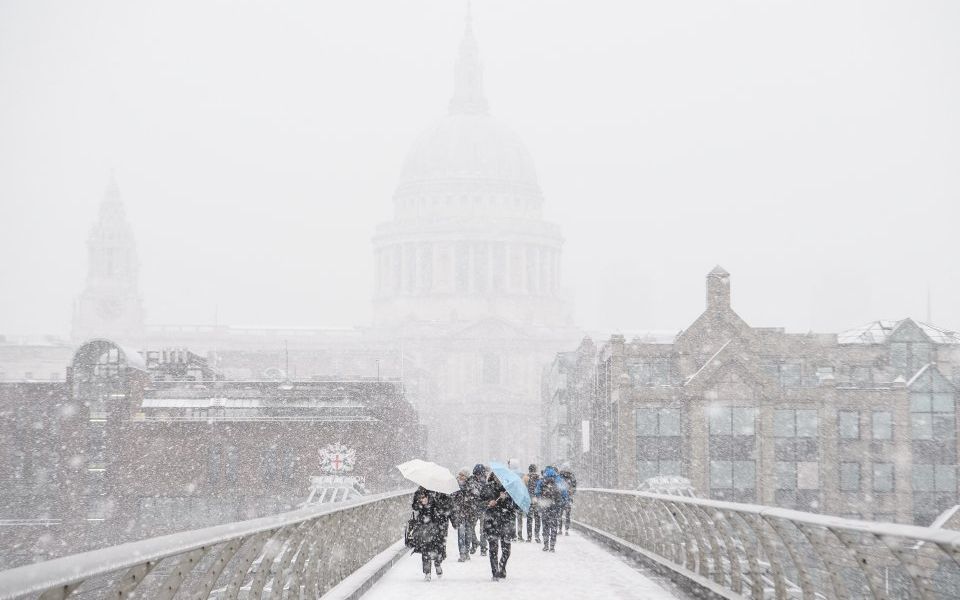
The "Beast from the East" closed schools, kept trains in their sidings and hit Britain's productivity. But can inclement weather move the stock market by affecting investors' minds?
Findings of a research project published in the Journal of Accounting Research in 2015 concluded that financial analysts respond more slowly to the implications of earnings announcements when the weather is bad than when it is good.
It put this down to changes in mood sparked by the weather. Of course, this sort of insight into investor psychology is useful if you are rapid-trading news announcements. But, as a long-term investor, these trading opportunities are less relevant. That does not mean you should ignore the weather.
There are businesses that will obviously see their operations hit by the elements. The hurricane season in the North Atlantic, for example, can have a major global impact when it causes rigs in oil-producing regions such as the Gulf of Mexico to be shut-in. However, the market reaction to these events is not always clear cut.
Last year, Hurricane Harvey smashed into the centre of the US oil industry's operations in Houston, Texas. The city is the central hub for the US energy industry and there are producing rigs in the area as well. A massive supply shock usually sends the oil price higher – but this did not happen. The oil price, counter-intuitively, fell.
The reason was that the historic storm hit demand as well as supply from crude's biggest customers – oil refineries and American drivers. Also, before the storm hit, US oil inventories were at historically high levels, so its impact on the crude price was buffered by this excess of supply.
Elsewhere, retailers are very adept at blaming sun, rain or snow for many of their woes. Earlier this week, Primark-owner Associated British Foods played the seemingly perennial weather card in its trading update after it said like-for-like sales at the fast-fashion group would probably slip 1pc in its latest 24-week period.
"Sales growth was held back by unseasonably warm weather in October with a significant decline in the like-for-like measure in that month," it said.
This implies that the polar vortex induced snow we saw last week could be positive for retailers such as Primark, Next and Marks & Spencer as shoppers buy hats, scarves and gloves. We shall see.
Insurers are also obviously hit by severe-weather events. Last year's losses from major catastrophes, known as CAT losses, were quite high. This has been reflected in the earnings that UK insurers have been posting in the latest results season. However, the large outflow of claims may have had a positive impact, as it will allow CAT insurers to raise premium prices, which have been in the doldrums.
The weather could also be good for Britain's utilities, whose share prices have been falling for a number of months. This has been caused by a rise in bond yields. Utility shares are sensitive to movements in bond pricing, as the yield is an important part of the return. With global interest rates heading higher, plus investors' minds turning to the next regulatory period, which is expected to be tough, it is questionable whether a period of cold weather in the UK such as we are experiencing right now could reverse this trend. The Beast will, however, probably have a positive impact on earnings in the next reporting season. After all, National Grid said we were almost out of gas yesterday.
Two related-weather phenomena that are closely watched because of the potential impacts on commodity markets are El Niño and La Niña. These are opposite phases of what is known as the El Niño-Southern Oscillation cycle. Essentially, fluctuations in temperature between the ocean and atmosphere in the Pacific can have a major impact on the weather. In turn, this can impact the production – and price – of products such as coal, rubber, soya beans, palm oil and wheat.
In 2011, a strong La Niña resulted in devastating floods in Queensland, Australia, which washed away infrastructure and closed mines. This sent the spot price of coking coal, a vital ingredient in steel making, soaring. Past events have also flooded copper mines in Chile, the world's largest producer of the economically sensitive metal. However, the impact is very unpredictable and it's difficult to forecast what will happen.
This unpredictability is what led to the development of weather derivatives. Previously, the way to deal with potential weather implications on businesses was to take out insurance. However, these policies only usually pay out in the case of extreme damage, what happens if cold weather reduces demand for a holiday business? In general, weather derivatives cover low-risk, high-probability events and are for corporate purposes, not part of a normal investors' toolkit.
All of this means investors should pay attention to what is going on with the weather in circumstances when it impacts a specific business. However, as we saw with the oil price during Hurricane Harvey, the reaction can be unpredictable because there are other drivers in play. Investor psychology is so utterly complex that is difficult – if not impossible – for long-term shareholders to gain a significant advantage over time. Buying into businesses with a low valuation and positive earnings outlook remains the best investment strategy.
A version of this article appeared in Friday’s Daily Telegraph.