Is Britain ready for war?

The government’s decision to scrap a number of defence capabilities has left our military’s ability to deploy in an emergency in serious doubt, says William Freer
Last month, the Secretary of State for Defence, John Healey, announced a suite of military capabilities to be cut to redirect a portion of the defence budget.
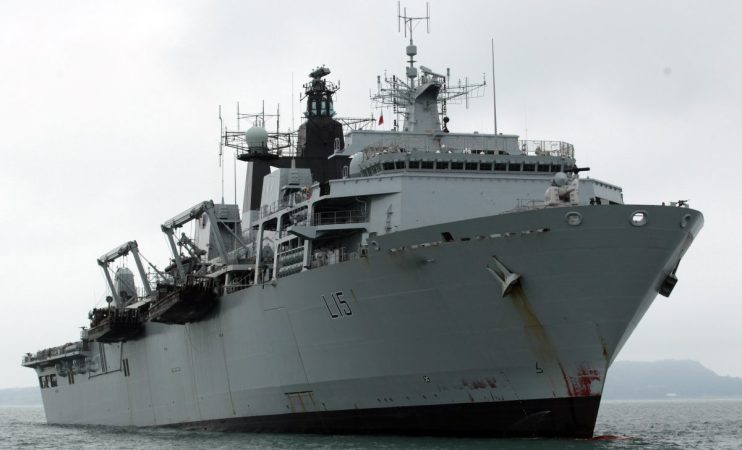
The assets set to be scrapped included two amphibious assault ships (HMS Albion and HMS Bulwark), a frigate (HMS Northumberland), two fleet tankers (RFA Wave Knight and RFA Wave Ruler), a number of Puma and Chinook helicopters, and Watchkeeper drones.
The total savings from these decisions came to £500m over the next five years, all of which will be reinvested in defence. But what prompted these cuts, and what are their implications for the long-term funding of the British Armed Forces?
The decision on the helicopters was logical. They were completely worn out, having been in service for decades and keeping them going would not have been worth the expense. Similarly, the decision to scrap HMS Northumberland comes over 30 years after it entered service – a life of service well beyond what was planned when she was built.
A capability gap
The other decisions are more complicated. The Watchkeeper drones have had a troubled life of budget overruns, delayed schedules and reliability issues. Combined with the vulnerability of larger drones in the skies over Ukraine, the decision might seem straightforward. But cutting the Watchkeeper’s reconnaissance and targeting capabilities without an immediate replacement creates a capability gap. With further funding likely to remain unclear until the Strategic Defence Review reports back next year, this presents a real issue for the British armed forces.
On the surface, the decision to scrap two amphibious assault ships and two fleet tankers, none of which had actually been to sea any time recently, may also seem like a sensible money saving measure to spend resources better on frontline forces.
However, the two tankers provided redundancy for potential losses should any of the more active tankers be damaged in peace or destroyed in war. The reason the two tankers have been so inactive is because of a lack of Royal Fleet Auxiliary crews, largely a result of pay dissatisfaction. The total RFA pay bill comes to under £100m per year, a great return on investment for the UK and its allies from a tiny fraction of the defence budget. Resolving the RFA pay dispute to get these ships back to sea would not have required vast expense.
Albion and Bulwark had also both been in port for some time due to the limited availability of crews. But the ministry of defence recently announced a package of recruitment and retention policy reforms, they could have waited to see if these reforms helped bring in the needed personnel.
Even if that didn’t happen, keeping these two ships in reserve at the tiny cost of £9m a year complicates the planning assumptions of the UK’s adversaries. For a few years, until new amphibious warfare ships are built, adversaries won’t have to worry about the UK’s potential to land troops anywhere on their coastline.
Meaningful reserves
These decisions show three things, one positive and two negative. The positive is that the new defence team is willing to make tough decisions, even if it generates bad headlines, to modernise the armed forces. But on the other side of that coin, they have shown little interest in maintaining meaningful reserve capabilities to be activated in a time of emergency – something which the conflict in Ukraine has shown has real value.
The decisions also highlight just how tight defence spending is. £500m over five years is a fraction of defence spending, in a budget which recently received a modest uplift. The move towards spending 2.5 per cent of GDP on defence cannot happen soon enough. As the world becomes more volatile, the need to rebuild and modernise our armed forces after 30 years of underinvestment will only grow. It is increasingly evident that even 2.5 per cent might not be enough to guarantee our safety.
William Freer is a research fellow in national security at the Council on Geostrategy