Is Budget speculation a bad thing?

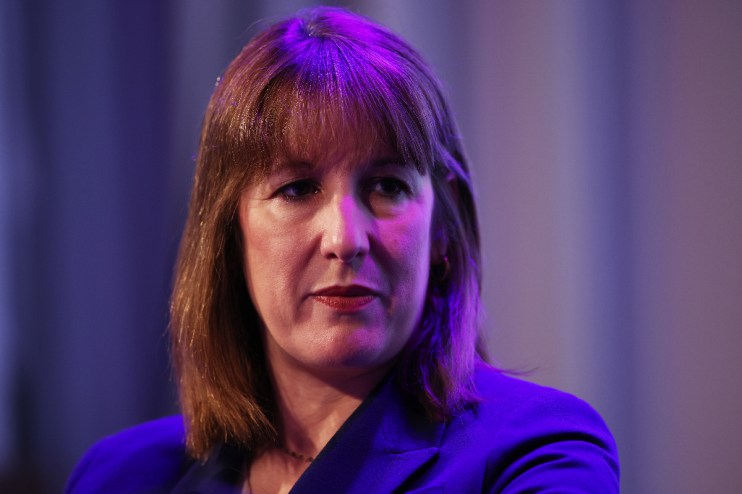
Testing measures before the big day can be helpful, but the upcoming Budget has been a feeding frenzy, making it impossible to distinguish fan fiction from genuine policy, says Tim Sarson
The Autumn Budget speculation season has become rather a circus. I thought last year was unusually long and noisy but 2025 takes things to another level.
Since the summer everyone with an informed view on the UK tax system – and plenty without – has been putting their two pennies worth into the mix. We always had Treasury insiders flying kites ahead of the statement, but this year they’re joined by a covey of think tanks doing their think tanking over the fiscal landscape, and in an environment of tax rises we’re witnessing the birth of a new genre of fan-fiction devoted to speculating in lurid detail on the most bloodcurdling hypothetical threats to certain groups of taxpayers.
So our annual KPMG pre-budget predictions blog is at a record word count. So much to discuss that we’ve had to reformat what used to be a breezy few paragraphs into a veritable dissertation with drop down menus. Add up all the mooted tax raising ideas and nevermind closing the deficit, the amounts being touted would be enough to start up our own modest sovereign wealth fund.
In an environment of tax rises we’re witnessing the birth of a new genre of fan-fiction devoted to speculating in lurid detail on the most bloodcurdling hypothetical threats to certain groups of taxpayers.
Watching over this, those notorious gilt markets whose every small flicker seems to drive ministers and opposition MPs into a paroxysm of nerves. They have been the ghost at the banquet for the last four years of budgets.
How have we ended up in this feeding frenzy? Can any good come out of it?
It’s probably helpful that some of the more impactful measures get aired before ending up in the Chancellor’s speech. Our Budget process is unusual among developed economies: one speech, often containing fundamental reforms of our tax system, then straight into a draft bill that’s usually quite lightly debated given our majoritarian parliamentary system, and into law it goes.
Elsewhere the legislative process can be long and fraught, with negotiations taking place in plain sight as parties and factions try to piece together a bill that can command a majority. In the US the two houses both come up with their own versions and the process takes months. In France a single budget this year has brought down three Prime Ministers.
Kite flying set you up for a fall
When you fly a tax kite you set it up for a fall, but that can be a good thing. We witnessed in 2022 what happens when the country and financial markets are taken by surprise by a package that they don’t believe adds up. Airing a measure before the day reduces the risk that ideas that have not been fully considered will make it through. You could argue that a bit more pre-briefing on the employer’s National Insurance Contributions changes last year, particularly the widely criticised dropping of the lower income threshold, might have helped the government avoid the worst of the fallout while still raising revenue.
The march of the think tanks has been interesting to watch this year. They were always there, putting their views forward. But this year the interventions have been prominent, detailed and – one senses – influential on government policymaking.
Social media now also treats us to a wider informal commentariat, spearheaded by tax expert Dan Neidle, that has developed a symbiotic relationship with researchers and the financial media.
I welcome the think tanks’ wonkishness. They introduce ideas into the national conversation that go beyond short-term expediency into the sort of fundamental reform that parts of the tax system really need. Their ideas, good or bad, tend to have more of an intellectual coherence than the tinkering we’ve got used to from chancellors. That may make some of their ideas politically impractical, but at least they are getting them out there.
But crikey, this time there is simply too much. We are flooding the zone. The volume of ideas brings confusion rather than clarity. It also encourages the “vocalisation of minorities” that former Treasury bigwig Sir Edward Troup has commented on, meaning that in a process like tax reform that creates winners and losers, a small group of losers will usually make more noise than a larger but quiet group of winners.
With a flooded zone how do you separate the fan fiction from serious proposals? It’s hard, because unlike in a more open debate as happens in the US, or European countries with coalition negotiations, we can never be sure of the source of many of the ideas. It’s all rather cloak and dagger.
This would be no more than annoying if it didn’t have a behavioural effect too. Surveys show depressed household and business sentiment, with investors quoting fiscal uncertainty as one of the main reasons. I know anecdotally that companies are putting off investment decisions until they get some more clarity. That is not healthy. Because no sooner do we get clarity from this event than speculation for the next one will begin. News travels too. I go abroad and notice that some of the more lurid speculation has been noticed.
I hope this feeding frenzy is temporary and we return to something like normality next year. It would certainly help if there weren’t a looming fiscal gap for commentators to fill with their suppositions. But I fear the genie is out of the bottle.
Tim Sarson is head of tax policy at KPMG