Skip to content
Tuesday 1 September 2026London --:--Frankfurt --:--Zurich --:--
NewslettersSearchEN · DE · FR
MorningWire

European business, markets and politics

FTSE 100
10,789.28
-0.32%
DAX
25,970.11
-1.10%
CAC 40
8,301.85
-0.39%
STOXX 50
6,368.98
-0.80%
  • Europe
  • Markets
  • Business
  • Economy
  • Regulation
  • Politics
  • Opinion
More
GermanyFranceEU InstitutionsCompetitionPublic AffairsBankingTechnologyEnergy
  • Germany
  • France
  • Europe
  • Markets
  • Business
  • Economy
  • Regulation
  • Politics
  • Opinion
  • DE
Monday 14 December 2015 1:58 pm

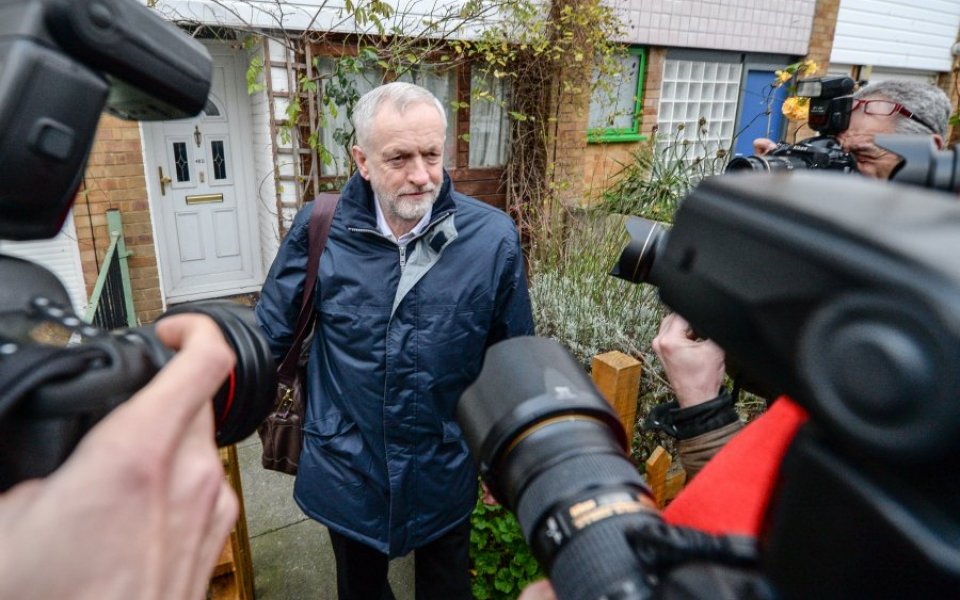
Is Labour leader Jeremy Corbyn right – when it comes to kickstarting the economy, is it time for a people’s QE?

By: Michael Howell

Add as a preferred source on Google

This is a big week for capitalism. In the next few days, the US Federal Reserve will finally start to remove its accommodative post-2008 crisis policy by pulling money out of markets.

With asset markets buoyant and the American jobs market seemingly strong, policy-makers should be surely saying ‘job well done’? But, on the ground, things look different.

Too few people have participated in this recovery and many more have been left far behind as asset values have soared. QE has worked for the wealthy, but it has cut a deep division through American and European societies.

More worryingly, for all the talk of success, the developed economies will end this year nearly 10 per cent behind in per capita income that their great grandparents were at the equivalent stage of the 1930s depression.

Although the interwar economy sank faster, it resurfaced more quickly and with a faster momentum, as the chart shows. Today, our heads are above economic water-line, but we’re just trashing around. The plain fact is that today’s QE (quantitative easing) policies have failed, not succeeded, to deliver growth.

The big difference between the 1930s and now seems to lie in the balance of spending. Ignoring, as far as possible, rearmament ahead of WW2, much deficit spending was then targeted on housing, roads and major infrastructure projects.

Large parts of today’s built environment originated in the Inter-war recovery, when they helped to provide real incomes and real jobs, from mass house-building and the industrialisation along arterial roads, like West London’s Golden Mile.

With long-term bonds across Western economies yielding barely two per cent, it is unfathomable why governments are not borrowing at these low interest rates and spending more? And, with major Western economies slipping back into deflation and commodity prices plunging, inflation concerns from more spending are hard to accept.

The poor quality of today’s infrastructure makes this inertia even harder to understand.

Perhaps there is also something after all in the Corbynomics idea of a “People’s QE” that allows central banks to finance investment spending by buying up more of these government bonds?

The US Fed should not be reversing QE, but boosting it to help upgrade America’s roads and railroads. Britain is dithering over a new airport runway for London: Heathrow or Gatwick? Just build both.

Share this article

  • Facebook
  • X
  • LinkedIn
  • WhatsApp
  • Email

Similarly tagged content:

Sections

  • News

Categories

  • Business
  • Politics

Trending Articles

  • Vodafone and Deliveroo look to patch up Reform ties after Yusuf prison threats

  • Jaguar reveals the Type 01’s screen-free interior

  • Trio of firms poised to quit London Stock Exchange as exodus gathers pace

  • As it happened: FTSE 100 slides as bound rout deepens; Oil jumps as Trump vows more strikes on Iran

  • Green activists want to take Polanski down a dark road

More from Morning Wire

  • Economists urge Bank of England to halt bond sales as borrowing costs climb

    Economics
    Bank of England headquarters with financial charts overlay, illustrating private credit stress test analysis
  • Tracker funds are turning 50 – will they make it to 100?

    Markets
    John C. Bogle, Vanguard founder, speaking at a business event, wearing a suit and tie
  • UK investors turn to bonds as equities valuations continue to stretch

    Markets
    Traders analyzing data on screens at London Stock Exchange, showcasing investment trends and market activity
  • Easyjet extends window for another Castlelake bid

    Aviation
    EasyJet aircraft parked at the airport terminal ready for boarding, featuring distinctive orange branding and clear blue sky.
  • Barclays and Lloyds back calls to digitalise UK markets and unlock £33bn boost

    Markets
    GettyImages 2211256637 showing a significant event or figure relevant to recent news updates in the business sector
  • Pension funds pledged a private investment splurge. Three years on, has anything changed?

    Markets
    Mansion House meeting of pension fund leaders discussing investment strategies and financial accords in a grand boardroom ...
  • As it happened: FTSE 100 climbs as markets digest Bessent buyback

    Markets
    Scott Bessent, a man with gray hair and glasses, wearing a blue suit and striped tie, looking to the side.
  • Chrysalis marks down Starling stake again and reduces Klarna holding

    Banking
    Hand inserting a turquoise Starling Bank PCA debit card with Mastercard logo into a brown wallet.
MorningWire

Independent European business, markets and political news for decision-makers.

Morning Briefing

Europe

  • Germany
  • France
  • EU Institutions
  • Europe

Business

  • Markets
  • Business
  • Economy
  • Regulation
  • Competition
  • Public Affairs

Editorial

  • Opinion
  • Editorial Policy
  • Corrections
  • Contact

Company

  • About Morning Wire
  • Privacy Policy
  • Terms of Use
  • Cookie Policy
© 2026 Morning Wire Ltd · Published by Morning Wire Media, Bahnhofstrasse 65, 8001 Zürich, Switzerland
Privacy · Terms · Cookies · Facebook