Is Parma ham really bad for you? We sent someone to Italy’s Emilia-Romagna region to eat as much as they could

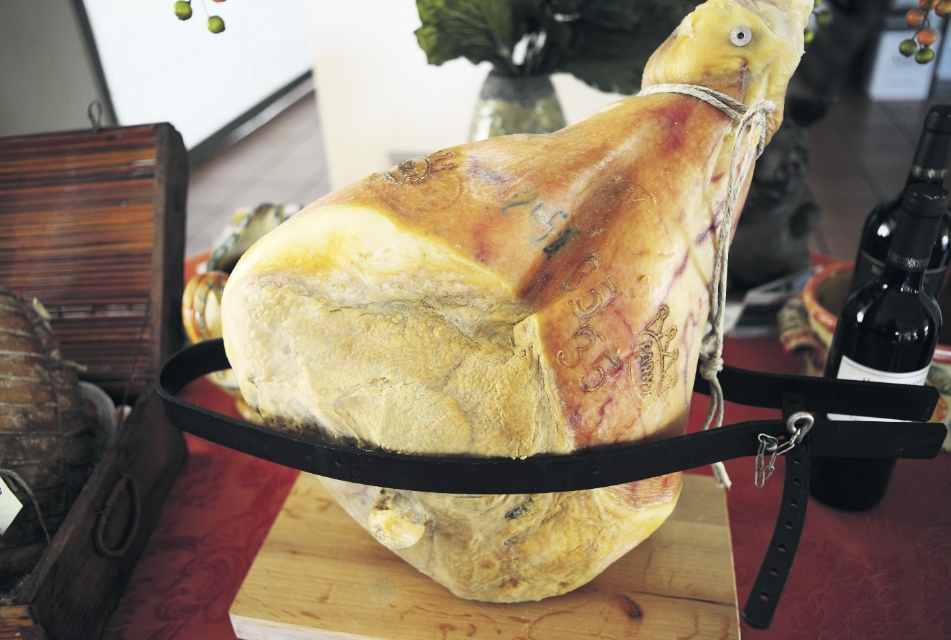
W e had only meant to stop for a light lunch. But in a quiet square in the tiny town of Piacenza, waiting staff at the Taverna In busied themselves bringing plate after plate of unbearably delicious looking fare.
There was a platter of cheese featuring crumbly gorgonzola, fat chunks of salty parmesan and creamy, smoky scamorza; a bowl of briny artichoke hearts; a dish of baked aubergines, smothered in rich, basil-spiked tomato sauce and topped with melted mozzarella; and a basket of something that looked like small golden pillows, which turned out to be gnocco fritto.
These were to accompany the plate of affettati misti, which is what this region does best, namely, cold cured meats. Silky prosciutto di Parma shared the table with cured pork shoulder and translucent strips of raw pancetta, made up of more fat than meat. And that was before we even got on to the pasta course.
To question whether they love eating in Emilia-Romagna would be to query whether bears use the woods as a public convenience. Here, food is treated with the kind of reverence normally reserved for art.
Its producers are referred to as artisans, many of whom have been doing the same thing for generations, and whose products take months, if not years, to perfect. People here build whole festivals around mushrooms. Even this year’s World Expo, which was held in Milan, was based around the theme of food and sustainability.
From the best balsamic vinegar in Modena, to prime prosciutto in Parma, and the many different shapes of fresh, handmade pasta in between, each town in the region has a speciality. Many of these are so prized around the world, that they have D.O.C (or ‘controlled designation of origin’) status, which guarantees that they are produced using particular methods, and to a particular standard.
No wonder Emilia-Romagna is one of the wealthiest regions in the country. Spanning over 8,500 square miles, it’s crossed by the Po river, making its soil perfect for agriculture. Its flat roads are perfect for the famous local car manufacturers to test their luxury products: Ferrari, Lamborghini, and Maserati were all born here.
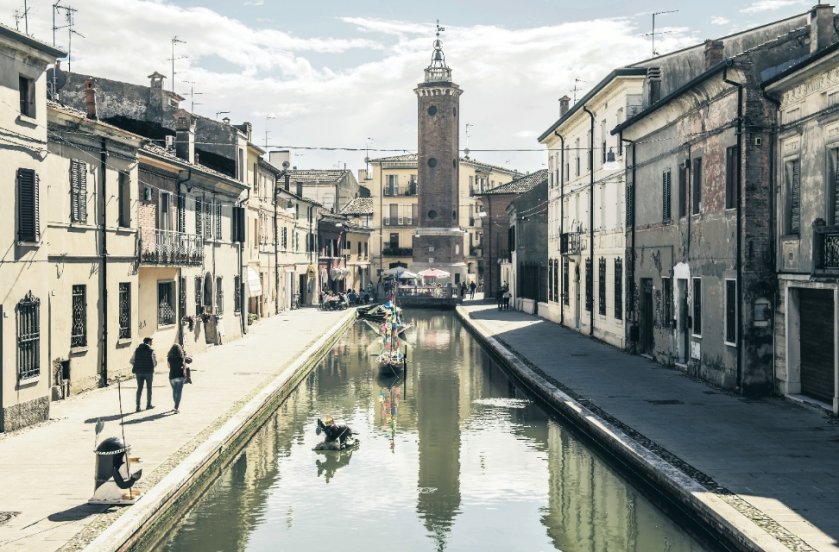 Film-makers on a budget flock to Comacchio as a sort of faux Venice
My first destination after Piacenza was Parma, a medium-sized city with such landmarks as its 13th century octagonal baptistery, the Baroque-style Teatro Farnese (a theatre built, and named, by an influential aristocratic family) and the Palazzo della Pilotta, the former Farnese family home.
All very cultural, but back to eating. There was a tour to take around the plant of a nearby Parma ham producer, Piazza Peppino and Co.
Brothers Martino and Riccardo Piazza and their cousin Francesco are all in their late 20s and early 30s, impossibly handsome and passionate about pigs. Working in the business started by their grandfather in the ‘70s, they produce 35,000 haunches of dry-cured ham per year, using nothing more than salt and air.
Each phase of the process – from slaughtering to fat-trimming, refrigeration, salting and drying – is carried out within strict temperature, safety and hygiene controls, regulated by the official Parma Ham consortium.
To obtain a coveted D.O.C. status, the Piazzas have to submit every single ham to an inspection by the Parma Institute of Quality. Only then will they be branded with the Ducal Crown you will spot hanging from the ceiling of any decent deli.
Do they ever get fed up of eating ham? “No!” laughs Martino. “I eat it every day,” claims Francesco. And when they wheel out 22-month-old prosciutto, I can see why. Free of any additives, it’s delicate and ever so slightly sweet.
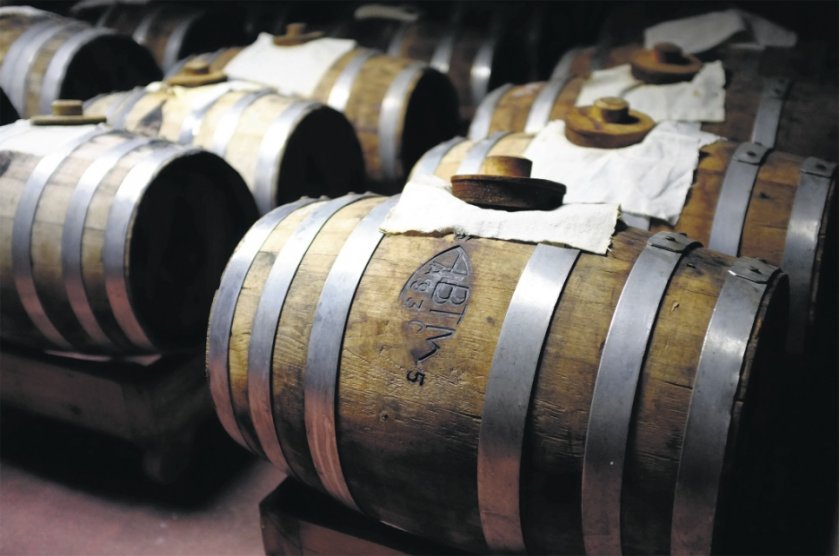 Barrels o' balsamic vinegar
Heading further east, I stop off at Colorno. Here, I’m shown around the cellars of the Bergonzi family, where they’ve been making culatello di zibello – cured meat from the back of a pig’s thigh – for decades.
Walking under hundreds of dangling pigs, mouldy from the humidity (don’t worry, this is frequently scraped off), the owner’s wife, Edgarda, shows me how the culatello inspectors can tell whether the meat is going to be good or not by thumping it with a hammer. It makes a slightly different sound when it’s perfectly dried, I’m told, and this is what the culatello consortium will be looking for.
A more unusual delicacy originates in Comacchio, a village that, owing to its many canals, sometimes doubles as Venice for budget-conscious filmmakers. Here, you can have anything you want as long as it’s eel.
Anguilla marinata (that’s pickled eels) is the area’s speciality, and there are 48 different ways it can be prepared here. There’s an eel festival every October, and a factory devoted to pickling them has been here for decades.
In fact, actress Sophia Loren once played the part of an eel pickler in a short film in the 1960s, which eventually led to her doing a bit of advertising for the company. Oh, the glamour.
My final food stop is in the outskirts of Modena, where I visit the vineyards of Villa Bianca, an acetaia, or vinegar producing company. Dr Emilio Biancardi’s family has grown, picked, mashed and pressed the white Trebbiano grapes, boiled their juice and then aged it in wooden barrels for over a hundred years.
Carrying on the tradition, he explains how the grapes need to have a high sugar content to turn from a pale, watery juice to the dark brown, syrupy liquid we know as balsamic, a process that takes at least 12 years. This then sells for around £36 for a bottle and if it hasn’t got the word ‘tradizionale’ on it, then discard it as a pale imitation.
But the very finest balsamic vinegar of Modena fetches an even higher price. Aged for 25 years, these bottles tend to sell for around £65. An expensive condiment, sure, but compared to the cost of a Maserati Quattroporte it’s still a cheaper way to get an authentic taste of Italy.
NEED TO KNOW
For BA flights to Bologna visit britishairways.com
To arrange a tour and tasting with Peppino Piazza and Co call (+39) 0521 861329, with Ristorante al Vedel visit poderecadassa.it, or with Villa Bianca visit acetaiavillabianca.com/en/
For Taverna In call (+39) 0523 33 57 85; for Al Cantinon visit alcantinon.com;for Cascina Scottina visit relaiscascinascottina.it; and for the Stallo del Pomodoro visit stallodelpomodoro.it
For more info about Emilia-Romagna visit emiliaromagnaturismo.it