Skip to content
Friday 7 August 2026London --:--Frankfurt --:--Zurich --:--
NewslettersSearchEN · DE
MorningWire

European business, markets and politics

FTSE 100
10,901.09
+0.31%
DAX
26,319.45
+0.69%
CAC 40
8,714.93
+0.17%
STOXX 50
6,523.86
+0.33%
  • Europe
  • Markets
  • Business
  • Economy
  • Technology
  • Politics
  • Opinion
More
GermanyFranceBankingAIEnergyFintechPropertyCapital Markets
  • Germany
  • France
  • Europe
  • Markets
  • Business
  • Economy
  • Technology
  • Politics
  • Opinion
  • DE
Wednesday 11 September 2024 5:49 am  |  Updated:  Tuesday 10 September 2024 4:26 pm

Is there such a thing as a ‘fair’ price? Definitely, maybe…

By: Paul Ormerod

Add as a preferred source on Google
Demand for hotel rooms in London has skyrocketed
Ticketmaster failed to tell fans in queues that standing tickets were being sold at two different price points, with the cheaper ones vanishing first.

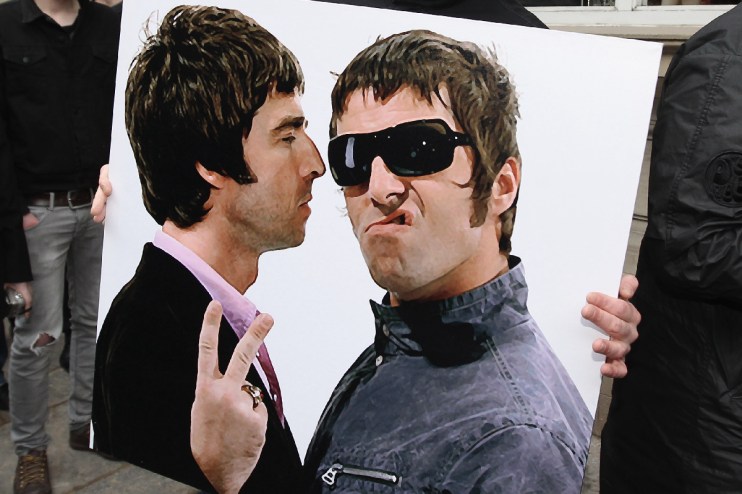
Oasis tickets have stirred controversy, but the question of how prices are set in a market goes all the way back to Alfred Marshall and Francis Edgeworth, says Paul Ormerod

The pricing of tickets for the forthcoming Oasis tour has stirred up a major controversy.  

This is not just on social media. Lisa Nandy, the culture secretary, has promised it will be included in a government review of pricing at gig events. One of her cabinet colleagues, Lucy Powell, has expressed personal outrage at the amount she had to pay for her tickets. Nandy has received the support of the Competition and Markets Authority for the review.

At the heart of the matter is a concept called dynamic pricing. The basic idea of this is straightforward. It is simply that price is determined by the interaction of demand and supply. Advances in technology enable this to be done more efficiently and to dress it up with its new name.

But allowing prices to be set by a market is something which causes hackles to rise in large sections of the population.

We might note that there is often inconsistency in an individual’s view on this. Someone who boasts about the price they obtained when selling their car, or even their house, might in the next breath complain about being “gouged” when they bought tickets for the Oasis reunion.

The myth of the ‘fair’ price

Even so, there is a widespread belief that it is somehow unfair to allow companies to make too much money by taking advantage of a high demand for their product. It is ultimately rooted in the medieval concept of the “just price” – just in the sense of being fair.

Sometimes companies are forced to change their decisions to fit in with this view. A notorious example was in 2016 when the owners of Liverpool FC decided to increase the price of season tickets substantially, on the grounds that the demand for them was much greater than the number of seats available. At the next game, 10,000 fans walked out, showing a neat touch of Scouse humour by doing so at the 77th minute of the game, coinciding with the proposed new price of £77.  The increase was abandoned.

Yet, far more often, companies do not take advantage of excess demand for their products.

Read more

What should sport expect from Andy Burnham and Lisa Nandy?

GettyImages 2286323428: Business professionals in a meeting, discussing strategies with charts and laptops.

The economics Nobel Laureate Richard Thaler gives the example of the Superbowl in America. The NFL, the sporting body which runs the event, takes a long-term strategic view towards ticket prices, keeping them reasonable despite huge demand. He quotes an NFL representative saying that this strategy fosters its “ongoing relationship with fans and business associates”.

Being a behavioural economist, Thaler ascribes this to consumers having an inherent sense of ‘fairness’ which it is not in the interests of companies to ignore.  

Mainstream economics, however, can explain this readily enough. Yes, firms act to maximise profit. But what maximises profit in the immediate short term may not do so in the longer term. Even basic textbooks make this distinction.

But the question of how prices are set goes way beyond the textbooks to the very heart of economic theory. Often, it is far more complex than the simple interaction of supply and demand.

Marshall vs Edgeworth

Two giants of economics locked horns on this over a century ago. Alfred Marshall at Cambridge formalised the idea that price is set by the interplay of supply and demand.  Francis Edgeworth at Oxford disagreed. Supply and demand matter, but there is a bargaining process in addition which means that there is an inherent element of uncertainty about the eventual price which will emerge.

Marshall dominated for much of the 20th century, but modern economic theory is much more inclined to take Edgeworth’s approach.

The government may be hoping their review into gig pricing will prove straightforward. But the determination of prices is a very complex question to which there are often no easy answers.

Paul Ormerod is an economist at Volterra Partners LLP, an Honorary Professor at the Alliance Business School at the University of Manchester and author of Against the Grain: Insights of an Economic Contrarian, published by the IEA in conjunction with Morning Wire

Read more

Lisa Nandy has set a terrible precedent by flouncing off Twitter

Culture secretary Lisa Nandy has warned that the limbo over David Kogan’s appointment as head of the Independent Football Regulator is “obviously having real-world consequences”.

Share this article

  • Facebook
  • X
  • LinkedIn
  • WhatsApp
  • Email

Similarly tagged content:

Sections

  • Opinion

Categories

  • Opinion

People & Organisations

  • Liam Gallagher
  • Lisa Nandy
  • Lucy Powell
  • noel gallagher
  • Oasis
  • prices
  • Ticketmaster

Related Topics

  • Economics

Trending Articles

  • Revolut founder’s wealth set to balloon amid talks of share award at $500bn valuation

  • Rupert Lowe axes pensions triple lock and pledges tax cuts in economic plan

  • WPP slashes jobs as revenue continues to fall

  • Liverpool owners tipped to sell – but not to Amazon boss Bezos – by former CEO

  • As it happened: Stocks rise as oil fluctuates after Red Sea attack; US-Iran deal ‘being circulated’

More from Morning Wire

  • What should sport expect from Andy Burnham and Lisa Nandy?

    Sport Business
    GettyImages 2286323428: Business professionals in a meeting, discussing strategies with charts and laptops.
  • Lisa Nandy has set a terrible precedent by flouncing off Twitter

    Opinion
    Culture secretary Lisa Nandy has warned that the limbo over David Kogan’s appointment as head of the Independent Football Regulator is “obviously having real-world consequences”.
  • Competition watchdog clears Paramount Warner Bros acquisition

    Media
    Paramount, Netflix, Warner logos; media giants intensifying streaming competition and strategic industry shifts
  • Starmer took sport freebies worth tens of thousands of pounds while PM

    Sport Business
    Getty Images logo on a digital screen, symbolizing media content and stock photography for news and business platforms
  • Manchester United issue major stadium update for ‘New Trafford’

    Sport Business
    Manchester United and opponent team players in action during a 1-1 draw, capturing intense moments of the match.
  • Over 1,000 World Cup final tickets unsold as resale site demands $2.3m

    Sport Business
    Breaking news concept with abstract digital globe and binary code on a blue background, symbolizing global data connectivity
  • Burnham accused of gutting tech department’s ‘biggest strength’

    Tech
    Andy Burnham, Mayor of Greater Manchester, smiling in glasses, dark jacket, light blue shirt, blurred green background.
  • Bargain: England World Cup semi tickets vs Argentina just $2,700

    Sport Business
    GettyImages 2285694346 shows a dynamic cityscape with bustling streets, highlighting urban life and modern architecture.
MorningWire

Independent European business, markets and political news for decision-makers.

Morning Briefing

Europe

  • Germany
  • France
  • Europe
  • UK & Ireland

Business

  • Markets
  • Banking
  • Technology
  • Energy
  • Property
  • Fintech

Editorial

  • Opinion
  • Editorial Policy
  • Corrections
  • Contact

Company

  • About Morning Wire
  • Privacy Policy
  • Terms of Use
  • Cookie Policy
© 2026 Morning Wire Ltd · Published by Morning Wire Media, Bahnhofstrasse 65, 8001 Zürich, Switzerland
Privacy · Terms · Cookies · Facebook