Is your business about to feel the Ozempic squeeze?

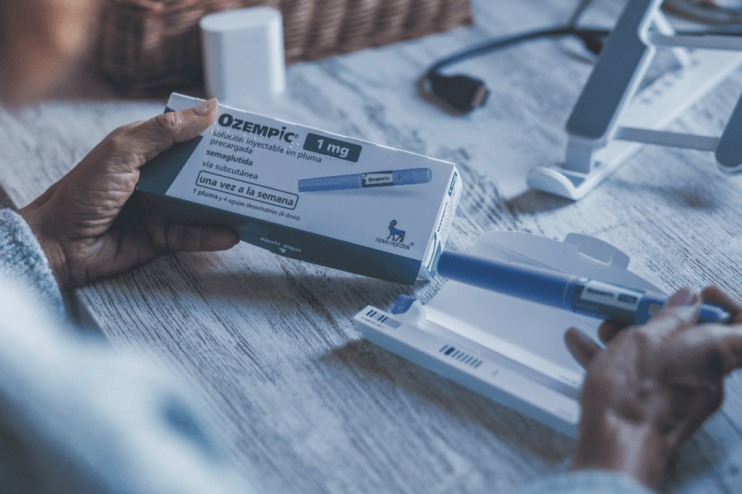
Reshaping stomachs with weightloss drugs like Ozempic likely means reshaping some markets (and probably your strategy), says Paul Armstrong
Ozempic, Wegovy, and Mounjaro are driving a subtle but undeniable shift in obesity rates across the U.S, showing a 2 per cent drop so far. While it’s too soon to crown these drugs the cure-all, their impact on obesity and related health conditions is real. But here’s the twist: for businesses, a lighter population isn’t just a health win — it’s a potential disruptor.
Here’s why it matters. Around 64 per cent of UK adults are overweight or living with obesity, and that level of chonk (yep, I’m in that club too) comes with a hefty price tag. The UK spends £98bn annually on obesity and all its complex, associated consequences. That’s four per cent of the nation’s GDP. Even a slight shift in these numbers could dramatically alter public spending and the wider economy, but not everyone’s going to benefit.
Last week’s budget included a massive bump for the NHS. These drugs have already piqued the interest of Wes Streeting and Keir Starmer, who are eyeing ways to get people back to work. Yet, the effects won’t just hit hospitals and job centres. Entire sectors — food, fitness, airlines — are going to feel the weight shift. The ripple effects will reshape industries from the ground up, and business leaders who think they’re safe from these changes could be in for a shock.
For airlines, lighter passenger loads could ultimately bring chunky fuel savings
Some scenarios are already here while others are looming on the horizon; in the £6.6 trillion global food sector, brands are preparing for reduced demand in high-calorie foods, shifting focus to low-calorie, nutrient-dense options along with disruption to supply chains around the world. The £82bn fitness industry may see gains, with increased demand for home workouts, outdoor activities, and fitness tracking as consumers maintain healthier lifestyles. For airlines (£660bn), lighter passenger loads could ultimately bring chunky fuel savings, with potential for long-term aircraft redesigns to increase seating capacity. Fashion and apparel (£1.4 trillion) folks are licking their lips in anticipation of new wardrobes, as well as reducing plus-size lines and boosting performance and wellness-oriented attire. The £8.3 trillion healthcare and pharmaceuticals sector will see a reduction in medications due to the drugs benefits, and their services may diversify, likely seeing less weight-related surgeries to perhaps more cosmetic ones.
Mental health services will need to adapt as people grapple with identity and self-esteem changes post-weight loss. The property market could see a drop in urban demand as people don’t need to rely so much on close medical or fitness services. Personal care and cosmetics (£470bn) will undoubtedly experience an increase in demand for skincare, anti-ageing, and self-care products as consumers prioritise wellness. Insurance (£4.6 trillion) will likely need to adjust premiums and risk models in light of improved population health, impacting revenues across life, health, and disability coverage. These are just a few obvious scenarios. Bottom line: if your industry intersects with health, food, retail, or lifestyle, expect disruptive secondary effects that will impact your strategies and operations. Savvy companies won’t just brace for impact; they’ll pivot to seize growth.
Bottom line: if your industry intersects with health, food, retail, or lifestyle, expect disruptive secondary effects that will impact your strategies and operations
The hype around these drugs isn’t just about weight loss — they’re tackling inflammation, heart health, and more, with broad-spectrum effects that are reshaping markets. The internal business impact could also be sizable. Healthier employees tend to have lower sick rates, improving productivity and reducing multiple costs for employers. Rethinking perks programs could also make sense in the short and long-term. Subsidising GLP-1 drugs could even become part of perk programs, aligning employee health goals with company gains — a bold move, but we’ve all seen stranger initiatives.
Give your business a health assessment
Perspective is important here, we can’t underestimate the resilience of existing consumer habits, industry pushback, and business models, all of which are deeply entrenched, complex and slow to pivot. Neither are these drugs free or universally available yet, but the clock is ticking. For the West, substantial shifts are likely within five to 10 years, with mid-term disruptions around 2027 as generics bring down prices and easy access increases. By 2029, oral versions are expected to hit the market, potentially accelerating change even further. Companies like Eli Lilly, Pfizer, and Terns Pharmaceuticals are leading the charge and hoping to bring that down, with some oral GLP-1s already in late-stage trials. If these hit shelves early, as is rumoured, expect major market shifts to happen as soon as 2026-2027. Granted, there is no magic distribution system, and availability will be staggered, but the data is promising for hundreds of millions, if not billions.
Businesses should understand that the rise of GLP-1 drugs like Ozempic is more than just a shift in health; it’s an industry-wide disruptor poised to reshape entire markets. Still think it’s too early? Ask Nestlé, already targeting GLP-1 consumers with their new (albeit poorly named) line, “Vital Pursuit”. Smart leaders aren’t just asking how the Ozempic effect will reshape their industry, they’re asking if their business is ready to handle the aftershocks. Companies that take a strategic approach, undertaking a thorough “health assessment” now, will be positioned to leverage these shifts, not be rocked by them.
Paul Armstrong is founder of TBD Group