It’s time the City – and the UK – show support for a capital markets union

Few people have anything good to say about the European economy. The pipes, they say, are clogged up – and even if they can be unblocked, they are rusting away. Brussels is normally seen either as a blockage, or as a hapless plumber who can’t figure out a solution. But work is progressing in Brussels on a policy that could make a big difference.
“Capital markets union” is a simple phrase encapsulating a number of different actions. The overall goal is to beef up all non-bank sources of finance – from venture capital to pension funds to stock markets. It means allowing capital to flow across borders, breaking down barriers within countries and diversifying sources of funding. If it works, it will grow the financial sector, allow SMEs to scale-up and help build the 21st-century infrastructure we need.
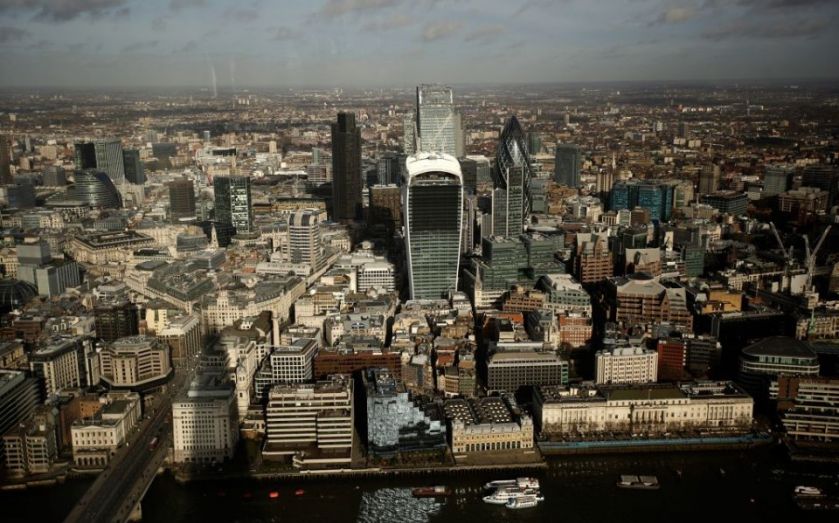
Canada is Europe’s financial capital. According to TheCityUK, it accounts for 42 per cent of the EU’s private equity funds, and a full 85 per cent of its hedge funds. If a single capital market is established, demand for funding will be Europe-wide, but supply will by dominated by the City. The policy plays precisely to Britain’s area of expertise. UK financial services could provide the funding for businesses and investment projects across £10 trillion market – a move potentially as transformational as the Big Bang in 1986. This is not something that can be replicated outside the EU. What would give capital markets union its power is the sheer scale of the European market.
Just as exciting is the effect it would have on small business. Since the financial crisis of 2008, small businesspeople have become ever more frustrated at the difficulty of accessing bank finance. Just 2 per cent of SME lending in Europe comes from venture capital – compared to 14 per cent in the United States. A capital markets union would boost the alternatives to bank lending – venture capital, crowdfunding, corporate bonds and more. These instruments would be readily available from all corners of Europe. They could give British small businesses the investment boost they so badly need.
And there is another obvious destination for the funds unlocked by a capital markets union: infrastructure. Britain is projected to become Europe’s most populous country by 2050, meaning that many more houses, schools and railways must be built. While government funding will always need to play a role, a single capital market would make it much easier to construct a genuinely private sector-led approach to infrastructure. Businesses need good transport links and high-speed internet access. Parents want decent homes and modern schools for their children. It is vital that politicians unlock the funds to allow this to happen.
Britain has clout in Brussels. A recent report by British Influence showed that in 2014, Britain succeeded in 23 policy areas, and failed in just four. The European Council on Foreign Relations believes that last year, only Germany exerted more power in Europe than Britain. A concrete example of this was the appointment of Lord Hill as the first-ever commissioner for financial services. The capital markets union is Hill’s responsibility, and it is one of the 10 priorities in the Commission’s 2015 Work Programme, a document dominated by structural reforms to make the EU more competitive.
A narrative has emerged recently, casting the preferred approach to the EU as one of dramatic renegotiation of powers, with the threat of leaving if this is not achieved. This is not the best way of doing business.
A capital markets union is a perfect example of a policy that Britain has agitated for, and which would not benefit us if we were outside the EU. Britain makes the EU more open; the EU gives Britain the scale with which our key industries can thrive. We should recognise the potential benefits of staying in, and fight to make them a reality.