It’s time to embrace the free thinkers who recognise the EU isn’t the future

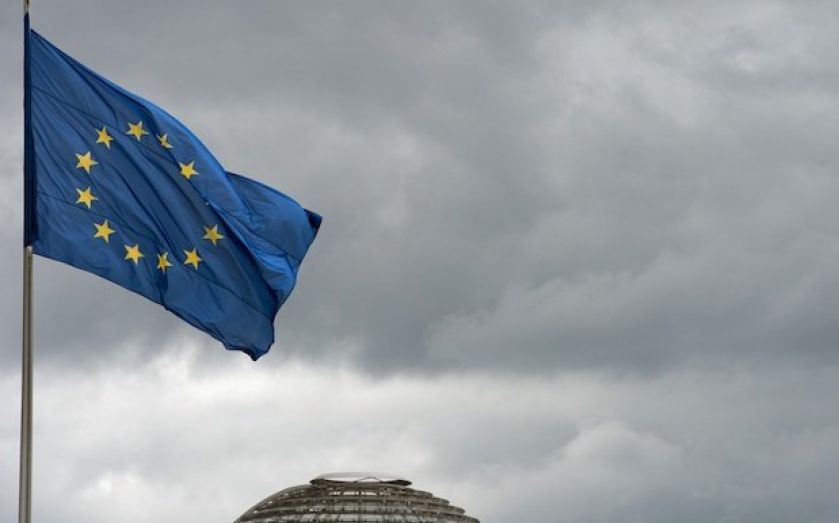
GEORGE Orwell would have had the EU’s number. As he memorably noted, “Political language is designed …to give an appearance of solidity to pure wind.” That is just the strategy the EU’s cheerleaders have been using since the start of the euro crisis. Barely a month passes without some European potentate telling us that Brussels has survived the crisis, that all is well, that the EU is indestructible and somehow very much the future.
This is patently nonsense. Europe will have mastered the worst economic crisis since the Depression when its debtor states – Spain, Greece, Portugal, Italy – are growing at a sustained pace of 2 per cent per annum (lowering catastrophic unemployment rates), can freely borrow money on the open market, and have debt burdens on a downward trajectory. By any reasonable measure, Europe has not even begun to turn the corner.
A basic problem with European elites concealing their failings is that it makes it difficult to weigh the pros and cons of remaining a member of a club in such peril. That is Britain’s dilemma – the dilemma that George Osborne fleshed out in economic terms yesterday, by pointing out European overspending on welfare, the excessive burden of regulation, and the competitiveness crisis Europe still faces. But recognising this is only half the challenge. At the end of last year, I happened upon two instances in which thinkers tried to get beyond the EU’s Orwellian roadblock. By asking the right questions, they give us a clue for how the UK should proceed.
In December, my firm designed a war game (and I moderated eights hours of discussion) on what a European renegotiation might look like, for the think tank Open Europe. After outlining what Britain would want re-negotiated, Andrea Leadsom MP addressed a question of language that showed the chasm between London and Brussels, and pierced the hides of the euro elites around her. She straightforwardly said that, if Europe did not engage in serious economic reform soon, it would go the way of the Romans. Politely, all hell broke loose, with one continental player in particular making it clear he could not wait to see the UK leave the EU.
Leadsom had broken an important verbal taboo. European elites routinely describe themselves as “post-modern” and “post-nationalist”. They see themselves as the future, with the rest of us sovereignty-loving Neanderthals representing a brutish and soon-to-be-extinct way of life. But what if this arrogant worldview is wrong, as current global economic statistics deem it to be? What if the EU represents a 1970s corporatist statism, wholly incapable of competing with a resurgent US and the successful emerging markets? Such a question gets at the heart of the matter. If Europe is the economic and political past and not the future, the only policy choices for Britain are the reforms Osborne advocates or outright withdrawal. As the chancellor said, it is reform or decline. Reform, however, could be impossible.
What should Britain do strategically if this is the case? Enter the MEP Daniel Hannan, one of the most insightful and fearless thinkers in Britain today. His most recent book, How We Invented Freedom & Why It Matters, takes on this central question, looking at the prism of culture to chart the UK’s future. Rather than seeing western civilisation as the primary reason for the long triumph of the West, Hannan plumps for a more specific Anglo-Saxon culture as key. This culture is characterised by rule of law, personal liberty, and representative government, all of which most Anglo-Saxon states have maintained over centuries.
Hannan provocatively finds that the EU of 28 states doesn’t share a civilisation, however often Brussels mandarins say it does. Instead, these specific Anglo-Saxon characteristics are the key to ongoing global economic success (and also explain Europe’s failure). They point a way forward for the UK should it decide to leave the EU, in closer political, economic, and military ties with the US, Australia, New Zealand, Canada, the Netherlands, Switzerland, the Nordic countries and, tantalisingly, India and South Africa. This amounts to nothing less than a radically different foreign policy for a radically different world.
The joy in working with iconoclasts like Open Europe and Hannan lies in their bravery in trying to get around the Orwellian pixie dust Brussels has been blowing in our faces for so long. Only by finally asking the right questions, by calling out humbug when it is apparent, and by reimagining a British foreign policy fit for purpose in this new world, can Britain survive and thrive.
Dr John C Hulsman is president and co-founder of John C Hulsman Enterprises (www.john-hulsman.com), a global political risk consultancy. He is a life member of the Council on Foreign Relations, and author of Ethical Realism, The Godfather Doctrine, and Lawrence of Arabia, To Begin the World Over Again.
How We Invented Freedom & Why It Matters, by Daniel Hannan, is published by Head of Zeus.