It took a pandemic to show it, but now we can all see that internet access is a human right

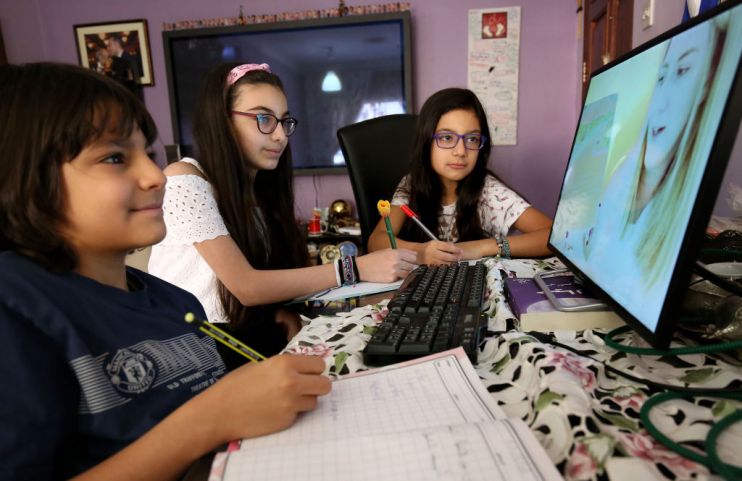
The coronavirus pandemic has shown us the importance of the internet — but for many around the world, it could be the difference between life and death.
It is time to realise that the web is not a luxury, but a necessity and a human right.
The internet has become a lifesaving tool during this pandemic, not only in enabling people to buy the resources they need online as the shops shut, but in the communication of public health information, reinforcing lifesaving messaging and answering questions, as well as mitigating the harmful effects of isolation.
In the UK and in developing countries alike, the internet has been instrumental in disseminating healthcare education, enabling and empowering people to make informed decisions about their health.
In the short term, universal internet access can save lives and keep kids learning during school closures.
But that is just the beginning: internet access can also transform global inequalities.
Increasingly, some of the world’s biggest brands are signalling that remote working is here to stay for the long term. Twitter announced recently that its employees will be allowed to work from home “forever”, and in a recent survey nearly three quarters of chief financial officers said that they intend to shift at least some of their workforce to working remotely.
The question now is: how remote?
If a company is based in London but is open to remote workers, does it really matter whether they are in Manchester or Mumbai? The flow of labour and work visas, long a pillar of how the transfer of global wealth is controlled, is crumbling. A borderless labour market is emerging, and it could significantly reduce global inequalities.
I have seen first-hand how many talented, hard working people there are stuck in weak economies with no work. Many of them would be earning above average wages in western capitals, but are under-employed or even unemployed in their home countries.
There is already a strong positive correlation between internet penetration and GDP per capita, and academic literature proves the Internet has a “vast potential for inclusive growth and socio-economic development”. So as well as saving lives during the pandemic, internet access can change lives after it.
There is therefore a strong case for internet access to be considered a public utility, and one that needs support from the state to guarantee its provision. Years ago, the Human Rights Council of the United Nations General Assembly declared access to the internet to be a basic human right for individuals. Maybe the pandemic can help drive this agenda forward.
There is much to be done, with more than half the world’s population without internet access. As well as those who simply do not have a connection, consider also those who have their access blocked deliberately. Human rights groups have warned of the impact of internet shutdowns in places like India, Pakistan, Kashmir, Myanmar and Bangladesh. And the digital divide exists across gender lines too: women are less likely to be online than men, limiting their economic and educational prospects.
Rectifying this gap needs to be a global priority.
Since 1997 I have worked, through the Lady Fatemah Trust on humanitarian projects around the globe, often in the poorest countries and those affected by conflict. I have watched how online access has helped communities recovering from the effects of war and sanctions like Iraq and Gaza, but as well as children with disabilities, like those in the deaf schools that we are supporting.
This year, we are also part way through our first UK project in the education space. GiveIT to children aims to provide 500 families with internet access and devices so they can stay connected to family and friends, and crucially, children can continue their education. It is not just children in developing countries who have missed out on online classes since the schools closed. Lack of access to an internet enabled device or lack of even internet coverage puts these learners at an even higher disadvantage reinforcing the causes of poverty they find themselves in — and that’s a challenge we’ve been committed to tackling.
Often, charities focus on the more photogenic images of delivering food and water to hungry babies in far-flung wartorn places. Handing out rice in Yemen is a more visceral image than delivering a dongle in London.
But both are important. If we are to treat internet access as the human right that I believe it is, that right must be enjoyed by all. As well as breaking down global inequalities and injustices, it could do the same closer to home.
Perhaps what we need now more than a World Health Organisation is a World Internet Organisation, to campaign for and facilitate worldwide internet access.
Main image credit: Getty