Skip to content
Tuesday 11 August 2026London --:--Frankfurt --:--Zurich --:--
NewslettersSearchEN · DE
MorningWire

European business, markets and politics

FTSE 100
10,844.19
-0.17%
DAX
26,391.42
+0.26%
CAC 40
8,714.94
-0.13%
STOXX 50
6,551.22
+0.24%
  • Europe
  • Markets
  • Business
  • Economy
  • Technology
  • Politics
  • Opinion
More
GermanyFranceBankingAIEnergyFintechPropertyCapital Markets
  • Germany
  • France
  • Europe
  • Markets
  • Business
  • Economy
  • Technology
  • Politics
  • Opinion
  • DE
Friday 15 May 2015 11:06 am

It’s baffling that Labour didn’t make more of QE in its election campaign

By: Emma Haslett

Add as a preferred source on Google

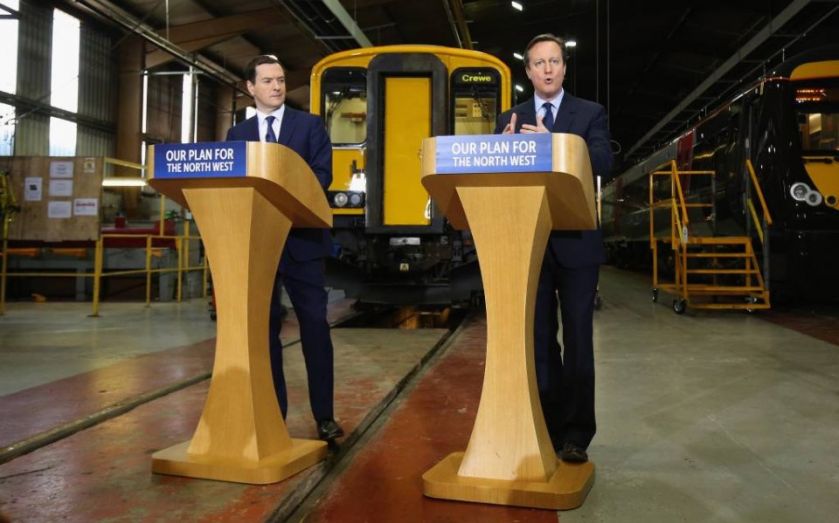
George Osborne's management of the economy has been credited with winning the Conservatives the election. Despite repeated criticism and warnings of the dire economic consequences of his austerity policies from adversaries, he continued on. The Labour leadership majored on this theme in the first few years in opposition.
 
In the early days of the Coalition government, when the economy was performing poorly, the chancellor (naturally) blamed a string of poor figures on the last Labour government's profligacy. Gordon Brown ran up debts in the good times – when there was absolutely no need.
 
So, the recent performance of the UK economy – and, indeed, the election result – is a vindication for austerity and Osbornomics, right? Not quite, in my view.
 
What was ignored throughout the recent electoral campaign was the role quantitative easing (QE)  played in artificially buoying the economy. In fact, QE continues to go ignored. Yet, it has pumped up asset prices across the board, and has created new synthetic market highs.
 
On top of that, QE is likely to be very difficult (if not impossible) to wean this country – and the rest of the world – off.  
 
We’ve recently heard the European economy has returned to growth, and there has been much confident backslapping all around. What's changed in Europe? The ECB’s just started a new money-printing programme, of course.
 
Despite all this, Harvard history professor Niall Ferguson continues to argue Labour should blame Keynes and his economics for their election defeat. He did so prominently in the Financial Times this week.
 
Of course, he’s right that, as Labour discovered to their cost, it’s clearly counterintuitive that counter cyclical reductions in spending at a time of substandard economic growth should lead to improved economic growth.
 
But he ignored the impact of near-zero interest rates and most importantly, massive amounts of QE, without which the economic performance under the Conservatives would have been vastly different – as might the election result.
 
This begs the question why QE did not get more attention pre-election, both politically and in the financial press? It would appear to be politically astute for the Conservatives to take the credit for the recovery, whatever occasioned it. But why did the opposition not make more of it? Was it simply economic naivety – or might we have seen more QE after a Labour victory?

Share this article

  • Facebook
  • X
  • LinkedIn
  • WhatsApp
  • Email

Similarly tagged content:

Sections

  • Opinion

Categories

  • Opinion

Related Topics

  • General Election 2015
  • Quantitative easing

Trending Articles

  • Energy discount scheme for homes near new pylons branded ‘bribe’ by Reform

  • Inside Formula 1’s £10,000 hospitality ticket on the back of a moving lorry

  • London Stock Exchange boss: We should know which companies our pensions are backing

  • WP Engine Opens Smart Search AI to the WordPress Ecosystem

  • Options Unveils H1 2026 AtlasFeed and Raw Market Data Feed Expansion

More from Morning Wire

  • Brits say Burnham should call an election

    Politics
    Number 10 Downing Street entrance with iconic black door, symbolizing British political power and leadership
  • Top investment bank: Starmer and Reeves left UK ‘no better off than they found it’

    Economics
    Keir Starmer and Rachel Reeves discuss the Great British Summer Savings scheme at a press conference podium with banners b...
  • UK debt ‘hits £3 trillion’ milestone

    Economics
    Houses of Parliament in Westminster showcasing historic architecture under a clear sky, central to UK government and politics
  • Tax online businesses more to save Britain’s struggling high streets

    Opinion
    Bustling Oxford Street with shoppers, iconic red buses, and storefronts under a clear sky in a vibrant urban scene
  • Farage quits to stand in ‘people versus establishment’ by-election

    Politics
    George Cottrell and Nigel Farage engaging in a conversation at a political event, both dressed in formal attire.
  • Reeves issues warning to successor as she battles to defend record

    Politics
    Reeves is eying mortgage reform as a key growth driver.
  • Nearly 1m people to pay higher tax ‘by stealth’

    Economics
    Tax Trap: Another 74,000 taxpayers were added to the punitive £100,000-£125,000 income bracket during the 2024/25 tax year
  • Has Nigel Farage peaked too soon?

    Opinion
    Nigel Farage delivering a speech in July 2026, wearing a suit, addressing an audience at a political event.
MorningWire

Independent European business, markets and political news for decision-makers.

Morning Briefing

Europe

  • Germany
  • France
  • Europe
  • UK & Ireland

Business

  • Markets
  • Banking
  • Technology
  • Energy
  • Property
  • Fintech

Editorial

  • Opinion
  • Editorial Policy
  • Corrections
  • Contact

Company

  • About Morning Wire
  • Privacy Policy
  • Terms of Use
  • Cookie Policy
© 2026 Morning Wire Ltd · Published by Morning Wire Media, Bahnhofstrasse 65, 8001 Zürich, Switzerland
Privacy · Terms · Cookies · Facebook