Skip to content
Wednesday 26 August 2026London --:--Frankfurt --:--Zurich --:--
NewslettersSearchEN · DE · FR
MorningWire

European business, markets and politics

FTSE 100
10,886.16
+0.29%
DAX
26,266.14
+0.61%
CAC 40
8,439.20
0.00%
STOXX 50
6,455.63
+0.12%
  • Europe
  • Markets
  • Business
  • Economy
  • Regulation
  • Politics
  • Opinion
More
GermanyFranceEU InstitutionsCompetitionPublic AffairsBankingTechnologyEnergy
  • Germany
  • France
  • Europe
  • Markets
  • Business
  • Economy
  • Regulation
  • Politics
  • Opinion
  • DE
Thursday 11 October 2018 8:40 am  |  Updated:  Tuesday 21 May 2019 4:23 pm

It’s a mistake to dismiss the Anglosphere as mere romance – it could be the future

By: Graeme Leach

Add as a preferred source on Google

NULL

The Prime Minister’s strong point is not vision, particularly when it comes to post-Brexit Britain.

But as the Chequers Agreement dies a slow death, she would do well to consider the possibilities for a much wider geopolitical shift with regard to the so-called Anglosphere.

A Canada+++ agreement with the EU could lead to trade agreements with Anglosphere countries, such as the US, Australia, New Zealand, and possibly Singapore.

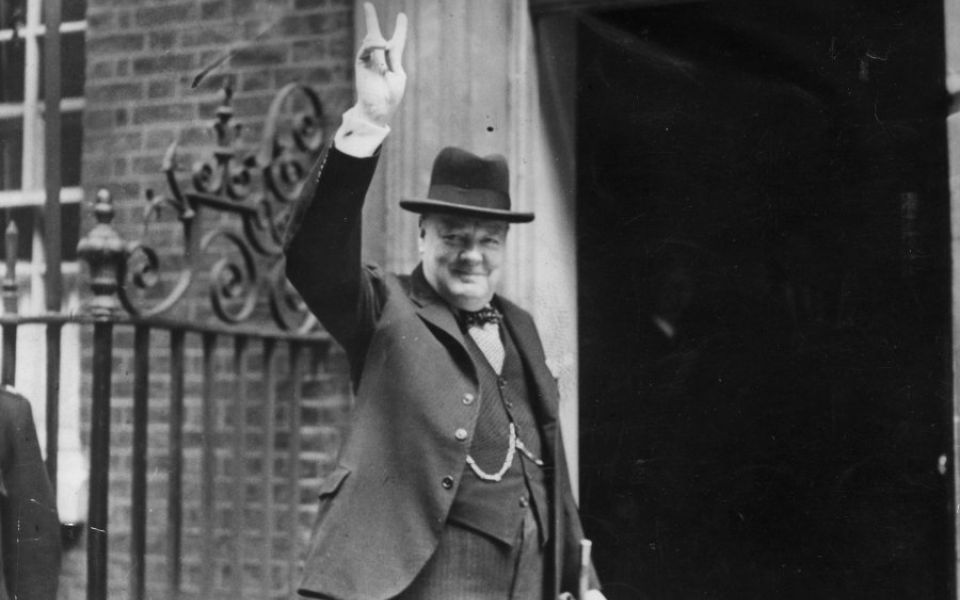
But the Anglosphere is far more than just trade agreements. It’s a concept that can trace its lineage back to Winston Churchill’s “A History of the English Speaking Peoples”. More recently, it’s been advanced by historians, such as Andrew Roberts and Robert Conquest, and most notably by the American writer on technology and international affairs, James C. Bennett.

The Anglosphere raises the possibility of creating a new entity which aligns, history, culture, and politics more closely than with EU membership.

Although there is no precise definition, the Anglosphere is seen as the set of English speaking, common law nations, with an adherence to individualism, the rule of law, and the elevation of freedom to the first rank of political and cultural values. The common denominator is whether or not the countries have been shaped by English-speaking civilisation.

The concept of the Anglosphere is very different from that of the EU. It’s what’s called an “identity narrative”. At most, it’s seen as more than an alliance, and far less than a federation of states.

Advocates of the Anglosphere argue that in the twenty-first century, it is becoming a distinct civilisation in its own right. Their essential argument is that a new world order – based on cultural affinity – is evolving in response to the information revolution, and those nations best placed to exploit it are those with a strong civil society. Bennett describes this as a “network commonwealth” of open inter-relationships.

The root of civil society is the individual, and the economy is the expression of a strong civil society. Bennett argues that in the next phase of the technological revolution, strong civil society will be even more central to success, with entrepreneurship flourishing best in a civil society.

Around 90 per cent of the top 500 software companies in the world are based in the Anglosphere.

Many dismiss the idea of the Anglosphere as more romance than realpolitik, but this is surely mistaken. The core Anglosphere economies account for around 30 per cent of global GDP. Including Singapore, five of the top 10 economies in the 2018 Heritage Index of Economic Freedom are Anglosphere nations.

Anglosphere countries share economic power, soft power, strength of armed forces, and English language ascendance.

According to the British Council, English will be spoken at a useful level by 2bn people by 2020. It is set to be the dominant international language of this century, and it is already the lingua franca of academia.

Winston Churchill said that “if Britain must choose between Europe and the open sea, she must always choose the sea”. Right now the sea might be the Anglosphere.

Share this article

  • Facebook
  • X
  • LinkedIn
  • WhatsApp
  • Email

Similarly tagged content:

Sections

  • Markets & Economics
  • News

Categories

  • Business
  • Economics
  • Politics

Related Topics

  • Brexit

Trending Articles

  • Andy Burnham hints at tax rises in Autumn Budget

  • Budget 2026: Which taxes will Burnham and Healey hike?

  • Can debt-ridden Morrisons become a Big Four supermarket again?

  • Burnham shelves Thames Water administration plans over costs

  • As it happened: Stocks rally; US to unveil ‘economic D-Day’ Iran sanctions

More from Morning Wire

  • Will Formula 1 need to refund sponsors for cancelled Middle East races?

    Sport Business
    Max Verstappen in a Red Bull Racing cap and team shirt, looking contemplative with hands under his chin.
  • Google backs publisher model as Apple considers price tag for news

    Media
    AI copyright laws
  • Voi rides on in London borough despite council order

    Transport & Infrastructure
    Voi electric scooters lined up on a city street, highlighting urban mobility solutions and eco-friendly transportation opt...
  • Westinghouse and Amentum Partner to Expand Delivery Capacity for APX Fleet Deployment

    Business Wire
  • Alfasigma to Acquire Nordic Group B.V. Expanding Its Specialty Care Portfolio and Presence in Europe

    Business Wire
  • Tritax Big Box taps investors for £350m London data centre splurge

    Tech
    AI data center with rows of servers and cooling systems, showcasing advanced technology and infrastructure innovation
  • Litigation funders need certainty to keep Britain’s class action regime fair

    Opinion
    UK Supreme Court building, London, with intricate stone carvings and statues, under a blue sky
  • City leaders weigh employment policy alternatives to non-competes

    Law
    LONDON, ENGLAND - OCTOBER 15: Commuters cross London Bridge on October 15, 2024 in London, England. Estimates for the September 2024 payroll indicate that the number of employees rose by 0.4% compared with September 2023, a rise of 113,000 employees. (Photo by Dan Kitwood/Getty Images)
MorningWire

Independent European business, markets and political news for decision-makers.

Morning Briefing

Europe

  • Germany
  • France
  • EU Institutions
  • Europe

Business

  • Markets
  • Business
  • Economy
  • Regulation
  • Competition
  • Public Affairs

Editorial

  • Opinion
  • Editorial Policy
  • Corrections
  • Contact

Company

  • About Morning Wire
  • Privacy Policy
  • Terms of Use
  • Cookie Policy
© 2026 Morning Wire Ltd · Published by Morning Wire Media, Bahnhofstrasse 65, 8001 Zürich, Switzerland
Privacy · Terms · Cookies · Facebook