It’s time for England to stop subsidising Scotland and Wales

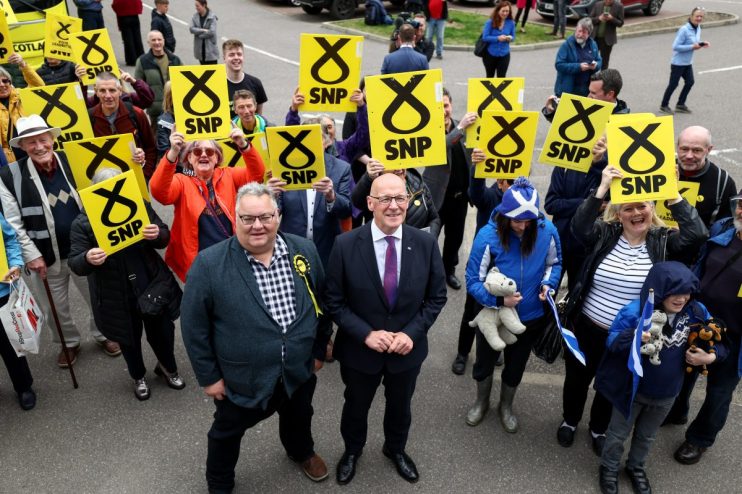
The devolved nations are living on another planet economically because England essentially pays for their deficits. This has to stop, says Paul Ormerod
Every single pensioner will continue to receive payments towards their winter fuel.
This is not some fantasy world in which the Chancellor, Rachel Reeves, has abandoned one of her flagship policies. It is what is actually happening in Scotland. More precisely, it is what will happen. For arcane bureaucratic reasons, the policy might not take effect until next winter.
The Labour leader in Scotland, Anas Sawar, kicked it off by saying that if his party were to win the next elections to the Scottish Parliament in 2026, all pensioners would receive a fuel payment. It would be based on income, but everyone would get something. Within days, the Scottish First Minister, John Swinney, of the SNP, trumped Sawar’s pledge with a better offer of his own.
How can this be, when there are serious constraints on public spending? At the UK level, Rachel Reeves is desperately trying to reduce the government’s fiscal deficit, currently running at 4.5 per cent of GDP.
The Office for Budget Responsibility (OBR) estimates that by the end of this parliament in 2028/29, it will indeed have fallen to some 2.2 per cent of GDP.
But this has required Reeves to take some unpopular measures, such as putting up employers’ National Insurance rates and slashing winter fuel allowance.
Scotland seems to be on a different planet. Fuel payments can be restored, even though the spending deficit of the SNP government is 10.4 per cent of GDP, more than double that in the UK as a whole.
The reason is simple. This enormous deficit is essentially paid for by the English.
The Barnett formula
During the 1974-79 Labour government, the Treasury minister Joel Barnett devised a formula which ensured that Scotland would have higher public spending than England.
It was a desperate short-term measure to fend off the then newly emerging threat from the SNP to Labour’s dominance in Scotland. The so-called Barnett formula is still in place today.
The Welsh government is the beneficiary of even greater largesse courtesy of the English taxpayer. The fiscal deficit in Wales – the amount by which government spending exceeds government receipts from taxation – is over 20 per cent of GDP.
It has been around this figure for at least 15 years. The bond markets are currently nervous about the fact that public sector debt in the UK has reached 100 per cent of GDP. Simple arithmetic tells us that in Wales the figure would be at least 300 per cent.
If a magic wand were waved and Scotland and Wales became independent overnight, both governments would face enormous pressure from financial markets to make major cuts to public expenditure. It is even conceivable that Wales might even be forced to default on its debts given that they would be so enormous relative to the size of the economy.
If a magic wand were waved and Scotland and Wales became independent overnight, both governments would face enormous pressure from financial markets to make major cuts to public expenditure
This is not a satisfactory state of affairs for anyone. The English subsidise Scottish spending on things like free university places which are not available here. We basically have to bail out the Welsh government from imminent bankruptcy year after year.
But at the same time the Scottish and Welsh governments, no matter which party controls them, have little or no incentive to perform better.
The time has come to start gradually withdrawing the annual subsidies to both Scotland and Wales. It would be a huge shock, especially for the Welsh, to do this all at once. So, something like a three to five year time horizon would be reasonable.
At the same time, further powers should be devolved to enable these governments to raise taxes. If their electorates wanted to sustain the current levels of public spending, they would have the satisfaction of knowing that they were paying for it themselves and not relying on handouts.
Paul Ormerod is an economist at Volterra Partners LLP, an Honorary Professor at the Alliance Business School at the University of Manchester and author of Against the Grain: Insights of an Economic Contrarian, published by the IEA in conjunction with Morning Wire