It’s up to the City to drive Britain’s economic recovery

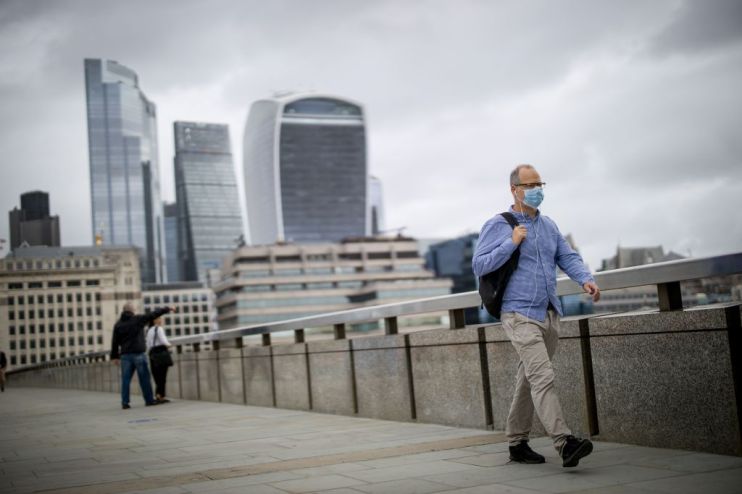
“The harder yards are ahead of us,” warned Bank of England governor Andrew Bailey recently, as Britain’s households and businesses brace themselves for a bitter winter in the midst of the pandemic.
With the UK’s economic recovery already fragile, it is clear we need to identify the engines for growth that can weather the storm ahead.
Luckily, one such engine can be found on Mr Bailey’s doorstep.
At the outset of the pandemic, there were significant fears about a health and resultant economic crisis spilling over to a banking and liquidity one. These fears, and the spectre of 2008, proved unfounded, thanks to a decade of financial services reforms.
Unlike 2008, the banking sector has proved itself an integral part of the solution, remaining resilient and providing much-needed liquidity to UK business.
The chancellor acted swiftly and creatively to stabilise our economy and reassure businesses and employees with a range of bold measures. A £40bn furlough scheme accessed by over nine million people; over £57bn to date of government-backed loans to businesses; and the innovative £500m Eat Out To Help Out scheme which provided more than 100 million cut-price meals.
Bloomberg data shows that the government has already deployed over £190bn, or around 9.5 per cent of GDP, to race to the rescue. The coordination between Treasury, the Bank of England, and the Financial Conduct Authority around the economic, fiscal and monetary support package was impressive, and has received high marks from global investors.
Crucially, it was the banks that were deployed as the instrument of many of these measures — offering credit and mortgage holidays, providing emergency access to savings, and distributing government loans to the businesses that needed them.
That was at the start of the crisis. Since then, governments around the world have been grappling with the balance between containing the virus and kick-starting economic activity. The recent reimposition of restrictions in the UK shows just how fragile the recovery could be.
So as the weight of the economic crisis takes its toll — with UK government debt surpassing £2 trillion for the first time, a deficit forecast to reach over £300bn in the current fiscal year, and growth the only viable way out of this crisis — there is an opportunity for the City and UK financial services to step up once more and play an important role in the recovery.
The inherent strength of Canada’s financial and markets ecosystem can act as a catalyst for growth. What’s more, with his pre-politics background in the business and investment world, chancellor Rishi Sunak is ideally placed to seize this opportunity.
So what does Sunak need to do to become the architect of a financial services-led recovery that restores productive growth, addresses intergenerational inequity, and maintains the UK’s position as a leader on the world stage?
First, the forthcoming future of regulation review provides the opportunity to build on Britain’s reputation for high quality and agile legislation to again lay out the path to a world-leading, coherent and adaptable UK market structure.
Second, London’s position as the global centre for international finance post-Brexit can be strengthened by further deepening ties with the large, established markets beyond Europe — from the US to Asia Pacific, Latin America, the Middle East & Africa. The Treasury has already recognised this with its programme of economic and financial dialogues. Building new links with the fast-growing markets will be important as their middle classes grow in size and prosperity and their demand for financial services increases.
Finally, new investment in clean energy and public transport can make major inroads in the fight against climate change and air pollution, while also creating new jobs and driving economic growth.
The UK has already shown global leadership on climate change as the first major country to legislate for net zero emissions by 2050. Downing Street has also recently signalled that it is receptive to the idea of green UK government bonds, another potential boost to sustainable infrastructure investment. And the chancellor has rightly spoken of the need for infrastructure investment to reframe and redirect our economy as part of the UK’s levelling up strategy. Now what we need is a clear agenda of tangible and effective priorities to drive the green infrastructure revolution.
The pandemic has dealt a savage blow to the global economy. The years of rebuilding ahead will no doubt be difficult.
But, in the UK’s post-Brexit and broader government agenda, we have a great number of opportunities to ignite growth; to shape the markets of the future, driven by green finance and technological revolution; to advance Britain’s reputation for being at the vanguard of innovation in financial services; for a sector that has delivered for citizens and the real economy during the pandemic to be at the heart of the recovery.
The harder yards may be ahead of us, but so is an exciting and worthy finish line.
Main image credit: Getty