Keir Starmer could be more like Harold Wilson than Tony Blair

Comparisons with 1997 start and finish with the polls. Unlike Blair, Starmer will inherit an economy in desperate need of a sharp turnaround, says Paul Ormerod
Labour’s massive lead in the opinion polls is generating many parallels with the 1997 election. Will Keir Starmer end up with a bigger majority than Tony Blair or not?
But the comparison with 1997 more or less starts and finishes with the polls. Most other things are completely different.
In the late 1990s, capitalism appeared triumphant and the foundations for a stable world order secured. Some scholars even wrote of the “end of history”. On and on we would go into the rosy future of liberal democracy as it spread across the entire planet. The contrast with 2024 could hardly be more stark.
There is also a major difference purely domestically between 1997 and now which will determine the whole course of the next government.
Keir Starmer has made it crystal clear that Labour’s spending plans depend not upon redistributive taxation but on economic growth.
In 1997, Kenneth Clarke, the Conservative Chancellor under John Major, had done Tony Blair and Gordon Brown’s work for them.
Following the short recession of the early 1990s, the economy boomed. The average annual growth rate from 1993 to 1997 was 3.1 per cent. In the election year itself, 1997, the economy expanded by a massive 4.9 per cent.
Gordon Brown pledged to change very little in the first few years of power, and the momentum continued, with an average of 3.4 per cent growth 1998-2000.
In dramatic contrast, growth over the past five years has averaged an anaemic 0.9 per cent a year. In 2023 itself, the last complete year of data we have, the growth rate barely troubled the scorers, as they say in cricket, being just 0.1 per cent.
To meet his aspirations, Keir Starmer’s Labour Party will have to bring about a very sharp turnaround.
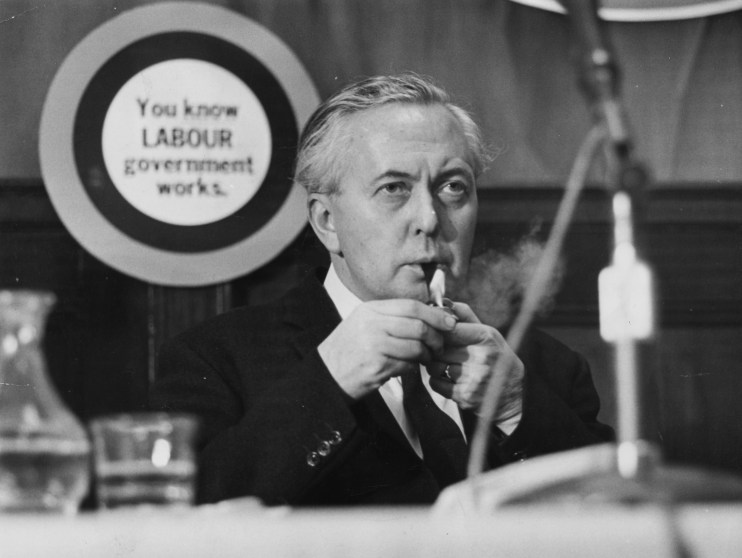
The risk for Labour is that the parallel turns out not to be 1997 but 1964. Harold Wilson’s government came to power with spending plans based on 4.5 per cent growth a year. In the first two years it was under two per cent. This crippled the government and led to their eventual defeat in 1970.
But trends can be reversed, and in a short space of time. The Conservatives have achieved it twice.
Once, as already mentioned, in the mid-1990s. And previously, in the aftermath of the much sharper recession of the early 1980s. Nigel Lawson as Chancellor presided over growth even stronger than that of the 1990s, averaging 4.1 per cent a year.
Both Clark and Lawson took positive steps to bring about growth. More precisely, Clark was the beneficiary of the UK’s summary ejection from the prototype of the Euro, the Exchange Rate Mechanism, in the autumn of 1992. It destroyed the Tories’ reputation for economic competence. But the resulting fall in sterling gave British industry a huge competitive boost in world markets.
Nigel Lawson, of course, both reduced taxes and facilitated the transformation of the City with the Big Bang.
Keir Starmer’s plans are rather more opaque.
One possibility, which should not be dismissed lightly, is that the mere fact that the Conservatives have been removed from office will have a positive impact on sentiment. This itself can raise the growth rate.
John Maynard Keynes is usually associated with the idea that government spending should be increased to stimulate the economy. But his work is full of references to “sentiment” and “confidence”. Indeed, he coined the memorable phrase “animal spirits” to describe business psychology, which he regarded as a key driver, or dampener if they were low, of the economy.
Consumer confidence is returning as inflation falls and real wages rise. If business sentiment goes the same way, Starmer may just pull it off. It is sentiment rather than any explicit policy tweak which is the key.
Paul Ormerod is an economist at Volterra Partners LLP, an Honorary Professor at the Alliance Business School at the University of Manchester and author of Against the Grain: Insights of an Economic Contrarian, published by the IEA in conjunction with Morning Wire