
Kenneth Murray CA: ‘Awareness, acceptance and accommodation of ADHD on the part of employers would be a powerful statement on inclusivity’

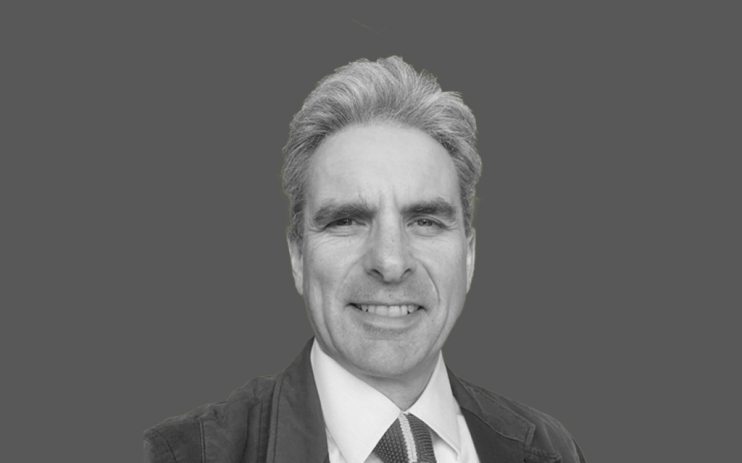
Kenneth Murray CA, Head of Forensic Accounting at Police Scotland discusses being diagnosed with ADHD at 59 and what employers should be doing to destigmatise the neurodiversity.
What is ADHD?
ADHD stands for attention deficit hyperactivity disorder, a complex brain disorder that is a development impairment of the brain’s executive functions. People with ADHD often have issues with attention, impulsivity and emotion management to varying degrees. The name implies difficulties with concentration, but a feature of the condition is also an ability to hyper-focus on issues for an extended period given the right stimulus (usually interest or fear oriented).
It is not a behaviour disorder or a mental illness. It is a chronic neurological condition that cannot be cured but can be managed through informed self-management and/or medication. It affects about 2.5% of the population (Royal College of Psychiatrists 2009).
When were you diagnosed with ADHD?
Without knowing what it was, I had been aware of being different in this way since childhood. However, I was not formally diagnosed – as having mild to medium ADHD – until April this year. It’s a lifetime condition and so I lived with it for 59 years undiagnosed. I can’t give a good reason for that being the case; except that I was living in denial of it – or else for long periods of my early career believed it was just a moral failing in myself.
The symptoms were something I had to learn to manage over the years, sometimes painfully. You think it is just a question of trying harder not to be like that, so when difficulties arise you tend to blame yourself and internalise it as personal failure.
The recent welcome changes in attitudes to diversity and inclusion finally encouraged me to address it formally – albeit rather late in the day – having devised ways of managing it during my career through trial and error.
It isn’t anything to be proud or ashamed of – but the way I dealt with it is precisely how you should not deal with it if you think you have it. So that’s why I’m happy to be open about it, on the off chance that it might help others.
Can you describe how you felt when you found out?
It explained my life, or at least the difficult parts of it. I was fairly certain I had it when I was diagnosed. I felt two conflicting things: on the one hand, I’d wished I’d known so I, and others around me, didn’t have to experience some of the things I have experienced; on the other hand, it made me realise how lucky I’ve been.
What was your university and CA training experience like?
I got away with my last-minute cramming technique at university and did quite well. But attempting the CA exams at the same time as working as a trainee with elite-standard contemporaries at Arthur Andersen, when you have a 20-30% reduced capability in terms of executive function against the average, was not a recipe for happiness.
Having said that, the training I got was superb, I was lucky enough to work with outstanding people, and I rely on the foundation it gave me to this day.
What challenges have you faced because of your ADHD?
The serious challenges you face arise from trying to wrestle with a neurobiological condition you don’t know you have that seems designed to frustrate you. The natural tendency is to internalise the attendant failures, whether perceived or real, and that can lead to very serious consequences in the form of life-threatening co-morbidities, such as depression or addiction.
These are very real potential consequences of undiagnosed ADHD and are obviously best avoided. The other cost to mention is a sense of unrealised potential, which is a loss not just to you but to society in general. The desire to make some kind of worthwhile contribution to redressing that sense has been a major personal motivator in my latter career.
What are some of the positives to having ADHD?
You are more creative in your thinking than most and there are some walks of life where ADHD is probably an advantage: a lot of entrepreneurs have it, and a lot of people in the arts and other creative fields have it too. In the modern accountancy profession, I think there is more scope now to find a job fit that accentuates your capabilities rather than one that exposes your weaknesses. Forensic accountancy suits me whereas a financial controller job almost certainly wouldn’t.
The concept of what it means to be a CA is changing in any case. The modern profession needs to be more responsive to the world around it and that requires access to different mindsets and capabilities – which is why I think it would be a mistake, in the context of an accountancy firm, for candidates with ADHD to be screened out of the recruitment process
Do you feel that today people are more likely to be open about their ADHD in the workplace?
I hope so. I think, however, many people find it very difficult to admit to having issues with concentration, or impulsivity, or feeling everyday emotions as intense dysphoria. They are not attractive characteristics, and they tend to impact relations with others too. The thought of seeking help is often barred by the feeling that they will be shunned, or that their career will be torpedoed, if they do, especially from their employer.
Then there is also the problem of those who suffer the difficulties but don’t even know what ADHD is. All these difficulties are manageable, so long as they are managed, so let’s hope the dawn is breaking on that.
Would you say ADHD has had an effect on your mental health?
Of course it has. Dealing with this undiagnosed, and without help, can be a very rough road. It is a chronic condition, and it never goes away. So, you have to manage it every day. Some lucky ones like me somehow manage to find a way in life without being diagnosed. But you really don’t want to do that.
If you think you have an issue, explore it. If you are experiencing ADHD symptoms and they are having an adverse effect on you, there are plenty of quizzes online to give you an indication of whether you may have it. Formal diagnosis usually requires some evidence from your childhood, so speak to parents and others who have known you. Don’t be afraid of finding out. You owe it to yourself and also the people around you.
I will never lose the regret I feel at how my undiagnosed condition may have affected others in the past. I don’t think I want to. An ADHD diagnosis is not a passport that frees you from responsibility for the things that have gone wrong in your life. But it will help you come to terms with yourself and give you the opportunity to make the kind of contribution you’ve always wanted to make but until now never felt able to. So the best plan is to open your arms to it as early as you can.
In your opinion, how can employers make sure that their workplace is open and accessible to people with ADHD and similar neuro-diversities?
Awareness, acceptance and accommodation of ADHD on the part of employers, especially the big influential ones, would be just about as powerful a statement on inclusivity that I can think of because a lot of people still struggle with neurodiversity. There remains a lot of fear and distrust surrounding it, perhaps in this profession more than most.
Just the influence of that kind of message would change a lot of lives for the better. You are not disabled, but you are differently-abled. Your contribution will be different to others, but there is no reason in a modern, inclusive, diverse world why it cannot be as valuable as anyone’s.