Labour market costs will put the ECB’s ‘camp permanent’ inflation policy to the test

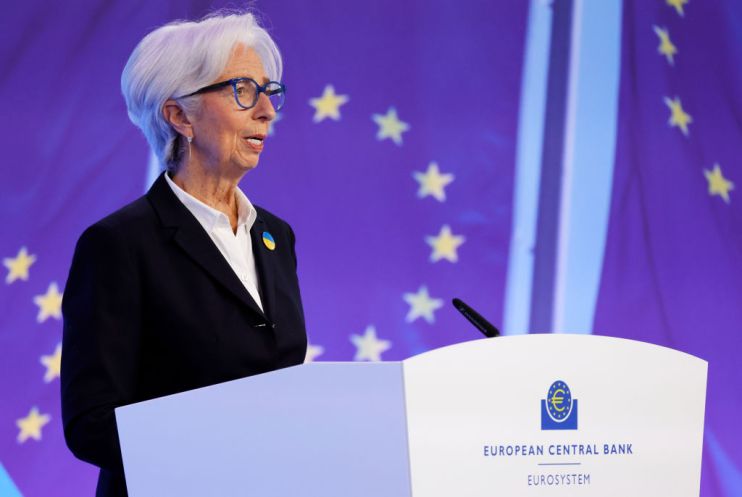
The ECB has moved into “camp permanent” on inflation, but cracks in the labour market will pose a challenge in 2024, writes Sylvain Broyer
At the beginning of 2023, the market knew that rate rises were an inevitable and critical part of central banks’ attempts to control inflation. However, as the year has progressed, we have nevertheless been surprised by central bank action on policy rates, and none more so than by the European Central Bank’s (ECB) policy U-turn.
In the space of six months – from December 2022 to spring 2023 – the ECB had completed a 180-degree turn and shifted to a new “camp” on rate-setting. Until the very end of 2022, the ECB was firmly in “camp transitory”, assuming that rising inflation would be short-lived and that rate rises would be measured. Fast forward six months, the Bank had moved into “camp permanent”, shifting its assumptions to conclude that inflation is here to stay for the foreseeable future, causing it to raise rates to as high as four per cent.
Core inflation is undoubtedly the reason behind the ECB’s policy decision; the Bank changed course just as core inflation outpaced headline inflation, in a repeat of the Federal Reserve’s action.
Although starting from a different situation, the ECB followed the same line of thought as the Fed on inflation, and came to the same conclusion on rates. So, there is now a consensus. Today, the ECB faces a similar problem to the Fed: how to restore price stability without crashing a tight labour market. It’s no easy task and a question of bringing down job openings without pushing up unemployment.
It means the resilience of the European labour market will serve as a litmus test for ECB monetary policy calibration this year.
Labour costs are the main driver of core inflation and we’re operating in a context when those have soared: the eurozone economy added 4m jobs in 2023, breaking its previous record of 163m in 2022. The market therefore remains tight, for cyclical and structural reasons, with only two job seekers per job opening. Meanwhile, wage growth has accelerated significantly, above five per cent.
However, some cracks are starting to appear. As the eurozone economy stagnated over the past year, the higher number of hours worked translates into lower productivity. Since the pandemic, employees tend to work around 45 minutes less per week. That’s combined with an ageing workforce and employees struggling to keep up with rapid technological changes. Lower productivity in turn is highly unusual at a time when wages are rising sharply, and could come at a price to employers by increasing their costs.
Employers face two choices to confront this challenge.
First, employers could strike a trade-off between a further increase in selling prices (that is, inflation) and a reduction in the workforce to maintain profit margins. Second, and the harder financial option, is that employers could choose to retain their workforce and swallow costs, if they fear further labour shortages will induce more of a squeeze on profit margins.
The likelier of those choices is yet to be seen. Either way, the direction of the labour market will be a key factor in 2024 in terms of growth. Indeed, we expect the eurozone will grow by 0.6 per cent in 2023 and 0.8 per cent in 2024 – only a marginal deviation on previous forecasts.
Maybe even more important is that inflation could remain stiffer than markets currently expect, particularly since inflation in the eurozone eased to 2.4 per cent in November and the ECB may hesitate to cut rates anytime soon.
A default, easier option through all these considerations would be to trust employment as the indicator of economic performance in the year ahead. That will help, but it may prove too late. Relying on changes in the unemployment rate is traditionally a lagging indicator of the cycle. Instead, for a more real-time indicator, we need to assess trends in unit labour costs (i.e. wage growth). That will be the way to monitor whether “higher for longer” is the outcome so many economists foresee.