Labour’s EV and heat pump push is paving a path to bankruptcy

Labour’s push for EVs and heat pumps fail to account for a crucial detail – reality, says Matthew Bowles
British Prime Minister Keir Starmer has reinstated the 2030 ban on the sale of all new petrol and diesel cars, after the previous government relaxed it to 2035.
This follows a government review of the current Zero-Emission Vehicle (ZEV) mandate. The ZEV mandate is a policy tool requiring car manufacturers to sell a certain percentage of electric vehicles yearly to avoid fines. Initially, this was a yearly target, with the percentage of ZEVs required to sell increasing until 100 per cent is reached in 2035. However, this could be sped up with reinstating the 2030 ban.
With the utmost thought towards the motor industry, the Prime Minister has generously allowed the sale of full hybrid cars until 2035, in what the Department for Transport claims will provide “certainty, stability and support as the Prime Minister sets out plans to back industry in the face of global economic headwinds”. I wonder what they could possibly be referring to.
So why is this an issue? Surely, there should be a desire to reduce carbon emissions and transition to a more sustainable system. The answer is that we should, but only if it is realistic to do so.
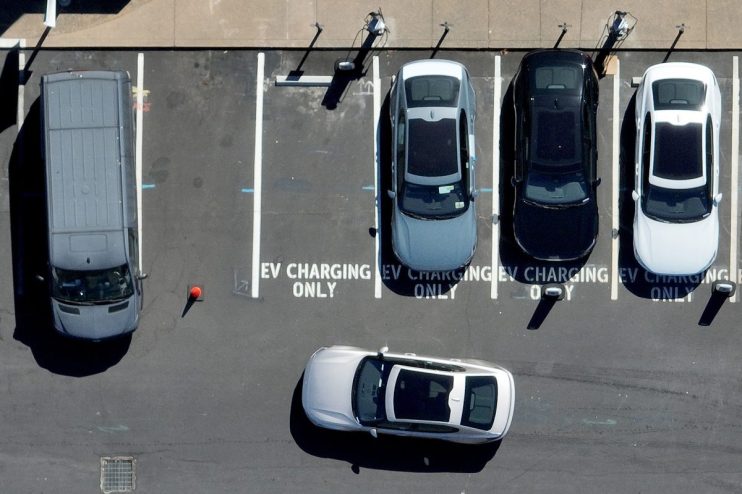
The EV charging issue has not gone away
In 2022, the then-Conservative government announced plans to increase the number of electric vehicle charging stations tenfold by 2030 through a £1.6bn Electric Vehicle Infrastructure Strategy. A pilot scheme for the Local Electric Vehicle Infrastructure (LEVI) fund was launched that year to support more remote areas of the UK. This strategy aimed to have five times the number of fuel pumps, meaning that charging electric vehicles would become far easier and cheaper than filling up your petrol or diesel motor. So, how is the government getting on?
According to figures from the Department of Transport, there were a total of 193,098 public electric vehicle charging points across the UK in January 2025. These are shared by about 460,000 privately owned electric vehicles, meaning there are approximately 2.4 vehicles for every public charger. This sounds reasonable until one looks at this ratio by region.
London has the best electric car infrastructure. Three of London’s boroughs are even in an enviable position of having more charging points than electric cars. However, in Castle Point, for example, there are a staggering 54 vehicles per charging point. East Hampshire also sees a similarly concerning ratio of 29 per charging point.
Net zero policy fails to account for reality
This is yet another policy piled together in an ambition to achieve net zero that has neither seen rigorous thought nor an analysis of the implications. Despite being far from meeting the infrastructural needs required for EVs, especially in certain regions, the ban on the sale of diesel and petrol cars has been reinstated. The issues with reinstating this ban are almost identical to those with banning gas boilers.
The phasing out of the installation of gas boilers by 2035 is mired due to expensive substitutes. The cost of installing heat pumps ranges between £7,000 and £13,000. Even with government grants – the Boiler Upgrade Scheme offers £7,500 to help offset these costs – the upfront expense remains substantial for many homeowners. Installation also requires significant home insulation and space, meaning that it is impractical for both older and smaller homes.
It isn’t just phasing out the installation of gas boilers that is similar; however, it is all the current and potential policy suggestions deemed necessary to achieve net zero. Home insulation targets, net-zero aviation, agriculture emissions reduction… the list goes on.
Net zero risks crashing the economy
Proponents of net zero suggest that the UK ought to lead by example on the global stage by decarbonising our economy. But no country will follow a path to bankruptcy.
With leaked government analysis suggesting that net zero could crash the economy, reducing GDP by a gargantuan 10 per cent by 2030, the approach of achieving policy without any recognition of the costs is set to continue between successive governments.
Without change from the super-polluters, our efforts will bring about little change to global emissions. It is important to remember that the United Kingdom is responsible for only about one per cent of global greenhouse gas emissions. Compare this to China, over 30 per cent, and the United States, around 11 per cent, and the scale of the problem is for all to see. To paint a starker picture, China is yet to reach its peak CO2 emissions, which it suggests will be achieved by 2030. The road to global net zero is still a long way from construction.
The decision to reinstate the 2030 ban on petrol and diesel cars is like a captain forcing a ship back toward a stormy harbour, ignoring the crew’s warnings about leaky hulls and uncharted reefs. The destination – net zero emissions – may gleam on the horizon, but the vessel of everyday drivers isn’t ready for the journey. With electric vehicle infrastructure still patchy and costs prohibitive, this abrupt course correction risks stranding motorists, all while the captain insists the storm will clear by sheer willpower. A wiser leader might adjust the sails, not demand the crew row harder against the tide.
Matthew Bowles is strategic partnerships manager at the Institute of Economic Affairs