| Updated:
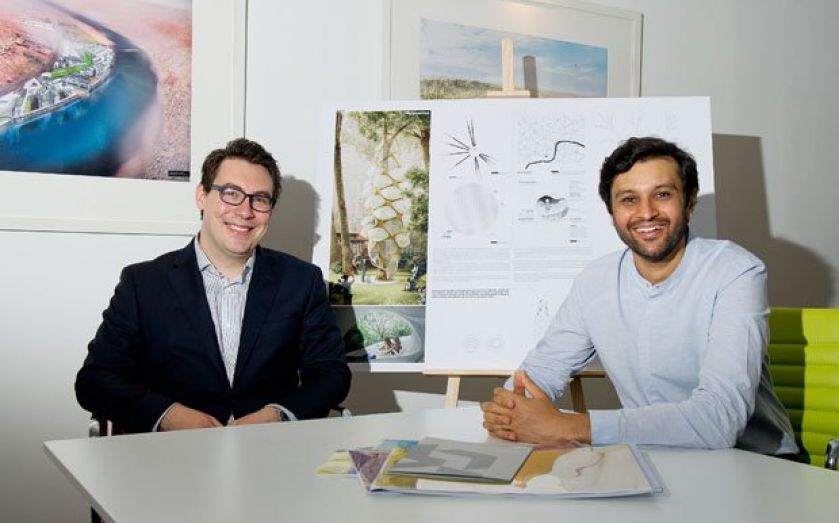
Latis Homes founders Robert Luck and Krishan Pattni talk dream designs and planning nightmares

Without the regulatory constraints imposed on our housing market, between 1974 and 2008, average house prices would have risen from £79,000 to £147,000, rather than to £226,000. That’s according to a new report by Christian Hilber of the LSE and Wouter Vermeulen of UV University that looks at the impact of supply constraints on house prices in England.
An overheating market with squeezed supply means it’s a tough bag for buyers, but rising prices don’t necessarily mean it’s always plain sailing for housebuilders, either – especially for those new to the market. Latis Homes is a small firm with a big vision. Founded in 2011, its 2014 turnover will be £6m. Next year, it’s projected to be £25m.
Founders Robert Luck and Krishan Pattni are architects turned developers. Having met at university, both went on to work at the Richard Rogers Partnership, the London-based architectural practice. “It certainly had interesting aspects, but often you’ve got these great ideas and you’re having to answer to a client,” says Pattni. In 2006, the pair formed Latis, hoping to deal with the global housing crisis by offering scalable solutions. After five years of contract work, the UK commercial arm of Latis, Latis Homes, was incorporated. The pair began planning a model that would see them take control of the entire process of house building, from initial design through to sale – a new approach to development. Their mid-market homes make high-end design, hyperconnectivity and sustainability the norm. “One of the problems with modern homes is that they all look the same. We really believe good design can add value,” says Pattni.
HOME RUN
And it does feel like a Latis house pushes the boundaries of what a modern home should be. They’re eco-friendly but also beautifully designed. High ceilings, top-to-bottom doors, and integrated technology come as standard. Control panels allow you to, for example, turn your lights on and off from your phone, and an energy monitor gives you a breakdown of use. Showers have a green button – an option to halve the water use but keep the spread the same. For Luck and Pattni, it’s not about being prescriptive around energy consumption. Rather, it’s about “promoting and educating”. Sustainability is vital to them, but their designs just try to make it as easy as possible for people.
Back in January, Latis’s 14 prototype homes in Hayes sold within a week. Their 415-home pipeline now reaches from Oxford to Hertfordshire, through Greater London. “We planned to reach a point where we were building 500 a year. We didn’t expect to hit 415 nearly so quickly,” says Pattni. So far, most customers have been young, usually commuter families. This fits snugly with Luck and Pattni’s eagerness to assimilate their homes into local communities. At Hayes, they’ve fitted LED streetlights across the development and involved local school children in the building work. Speaking about this reminds Pattni of another problem: “There’s a serious construction worker shortage in this country. We’ve struggled to find bricklayers, plasterers.” A Rics survey earlier this year found that 41 per cent of developers were seeing labour shortages, hindering the speed of work.
BEST LAID PLANS
And despite their resolute attitude (Pattni tells me, “nothing is a setback. If you think it is, you’re thinking about it in the wrong way”), there have been even greater stumbling blocks for Latis. “Our planning system really needs reform,” says Pattni. It took them a year and a half to get the prototypes through. “The committee process is the worst. It’s a politicised, extremely slow system. I can’t even put my hand up at a hearing for my own project. Of course it’d be a disaster if it was a free-for-all, but it really needs work.” Pattni thinks replacing councillors with industry experts would be a start, trimming away some of the layers of replication that come from dealing with non-experts.
Are they optimistic about the future of the housing market? “With planning as it is, there’s no way supply can catch up,” says Luck. Part of the goal is to impact the industry as a whole, even changing the mindset of its biggest players by setting an example. Innovation when demand is so pressing can be difficult, but the pair believe something new is both needed and possible. “The aim should be to provide a better urban environment and better homes,” says Pattni. They’re confident that the highly scalable approach they’ve employed will demonstrate that innovative houses can be delivered fast (regulation aside, that is). A Latis home can be erected in just five weeks, and by choosing suppliers with the capacity to grow alongside them – building materials firm Kingspan provides the building frames, for example – they’re primed for accelerating growth.
FRIENDLY COMPETITION
And like many small companies that have found their feet, they’re now looking for competition, to help them up their game and to work with. “The future is collaborative working, so any competition would definitely be a good thing,” says Pattni. There’s still a way to go, but both men are brimming with optimism. “There’s no point worrying when things go wrong. They do, but you have to have confidence – it can’t be the end of your idea,” says Luck. Pattni points out how much it’s helped having each other: “There are low times, and then you need to be reminded that someone else believes the same thing.” For the pair, this kind of support has been bolstered by Latis’s chair Robin Edwards, an industry expert with a background in fund management and an interest in clean energy. “We just wish more people thought like this,” says Pattni. “After all, where you live shapes your life.”
CV: ROBERT LUCK & KRISHAN PATTNI
Company name: Latis Homes
Turnover: £6m (2014)
Founded: 2011
Number of staff: 32: 12 management, 20 construction
Job title: Co-founders. Luck is managing director, Pattni is creative director
Age: Both 32
Born: Luck: Birmingham, Pattni: Nairobi
Studied: Both have a BArch (Hons) in Architecture from Nottingham University and hold diplomas in architecture
Drinking: Luck: A good red wine, Pattni: Water, coke
Eating: Luck: Mostly everything, especially seafood, Pattni: Anything vegetarian and preferably gluten free
First ambition: Luck: To electrify my sister’s dolls house, Pattni: To build a building
Favourite business book: Luck: 10 Rules of Sam Walton, by Michael Bergdahl , Pattni: I’ve never read one!
Currently reading: Luck: The Wizard of Menlo Park, by Randall E Stross, Pattni: Cities for a Small Planet, by Richard Rogers and Philip Gumuchdjian
Most likely to say: Luck: “It can’t be rocket science”, Pattni: “That’s amazing”
Least likely to say: Luck: “No”, Pattni: “That’s impossible”
Motto: Luck: My school motto, “Fear not change”, Pattni: “Find beauty and the natural balance in everything”