Lessons from the Gulf: The UK must listen to business

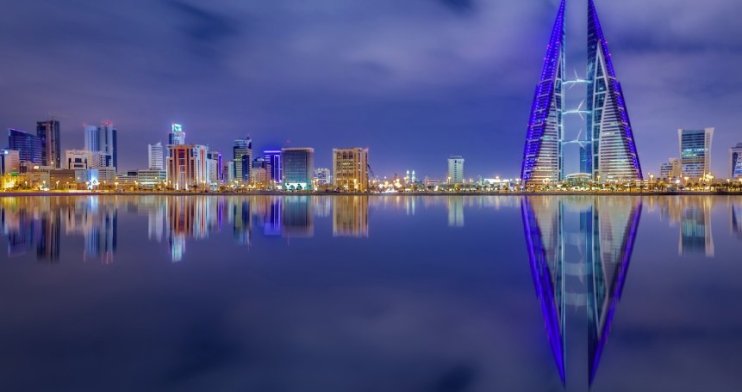
The UK may feel worlds apart from the Gulf monarchies, but there are lessons to be taken, writes Eliot Wilson
Last week I was in Bahrain for the Gateway Gulf 2024 investment forum. The organiser, the Bahrain Economic Development Board, was promoting investment opportunities in the kingdom and across the Gulf Cooperation Council, the six-member trading bloc comprising 60m people and a combined GDP of $2.25 trillion. Listening to the sales pitches, I wanted to pull back and look for lessons from the Gulf monarchies when set against the very different circumstances of the UK.
The modern world is overflowing with inspirational slogans downplaying the importance of wealth, but money-making is a universal instinct. I tend to agree with Thomas Jefferson, when he said that money, not morality, is the principle commerce of civilised nations. Conversations in Manama focused on the same subjects as conversations between business leaders and politicians everywhere: attracting investment, dealing with migration, enticing the best and brightest and building resilience.
The tenor was completely different, however, and there are lessons we can draw from that. It was particularly striking coming a few months after the sound and fury of the UK general election, and in the wake of the government’s International Investment Summit and chancellor of the Exchequer Rachel Reeves’s first Budget.
Foreign investment is an essential motor of any free economy. I spoke to former investment minister Lord Grimstone of Boscobel, who now chairs the Climate Solutions Fund at Bahraini investment firm Investcorp. He was unequivocal: “This is not dogmatic, these are purely the views of a practitioner… foreign investment is not just the initial financial flows, it’s the whole uplift you get to productivity”. Government investment plays a key role, but as a catalyst which can have a powerful multiplying effect.
“Sometimes I could put in state money and get multipliers of ten times, 15 times as much private money coming in, alongside the state money.”
The government’s recent summit in London claimed it had secured £63bn of investment for the UK (although on closer inspection more than £20bn is “confirmed” rather than new money). But the Office for Budget Responsibility’s (OBR) assessment of the Chancellor’s financial statement of 30 October raised a red flag. Reeves has announced so much public spending that it will not catalyse private investment, but in fact reduce it by the end of the decade.
“The increase in government activity, alongside a net fiscal loosening, crowds out some private consumption, business investment and net trade in a capacity-constrained economy.”
This is a net loss. The OBR notes that government investment incentivises the private sector, but “that is more than offset by the crowding out effect of the fiscal loosening”. Labour must cure itself of its addiction to public spending.
Immigration is important to many voters, but the debate has focused on total net migration and “small boats”, partly thanks to former home secretary Suella Braverman speaking in the House of Commons two years ago of “the invasion on our southern coast”. The effect on public debate has been corrosive and reductive.
The difference in perspective speaking to Noor bint Ali Alkhulaif, CEO of the Bahrain EDB, was enormous. Visa policy must be designed in consultation with employers and the education sector, but immigration is not inevitably negative.
“We realise that the success of companies depends on them getting the workforce they need. If that means you bring people from outside, there’s only an advantage, because local people will benefit.”
Connected to this is the “offer” of countries trying to attract investment. Bahrain has no personal income tax or capital gains tax, relying on social insurance paid by employers and employees. By contrast, the recent UK Budget will see the overall burden of taxation rise to a peacetime record of 38.2 per cent of GDP by 2029/30. Just as Labour is addicted to spending, so it fuels its habit with ever higher taxes. What “pull” factors are we offering to attract investors and high net worth individuals?
Enshrining arbitrary emissions targets in the Climate Change Act 2008 was an idiocy of the previous Labour government, while its Conservative successor compounded the problem by making them more ambitious. This has been a source of political rancour which obscures the practicalities of climate resilience: reducing emissions will rely on innovation in alternative fuels and renewable energy. That innovation can support new industries, as technological progress has always done. Instead of mourning coal-fired power stations or steelworks from our industrial past, we should be asking: what’s next, and how do we excel?
It is private enterprise which will drive economic growth. The government’s role is to set the rules and make the UK attractive globally. London is one of the world’s greatest cities, and the UK is home to four of the world’s 10 best universities. We can be outstanding, but we will not achieve it by tax-and-spend and ideological proxy wars. If I can offer a lesson from the Gulf, it is to listen to business, cooperate with the private sector and let enterprise work its magic.