Let Apollo 11 be an inspiration, mankind can achieve the impossible

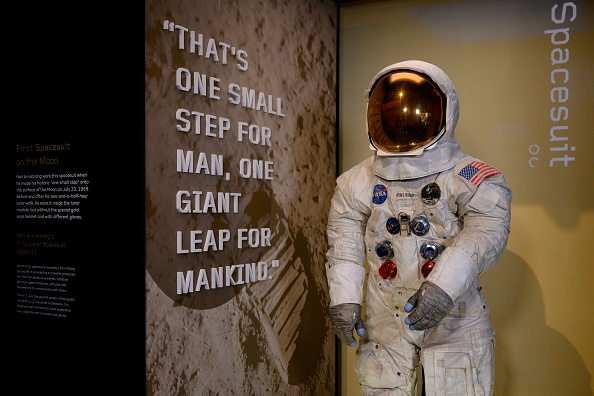
Fifty years ago this week, in one of the seminal moments in the history of humanity, man landed on the moon for the first time.
As hundreds of millions watched with bated breath, hoping against hope that nothing would derail this most extraordinary of missions, Neil Armstrong set foot on the lunar surface and immortalised the phrase (which he later claimed had been misheard) of “one small step for man, one giant leap for mankind”.
Looking back from the technological and financial comfort of 2019, it is difficult to comprehend exactly how much of a moonshot – to coin a phrase that sprang from this endeavour – the triumph of 1969 had been.
Apollo’s computer system may have been cutting-edge for its time, being one of the first to use integrated circuits and therefore occupying the space of a small box rather than a large room. But the latest iPhone processor is estimated to be 100,000 times more powerful than Apollo 11’s guidance computer.
Instead of brain, the Apollo mission therefore relied on brawn. Its Saturn V launcher remains the largest and most powerful rocket ever built, testimony to the complexity of the task and the raw power required to complete it.
Space travel was also an inherently dangerous business. The first Apollo craft had burned up during a launch pad test, killing its three occupants. Astronauts were well aware that what went up might well never make it back down, yet were prepared to sacrifice personal safety in pursuit of a greater goal.
Because for all of the talk of mankind’s achievement, there was very much a secondary victory being celebrated when the US flag was planted on the moon.
We struggle to recall it today, but the space race was the product entirely of Cold War rivalry between the USA and USSR.
The Soviets had struck the first blow through their successful launch of the Sputnik satellite in 1957. By the time they followed this by sending Yuri Gagarin into orbit as the first man in space in 1961, the gauntlet had well and truly been thrown down.
This was not just a contest between two nations, but two systems: the free world of the west and the closed world of the Communist bloc. And the Communists were winning.
President Kennedy’s response to the Soviet space flight was instantaneous. Amid fears of the militarisation of space and further wounds to national pride, Kennedy appeared before Congress in May 1961, and made the outlandish statement that the US “should commit itself to achieving the goal, before this decade is out, of landing a man on the moon and returning him safely to the Earth”.
Kennedy later refined his idea to reflect the possibility of a joint US-Soviet landing, but his successors had other plans. And when American astronauts did land on the moon – astonishingly within the timeline laid out by Kennedy – the world was under no illusions that they did so as Americans first, and that the Apollo mission thereby was the triumph of the free world over Communist oppression.
Man has not returned to the moon since 1972. The expense of the programme and the policy of detente that sprang up between the US and the Soviets made it surplus to requirements in a world of different realities.
Meanwhile, the contemporary equivalent of the moon landing – a mission to Mars – seems even further in the future than those halcyon days are in the past.
There are, of course, many ways to spend the £140bn in today’s money that the Apollo programme took to fund. But in our pursuit of the immediate and even the important, we have perhaps abandoned the ability to dream and to expand our horizons beyond what we assume possible.
In so doing, we have lost something else particular to the free world: we no longer push the boundaries of progress, and the importance – dare it be said, superiority – of our values to today’s equivalent of the authoritarian controlled world of Soviet times.
Instead, our retreat from the final frontier has coincided with our settling for a regression in free and democratic space, and of turning inwards upon ourselves.
In 1962, Kennedy reiterated that “we choose to go to the moon in this decade and do the other things, not because they are easy, but because they are hard… because that challenge is one that we are willing to accept, one we are unwilling to postpone, and one we intend to win, and the others, too”.
When that soaring rhetoric urging us to take the road less travelled is compared to the aggressive divisiveness of Donald Trump, the banality of Theresa May, and the pedestrian utterances of Angela Merkel, there is surely reason to fear for the future of the west.
Say what you like about Boris Johnson, but at least his sunny optimism once again gives us cause to dream, and to imagine that our future can be brighter than the past.
We live in exceptional times, but with unexceptional goals. If the moon landing teaches us anything, it is that if you aspire to greatness, it can yet be.
Main image credit: Getty