Let’s be honest, we don’t need to have bank holidays – no, not even for the football

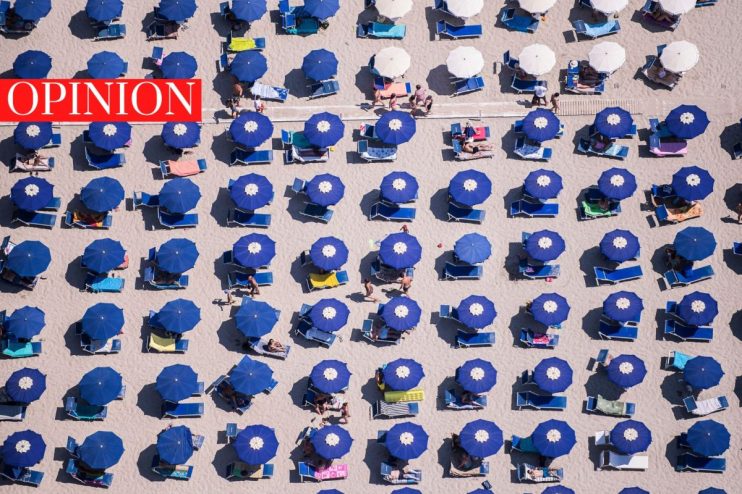
We all want more bank holidays, but even the ones we have are hurting our economy by forcing everyone to take time off on the same day, writes Matthew Lesh.
In 1930, economist John Maynard Keynes wrote an essay predicting that within a hundred years people would work just 15 hours per week. Keynes thought greater economic efficiencies would boost our standard of living (around four to eight times) to the point where we would barely have to work to consume everything we needed.
Keynes was not entirely wrong – Brits are around five times wealthier but annual working hours have declined from around 48 down to 34 hours per week. But instead of working 15 hours per week, we have chosen to consume a lot more – modern gadgets, better food, and international holidays, to name a few. We also live much longer, meaning more leisure time across our lives. But that leisure time and consumption is no free lunch, it requires working and saving when younger.
Nevertheless, the calls for more leisure are ever-present. Last week, amid the excitement surrounding the Lionesses making it to the Football World Cup final, there were demands for a victory to be met with a new bank holiday. Labour leader Keir Starmer perhaps jinxed the result by declaring that “there should be a celebratory bank holiday if the Lionesses bring it home”.
Unfortunately, despite how much everyone loves a day off, more bank holidays are a rubbish policy. According to IEA Economics Fellow Julian Jessop, an additional bank holiday for the Lionesses could have cost the economy around £1bn – a big blow to a country teetering on the brink of recession. “The extra day off work would hit output and incomes, and disrupt public services, especially as employers would have little time to prepare,” Jessop explains. We could have commemorated a victory at a much lower cost by investing in women’s football, giving a financial bonus to the players, or extending pub opening hours on Sunday, but an expensive bank holiday hardly feels justifiable.
The same applies to the general demand for more bank holidays. In 2017, never afraid to make a nice-sounding but fundamentally dumb promise, Jeremy Corbyn committed to four new permanent bank holidays.
Bank holidays force many businesses to shut down and workers to lose income. They also disrupt projects and workflow, lead to more NHS treatment delays, and cause kids to spend less time in school. By making everyone take time off, they are highly disruptive compared to when individuals are in control of their own holidays. Taken together, bank holidays lower productivity and economic growth.
More fundamentally, bank holidays collectively impose a holiday on everyone rather than leaving individuals free to decide when they take time off. They mean everyone – no matter their religion or lack of religiosity – is forced to take off Easter and Christmas. They increase costs for flights and accommodation for those wanting to travel. In practice, it leaves a select few stuck working; alternatively, shops and restaurants are closed altogether.
There’s nothing wrong with wanting more leisure time – and in fact, it has become increasingly normal to negotiate with employers for part-time work or more time off in lieu of pay raises. But not everyone has to take the same time off with you. Keynes was ultimately wrong about the 15-hour workweek because we chose to work harder and become much richer. More holidays should be an option, not something that everyone is forced to do, and certainly not all at the same time.