Let’s be honest, Labour’s ‘securonomics’ will make the UK economy less secure

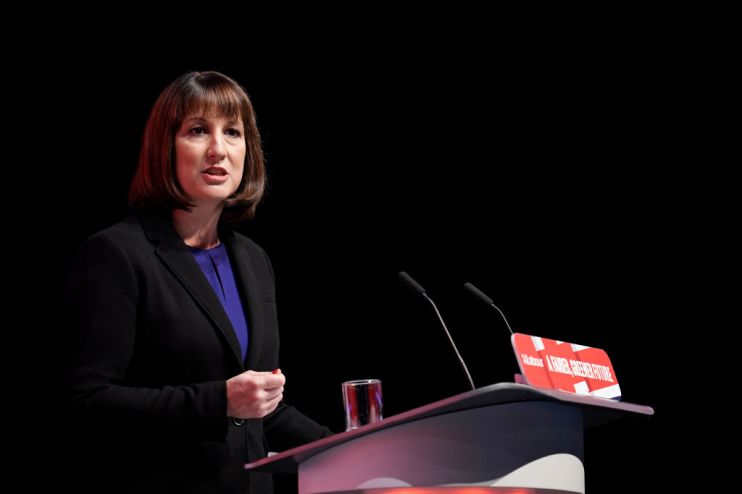
Reeves’ aspiration to deliver greater stability may sound appealing, but greater state involvement will not deliver the growth she promises, writes Matthew Lesh
Rachel Reeves spoke of a country wrecked by economic crises and a sense of perpetual decline this week at the Bayes Business School. Not the Britain of today mind you but that of 1978, the year Bank of England governor Gordon Richardson gave the first Mais lecture. The more things change, the more they stay the same.
There was much to like about the speech. Reeves’ analysis of Britain’s malaise should be commended. She correctly identifies the central importance of boosting productivity growth to raise living standards and fund public services – rejecting the ‘degrowth’ agenda sometimes popular on the left of politics.
Reeves also rightly focuses on the urgent need for ‘supply side reform’ and describes the planning system as “the single greatest obstacle to our economic success.” Not only is the inability to build homes a barrier to homeownership. It also feeds broader economic dysfunction by preventing people from living closer to more productive jobs and pushing up the cost of infrastructure, which means costlier energy and poorer transport.
Beyond these bright sparks, however, Reeves’ economic agenda should raise eyebrows. Her central claim is that global instability, new technologies like AI and climate change justify greater state involvement in the economy. She labels this “securonomics” and defines this as “a new model of economic management” focused on security.
Reeves’ vision is centred on a “modern industrial policy”. She says this won’t mean propping up uncompetitive industries like in the past but instead working in “genuine partnership with business” to identify “critical” future industries “based on our broad strengths”. It will be smart and strategic, she insists.
This is reminiscent of the claim that ‘real’ socialism has never been tried – that every previous case of disaster should be ignored because things will be different next time. Reeves’ exact approach has been tried and failed almost every time for predictable reasons.
Businesses that tend to seek subsidies are precisely the ones that are less productive and are struggling to attract private sector investment, meaning they risk selling snake oil to the taxpayer. The state also has a poor track record of picking which industries, let alone which companies, will be successful in future. This is because the economic process is an emergent phenomenon; it is dynamic and unpredictable. No amount of rhetoric about a closer partnership with businesses can fix these fundamental flaws.
Just take the case of ICL, a British mainframe computer company propped up by millions in state subsidies throughout the 1970s and 1980s. Over 90 per cent of its sales were to the public sector. Every time a profit-seeking business had a choice, it opted for the higher-quality IBM. Fujitsu, the makers of the Post Office Horizon system, ultimately purchased ICL. Hardly a ringing endorsement.
After recent years, Reeves’ aspiration to deliver greater stability may sound appealing. But it’s naive to presume the state has the capacity to predict or prevent shocks. We live in a rapidly changing and uncertain world. Efforts to prevent shocks, like limiting exposure to international trade or subsidising domestic industry, risk backfiring by making Britain poorer and less resilient.
If Reeves is serious about supply side reform, the focus must ultimately be on removing barriers to investment, not introducing more labour market regulations and state spending. Planning reform is a good start, but it is essential for policymakers to go much further.