Let’s be honest, teaching everyone more maths won’t boost our economic growth

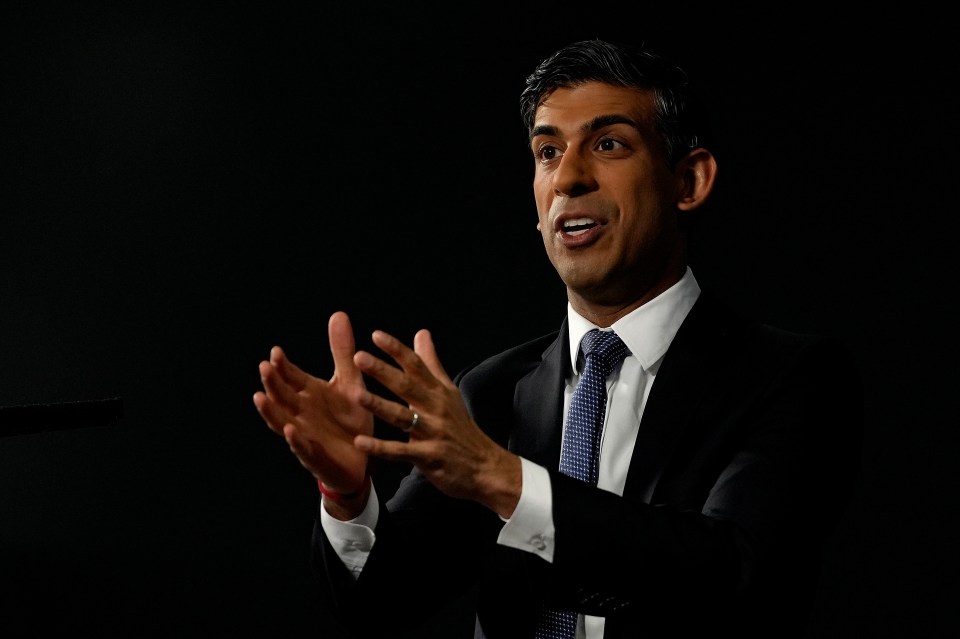
Rishi Sunak wants us all to be better at maths, but ultimately it won’t matter for our economic growth if we don’t have the infrastructure and resources to nurture talent, writes Matthew Lesh
Prime minister Rishi Sunak is a mathematics evangelist. In a speech this week to the London Screen Academy, he slammed the “anti-maths mindset” and re-announced plans to require everyone in the country to study maths until 18.
For many, these plans just don’t add up. The ongoing shortage of specialist maths teachers could make the policy backfire by lowering standards, as even more non-specialists are brought in to fill gaps. Others wonder whether disinterested students would be wasting their time and distracting others. Creative industry representatives were particularly aghast when Sunak first announced the plans in January.
Few, however, have tackled the prime minister’s central argument: that expanding mathematics education is necessary to grow the economy and compete internationally. Sunak’s belief fits neatly into the emerging concern about geostrategic competition in science and technology. Many believe the West is falling behind. Analysts expect China to have almost double the number of science, technology, engineering, and STEM PhDs compared to the United States by 2025.
This fear is, of course, nothing new. A confidential CIA report in 1959 warned that in the Soviet Union an extraordinary 90 per cent of all graduates specialised in scientific and technical fields. Soviet schools were famous for emphasising a strong mathematics and science education, expecting students to compete in the Soviet Student Olympiad. The launch of Sputnik, the world’s first satellite, particularly spooked the West.
Ultimately, however, it didn’t matter that the Soviet Union beat the West in technical education. Knowledge of maths could not compensate for a broken economic model. Central planning led to an inefficient use of resources and the lack of profit motivation removed the incentive to compete and innovate. Producing so many scientists and engineering left little space for business people and entrepreneurs. The strength of what economists call “human capital” is irrelevant when the underlying institutional environment doesn’t promote growth.
It’s a similar story for Britain. The UK has some of the world’s top universities, a record-high number of graduates, and impressive scientists. But none of that matters when a housing shortage prevents those skilled graduates from living in cities where they would be most productive. Nor does having top scientists matter when they cannot build successful companies – because of a shortage of laboratory space or barriers caused by red tape. Put differently, the UK produces more STEM graduates (23 per cent of all tertiary degree recipients) than the United States (20 per cent). Yet our economy is about one-third smaller on a per-capita basis.
Technical education certainly provides useful skills, which may then ultimately translate into higher productivity and incomes. Indeed, as Sunak said, we shouldn’t celebrate ignorance. But, as a study from the World Bank says, “education by itself does not guarantee successful development, as history has shown in the former Soviet bloc, Sri Lanka, the Philippines, and the Indian states of Kerala and West Bengal.” The authors, Ramon Lopez, Vinod Thomas, and Yan Wang, find that “economic policies that suppress market forces tend to dramatically reduce the impact of human capital on economic growth”.
Maths education is no silver bullet for economic growth. It’s worrying that, of all the things the prime minister could talk about, this is it. A plan for more maths classes is not the same as a plan for growth.