Skip to content
Sunday 9 August 2026London --:--Frankfurt --:--Zurich --:--
NewslettersSearchEN · DE
MorningWire

European business, markets and politics

FTSE 100
10,901.09
+0.31%
DAX
26,319.45
+0.69%
CAC 40
8,714.93
+0.17%
STOXX 50
6,523.86
+0.33%
  • Europe
  • Markets
  • Business
  • Economy
  • Technology
  • Politics
  • Opinion
More
GermanyFranceBankingAIEnergyFintechPropertyCapital Markets
  • Germany
  • France
  • Europe
  • Markets
  • Business
  • Economy
  • Technology
  • Politics
  • Opinion
  • DE
Thursday 02 May 2024 5:25 am  |  Updated:  Wednesday 01 May 2024 4:27 pm

Let’s be honest, there are no easy answers to worklessness

By: Matthew Lesh

Add as a preferred source on Google
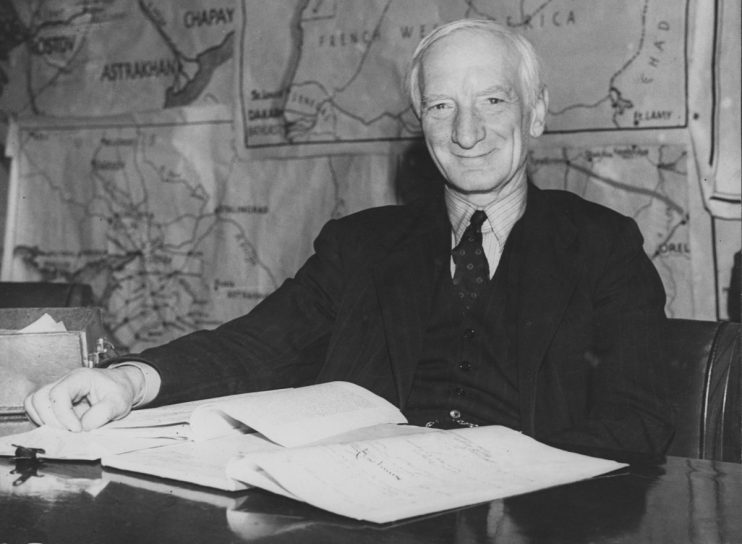
British economist Sir William Beveridge (1879 - 1963) with his report on Social Security during a press conference at the Ministry of Information, London, 1st December 1942. (Photo by Central Press/Hulton Archive/Getty Images)

The government is right to be focused on getting people off welfare dependency and into work, but we shouldn’t be too optimistic about its chances of success, says Matthew Lesh

In 1906, William Beveridge declared that those who cannot work should be maintained by public support. The condition, however, would be the “complete and permanent loss of all citizen rights – including not only the franchise but civil freedom and fatherhood.” Like many of the era, Beveridge, the godfather of the welfare state and post-war expansion in state benefits, was a proud eugenicist. 

By comparison, Rishi Sunak’s recent remarks about cracking down on welfare come across as rather soft. Sunak has raised concerns about “over-medicalising the everyday challenges and worries of life” in the context of the increased number of working age people who are out of work due to ill health.

There are 850,000 more people who are unable to work due to long-term sickness since the pandemic. Sunak has highlighted data showing half of the people claiming long-term sickness cite having depression or anxiety. Worryingly, the biggest increase comes from young people and in particular young men. This raises the prospect of a lifetime of never entering the workforce and dependence on handouts. 

As Beveridge’s remarks demonstrate, there has been a long-running debate about how best to deal with those who cannot or do not work. In the 19th century, the answer was workhouses, which offered accommodations to individuals unable to support themselves and who were unemployed. The labour was back-breaking, and the conditions were dire. As we became richer, workhouses were replaced with a more generous system of payments in the 20th century.

Today, taxpayers spend £69bn annually on working age benefits for those with disability or health conditions, more than the school, transport, or policing budgets. This is also set to grow by at least one-third over the next five years, with the department for work and pensions forecasting that working age claimants will rise from 2.8m to 3.96m over the next five years. 

The rising cost of welfare and fewer people in the workforce has many larger economic implications. Not only do we all face a higher tax burden to provide these payments but there are also ongoing labour shortages across the country, which are already thought to be contributing to Britain’s stagnant economy.

Read more

Burnham vows to ‘get serious’ about slashing welfare bill

Andy Burnham, Mayor of Greater Manchester, speaking and gesturing during an interview

In response, the government plans to change how payments are provided and tighten eligibility requirements. This means a crackdown on issuing sick notes (officially called ‘fit notes’) to those who could still do some sort of work and tackling the use of ‘subjective and unverifiable claims’ to reject work. There will also be additional support for mental health services. 

This all appears sensible. Welfare payments are expensive for taxpayers but maintain people at a subsistence level far from luxury. A lack of work in people’s lives greatly impacts their sense of dignity and purpose. The state should avoid trapping people in welfare. 

However, we should not be overly optimistic about the chances of success. According to the ONS, three-quarters of people who are long-term sick simply do not want a job. Many suggest that the solution is to address NHS waiting lists rather than welfare crackdowns. However, two-thirds of those moving into long-term sickness were already out of the labour market for another reason. 

We can and should avoid increasing labour market regulation, like Labour’s proposals for many benefits and unfair dismissal protections, to begin on day one. However, with nearly 1m job vacancies, more job opportunities are unlikely to get sick people to work. 

The sad truth may just be that there aren’t easy answers to the worklessness problem.

Matthew Lesh is the director of public policy and communications at the Institute of Economic Affairs

Read more

I’m a 21-year-old grad, why does the government want me to go on the dole to get a job?

Young man in front of a Jobcentre Plus building, standing on a pedestrian crossing.

Share this article

  • Facebook
  • X
  • LinkedIn
  • WhatsApp
  • Email

Similarly tagged content:

Sections

  • Opinion

Categories

  • Opinion

People & Organisations

  • ill health
  • long-term sick
  • william beveridge

Related Topics

  • flexible working
  • Future of Work
  • workers rights

Trending Articles

  • Thames Water faces fresh threat to survival after pensions regulation breach

  • PwC’s Embankment HQ to get major makeover ahead of Canary Wharf move

  • Family feud: London estate agent Winkworth sues chair over plot with wife to oust son from board

  • As it happened: Stocks rise despite new tensions in Strait of Hormuz; Oil price climbs

  • A tribute to wine legend Matthew Jukes by his friend Libby Brodie

More from Morning Wire

  • Burnham vows to ‘get serious’ about slashing welfare bill

    Politics
    Andy Burnham, Mayor of Greater Manchester, speaking and gesturing during an interview
  • I’m a 21-year-old grad, why does the government want me to go on the dole to get a job?

    Opinion
    Young man in front of a Jobcentre Plus building, standing on a pedestrian crossing.
  • Burnham backs higher defence spending but rules out ‘crude’ welfare cuts

    Politics
    Andy Burnham
  • Nearly 1m people to pay higher tax ‘by stealth’

    Economics
    Tax Trap: Another 74,000 taxpayers were added to the punitive £100,000-£125,000 income bracket during the 2024/25 tax year
  • The pensions triple lock is a travesty. Our politicians must fess up

    Opinion
    Young people face the risk of failing to save enough in their pension
  • If Burnham wants firms to hire young people, he needs to get out of their way

    Opinion
    Labour's Rachel Reeves has been urged to offer a tax relief to curb the number of Neets in the UK.
  • Keir Starmer wasn’t weird enough for Westminster

    Opinion
    Keir Starmer holding a football with a World Cup logo, smiling and engaging in a sports event discussion.
  • The water industry needs investment, not confiscation

    Opinion
    Thames Water infrastructure with pipes and maintenance workers, highlighting water management efforts in London
MorningWire

Independent European business, markets and political news for decision-makers.

Morning Briefing

Europe

  • Germany
  • France
  • Europe
  • UK & Ireland

Business

  • Markets
  • Banking
  • Technology
  • Energy
  • Property
  • Fintech

Editorial

  • Opinion
  • Editorial Policy
  • Corrections
  • Contact

Company

  • About Morning Wire
  • Privacy Policy
  • Terms of Use
  • Cookie Policy
© 2026 Morning Wire Ltd · Published by Morning Wire Media, Bahnhofstrasse 65, 8001 Zürich, Switzerland
Privacy · Terms · Cookies · Facebook