Letting go of the dream of mass membership political parties

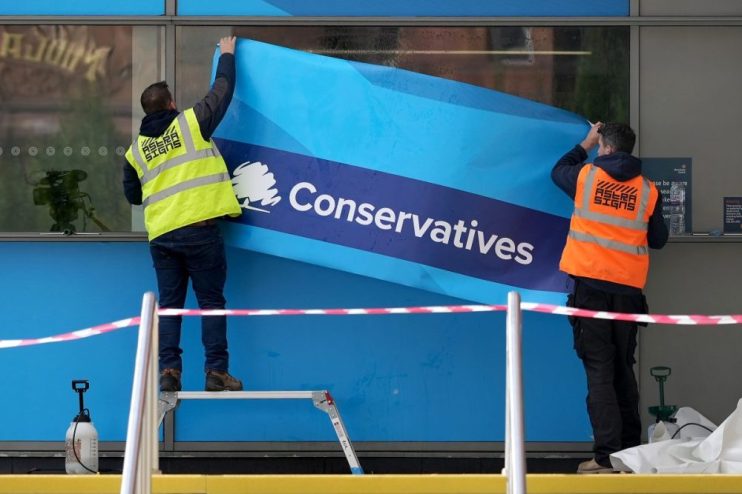
The existing model of political supporter engagement – mass membership – is over. Parties who want to survive must look to the future, says Frances Lasok
Less than 140,000 people decided the new leader of the Conservative Party this year. They’re participants in a niche pursuit: across parties, across Europe, membership has plummeted since the 1950s. UK party membership has fallen from around 12 per cent of the electorate then to below 2 per cent today, lower than that of the National Trust. Bumps in the trend are about movements – Jeremy Corbyn in the UK or Italy’s Five Star – and rise and fall quickly.
Why is this happening? Commentators link party membership to popularity, but it is more complex. 2015-2019 show a reverse relationship between membership and electoral success: the Labour Party lost to the Conservatives in 2017 and 2019 with a membership three times higher, while Liberal Democrat membership soared as their parliamentary party shrank. Disenchanted members often blame their party, suggesting that if Labour moved closer to its roots or the Conservatives brought back grammar schools, town halls would be filled to the rafters – but the decline spans the political spectrum across Europe.
Instead, the more plausible academic explanations suggest a social change. People have less leisure time, are less partisan, less involved in civic initiatives, are less likely to socialise based on geography. Fewer people know their local greengrocer and fewer join their local political party. Older members will describe membership in non-political terms: they joined a political party to meet their future spouse, or to get better conditions at work. This lens suggests that assessing political engagement through mass membership is like assessing vegetable consumption by counting greengrocers: relevant once, mostly outdated today. And that gives a lower-than-expected correlation between membership numbers and political impact: the Conservative Women’s Organisation transformed into a pipeline of female activists and candidates after its membership fell, because the fall allowed an evolution away from a function as a social club.
Reversing social trends is difficult. Member democracy is occasionally touted as a solution, recently by Robert Jenrick’s Conservative leadership campaign. But as academic Susan Scarrow notes, parties have offered more democracy (such as a member voice in the leadership) only to see their membership fall further: William Hague’s identical post-1997 attempt ended in failure. So if parties are concerned about their membership – what can they do?
Firstly, what motivates those who have defied the trend already? Why do they stand for election, deliver leaflets and hope to change the world? Research is limited, but talking to current Conservative members turned up some headline findings. Interest in politics is necessary but not sufficient. Members probably aren’t more ideologically extreme than supporters, but they are unusual in other ways. They are civic: school governors, or charity trustees. And circumstantial factors have almost certainly helped them become engaged. Particular life stages are key: university, after retirement, when children are older. In most members there isn’t a single cause but a relationship of factors, a combination of the inclination, ability and awareness. That forms the basis of a more complex, targeted recruitment strategy.
Stealth democracy
Secondly, parties must accept that there will be a ceiling to membership numbers. Anyone who has ever gone canvassing will tell you that political interest varies. Academics Theiss-Morse and Hibbing named this concept “stealth democracy”: some people are highly political while others will vote in important elections and don’t want to be disturbed further. Political interest is a spectrum, like interest in football: voters engage selectively. If social change means the majority of supporters just won’t want to join, that turns the conversation to how parties can adapt their model to a smaller base, then engage supporters by offering something they will want, like networking.
Why does this matter, if there’s no causal relationship between member democracy, membership numbers and electoral success? Because a mass membership structure without a mass membership is the least democratic option of all: it becomes an oligarchy of age or connections. It causes the limited talent pool in all parties, and the instances at Conservative Parliamentary selections where future Members of Parliament were chosen by four or five people. It is a partial cause of the stalemate over planning reform, and the resulting disenchantment with politics in the under 35s. Political parties needn’t worry about changes like where people meet romantic partners, but they should about partisan dealignment, the decrease in tribal loyalty, because when that’s combined with poor performance by the establishment and stagnation in living standards, it creates growth conditions for extremism. The danger sign in membership trends isn’t slow fall, but rapid rises: Jeremy Corbyn or Five Star, the movements or people that want to destroy the system.
Party membership in the old style is a fail-safe, based around loyalty to something bigger than a person. It is not a perfect defence against extremism – it did not stop Jeremy Corbyn – but it is a defence, allowing Labour moderates to survive on the backbenches. It’s often forgotten that mass membership is only one democratic model of many, beginning a century after parties began engaging supporters after the Great Reform Act. Our ability to evolve – slowly and carefully – has made us one of the oldest democracies in the world: it’s time to evolve again.
Frances Lasok is a freelance writer